Memorial Page for Albrecht Weinberg
German holocaust survivor
Memorial Candles
3 candles

“Ruhe in Frieden 🌹”
Andrea Bakker
May 15th, 2026

“In Erinnerung.”
Franz W.
May 15th, 2026

Emoria lights a memorial candle in memory of Albrecht Weinberg.
Emoria
May 13th, 2026
Condolence Book
0 Entries
Memories
8 memories

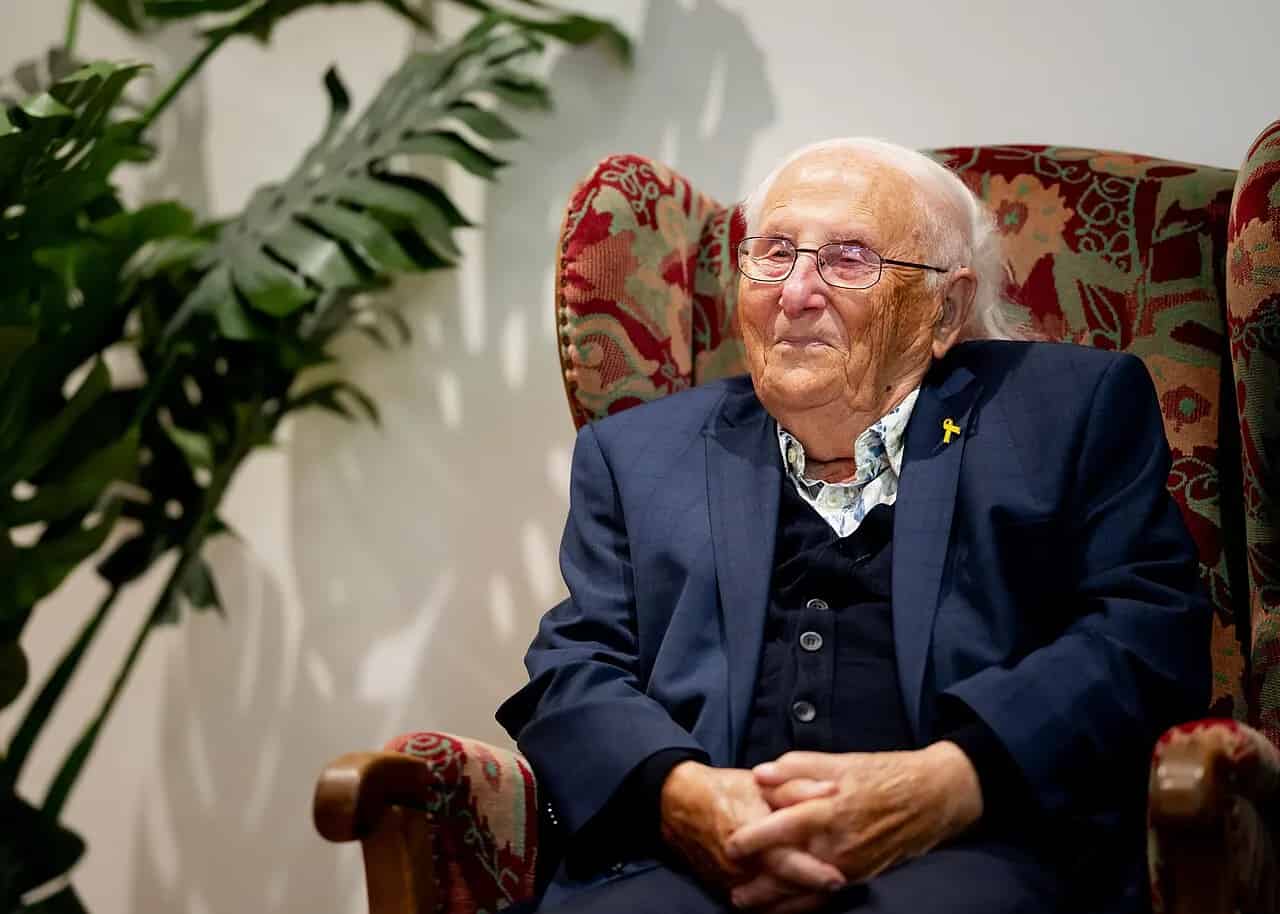
Albrecht Weinberg with Gerda Dänekas and Nicolas Büchse at the Zollhaus in Leer (Ostfriesland) on 26 January 2025

Albrecht Weinberg at the Zollhaus in Leer (Ostfriesland) on 26 January 2025

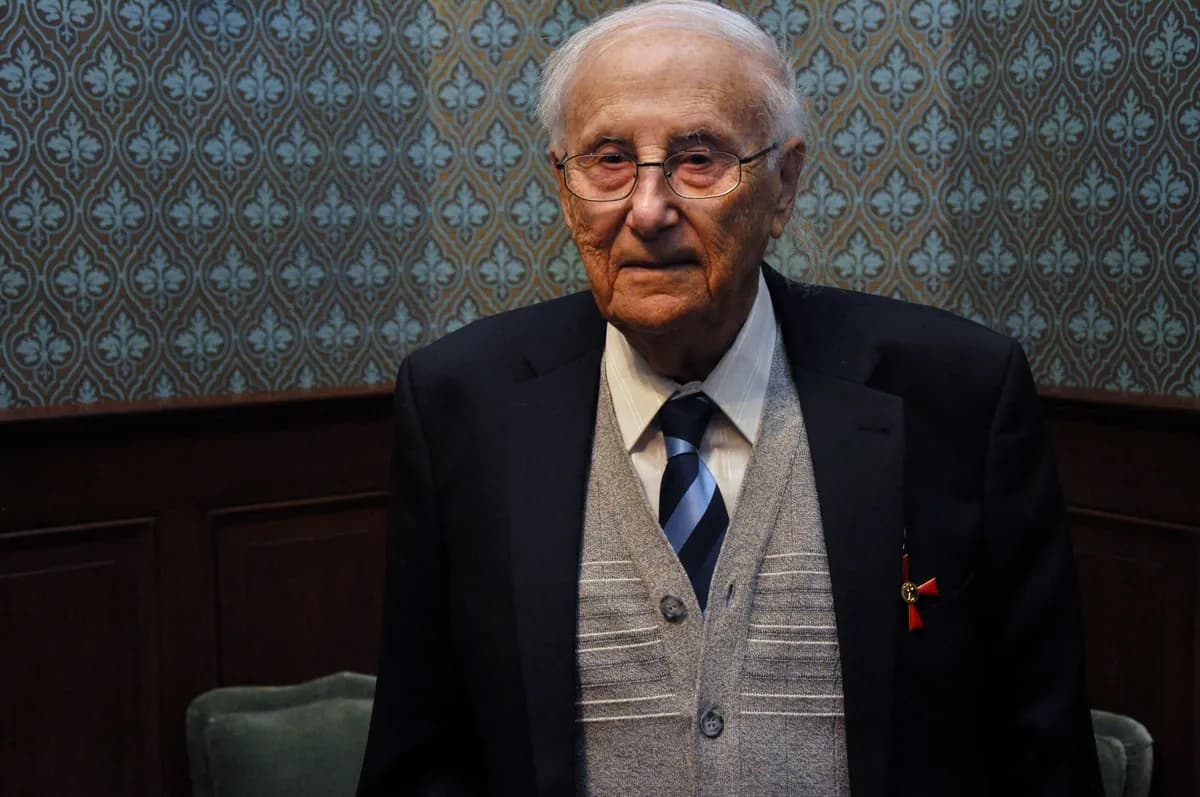
Holocaust-Überlebender Albrecht Weinberg mit Bundesverdienstkreuz 2017

Albrecht Weinberg bedankt sich bei der Verlegung der Stolpersteine für seine Eltern 2022 in Leer.

Albrecht Weinberg bei der Verlegung der Stolpersteine in Weener

Albrecht Weinberg 2022

Stolperstein für Albrecht Weinberg, Untenende 74 in Rhauderfehn

Albrecht Weinberg während eines Vortrags in Uplengen 2025
Biography
Albrecht Weinberg (born 7 March 1925 in Westrhauderfehn; died 12 May 2026 in Leer) was a German witness to the Shoah. As a Jew under National Socialism he was persecuted and imprisoned in Auschwitz, Mittelbau-Dora and Bergen-Belsen. After the war he emigrated to the United States and returned to East Frisia in old age. There he continued to speak to students and the public about persecution, loss and responsibility until the end of his life.

Childhood in East Frisia
Weinberg was born the youngest of three siblings in a Jewish family in East Frisia. After 1933 his childhood in Westrhauderfehn was increasingly shaped by exclusion, insults and the loss of rights. After the November pogroms in 1938 the family considered emigration, but escape soon became impossible. The places of his childhood therefore remained double-edged for Weinberg: home, and the beginning of persecution.
Auschwitz, Mittelbau-Dora and Bergen-Belsen
In 1943 Weinberg was deported with his siblings to the Auschwitz camp complex. There he was given prisoner number 116927. His parents Alfred and Flora, along with many other relatives, were murdered by the National Socialists. In January 1945 Weinberg was forced on a death march to Mittelbau-Dora; shortly before the end of the war he was sent to Bergen-Belsen. British troops liberated the camp on 15 April 1945. For Weinberg, the end of imprisonment did not mean the end of memory: the number on his arm, the names of the murdered and the images of the camps accompanied him throughout his life.

United States and return
In 1947 Albrecht Weinberg and his sister Friedel emigrated to the United States. In New York he began a new life far from the places of persecution. Only decades later did Weinberg return to East Frisia with his sister; from 2012 he lived again in Leer. This return was not a simple closing of a chapter. It became a conscious decision to speak in the places of his origin and tell young people what had happened there.
Work of remembrance
Weinberg visited schools, memorial sites and public events. He spoke calmly, concretely and without softening the facts about his family, deportation, the camps and the question of what people can do to one another. In 2020 the grammar school in Rhauderfehn was named after him. In 2024 the book Damit die Erinnerung nicht verblasst wie die Nummer auf meinem Arm, written with Nicolas Büchse, was published; in 2025 the ZDF/DW documentary Die Nummer auf meinem Arm brought his story to a wider audience.

Recognition and protest
For his work as a witness Weinberg received the Order of Merit of the Federal Republic of Germany in 2017. He accepted recognition, but he never understood remembrance as a completed ritual. In 2025 he returned the honour in protest after a parliamentary motion on migration policy passed with votes from the AfD. The gesture fitted his public stance: Weinberg did not warn about history in the abstract, but connected it with the present, democracy and human dignity.
Farewell
In March 2026 Weinberg still celebrated his 101st birthday in Leer and the premiere of the documentary film Es ist immer in meinem Kopf. He died in Leer on 12 May 2026. His life remains connected with East Frisia, New York and the places of National Socialist violence, but above all with a task he continued into very old age: telling the story so that names, deeds and responsibility would not disappear.
Life Events
11 EventsGeboren in Westrhauderfehn
1925Albrecht Weinberg wird in Westrhauderfehn, heute Teil von Rhauderfehn, geboren.
Novemberpogrome
1938Nach den Pogromen verschärft sich die Verfolgung der jüdischen Familie Weinberg weiter.
Deportation nach Auschwitz
1943Weinberg wird im April 1943 mit seinen Geschwistern in den Lagerkomplex Auschwitz deportiert.
Zwangsmarsch nach Mittelbau-Dora
1945Im Januar 1945 wird Weinberg nach Mittelbau-Dora verschleppt und dort zur Arbeit in der Rüstungsproduktion gezwungen.
Befreiung in Bergen-Belsen
1945Das Kriegsende erlebt Weinberg in Bergen-Belsen, das britische Truppen am 15. April 1945 befreien.
Emigration in die USA
1947Albrecht und seine Schwester Friedel wandern nach dem Krieg in die Vereinigten Staaten aus.
Rückkehr nach Ostfriesland
2012Nach Jahrzehnten in New York kehrt Weinberg mit seiner Schwester in seine ostfriesische Heimat zurück.
Bundesverdienstkreuz
2017Für seine Erinnerungsarbeit wird Weinberg mit dem Bundesverdienstkreuz ausgezeichnet.
Schule trägt seinen Namen
2020Das Gymnasium Rhauderfehn heißt seit dem Schuljahr 2020/21 Albrecht-Weinberg-Gymnasium.
101. Geburtstag und Filmpremiere
2026In Leer feiert Weinberg seinen 101. Geburtstag und die Premiere des Dokumentarfilms Es ist immer in meinem Kopf.
Gestorben in Leer
2026Albrecht Weinberg stirbt im Alter von 101 Jahren in Leer.
Obituary
No obituary yet
No obituary has been uploaded for this memorial page yet. If you are one of the loved ones and would like to upload one, you can register as the owner of this memorial page and add it afterward.
Albrecht Weinberg. Forever remembered.