Jardín Bella Vista
Buenos Aires Province
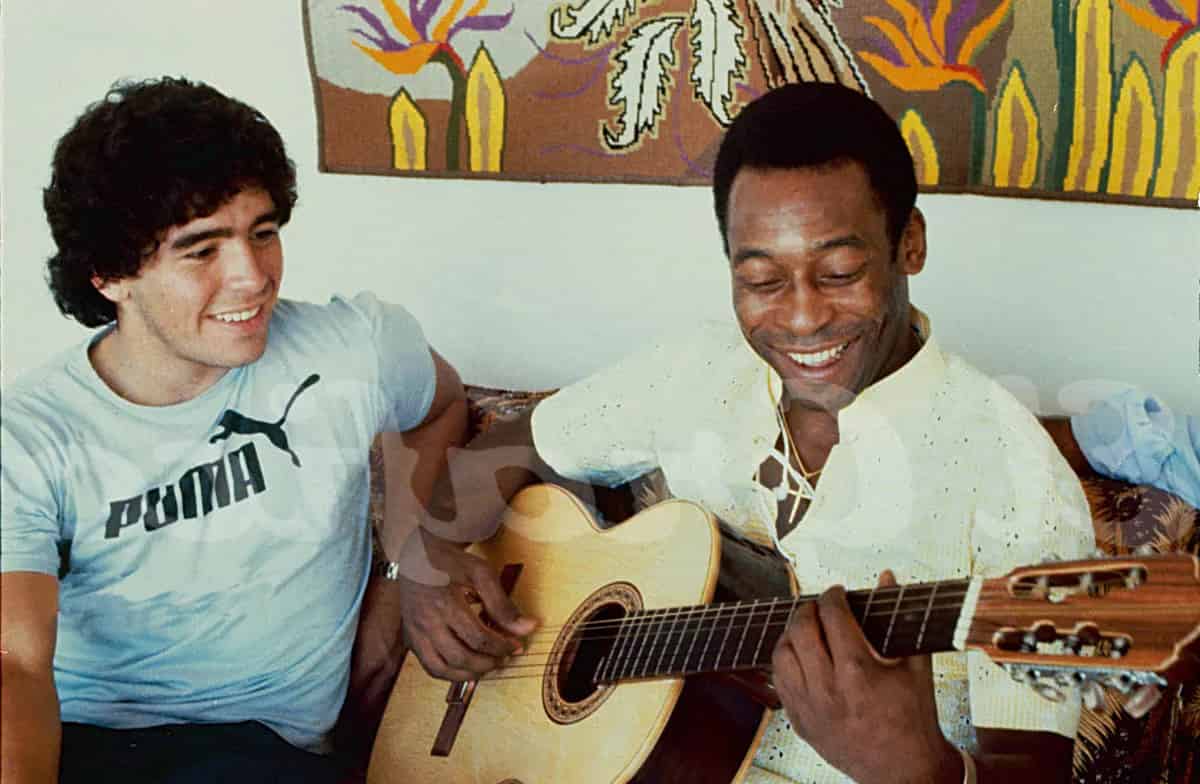

Argentine football player and manager
0 Entries
16 memories

Mackolik.com simgesi

Лопырева, Роналдиньо и Марадона. В Москве прошла жеребьевка ЧМ-2018

Diego Maradona in his debut with Argentina, vs Hungary in Buenos Aires, friendly.

Diego Maradona scoring his goal with the "hand of God".

A young Diego Maradona during an interview with journalist Juan José Panno for El Gráfico magazine.

Maradona salutes the crowd at San Paolo Stadium during his presentation in Naples.

Diego Maradona and Mario Kempes, playing for FC Barcelona and Valencia CF, respectively.

Diego Maradona celebrating his second goal scored to England during the 1986 FIFA World Cup.

Maradona eg 3203

Diego Maradona celebrates his goal v. Italy at the 1986 FIFA World Cup in Mexico.

Диего Марадона

Diego Maradona
Diego Maradona (born 30 October 1960 in Lanús, Buenos Aires Province; died 25 November 2020 in Tigre, Buenos Aires Province) was an Argentine footballer and coach. He led Argentina to the 1986 World Cup title, turned SSC Napoli into a power in Italian football and became a figure in which sport, origin, pride, contradiction and public pressure were tightly connected. Maradona was not a smooth hero. That is part of why he remained so close to many people: an extraordinary player from modest beginnings whose greatness and vulnerability were always visible at the same time.

Maradona grew up in Villa Fiorito on the edge of Buenos Aires. Football there was not only a game, but a possibility: a ball, a pitch, a talent that could be seen. As a child he played for Las Cebollitas, the youth team of Argentinos Juniors. In 1976 he made his first-division debut shortly before his 16th birthday. Even then, the qualities that would later make him unique were visible: ball control in tight spaces, balance despite fouls, a low centre of gravity and an eye for the moment when a match changes.
In 1981 Maradona joined Boca Juniors and became a projection figure in Buenos Aires. A year later he moved to FC Barcelona. There he won the Copa del Rey in 1983, but injuries, conflicts and the physical hardness of European football made the period difficult. Barcelona mattered, but it was not the place where Maradona's legend took its final shape. That place was Naples.

When Maradona was presented by SSC Napoli in 1984, it was more than a transfer. Naples saw in him a player who could make southern Italy visible against the rich and powerful clubs of the north. With Maradona, Napoli won Serie A for the first time in 1987, along with the Coppa Italia. The UEFA Cup followed in 1989 and another Scudetto in 1990. His importance lay not only in goals and assists. He gave a club and a city the feeling that they could stand against the order of Italian football.
The 1986 World Cup became Maradona's greatest tournament. He was captain, playmaker and centre of an Argentine team that was strong, but without him would not have spoken the same football language. Against England in the quarter-final, two goals came within minutes and still cannot be separated from one another: first the illegal handball goal, then a solo run from inside his own half in which Maradona beat several opponents and the goalkeeper. One goal remains a breach of the rules; the other a moment of almost unreal bodily control. Together they show why Maradona is so difficult to classify.

Argentina won the final against West Germany 3-2, and Maradona received the Golden Ball as the tournament's best player. The title reached far beyond sport. For Argentina, only a few years after military dictatorship and the Falklands War, Maradona became a figure of national relief and self-assertion. That significance made him great, but it also made him heavily burdened. Wherever Maradona played, football quickly became politics, class, myth and personal expectation at once.
Maradona's career had deep breaks. In 1991 his time at Napoli ended after a positive cocaine test and a 15-month suspension. At the 1994 World Cup he was excluded after a positive test for ephedrine. These episodes do not belong as a footnote, but as part of the truth of his story. They show a player who suffered under fame, pressure, addictions and public appropriation. Maradona later played for Sevilla, Newell's Old Boys and Boca Juniors, ended his professional career in 1997 and remained present afterward as a coach, commentator and public figure. From 2008 to 2010 he coached the Argentine national team.
Diego Maradona died in Tigre on 25 November 2020, a few weeks after surgery for a blood clot on his brain. He was 60 years old. His death brought mourning in Argentina, Naples and far beyond; questions about his medical care were later examined in court. Maradona's legacy is therefore not simple celebration. It is the memory of a player of rare ability, of a body that translated football into motion, and of a person who was also damaged by the myth he had created.
Diego Armando Maradona wird in der Provinz Buenos Aires geboren und wächst in Villa Fiorito auf.
Als Kind spielt Maradona für die Jugendmannschaft Las Cebollitas von Argentinos Juniors.
Kurz vor seinem 16. Geburtstag debütiert Maradona in der ersten argentinischen Liga.
Maradona spielt erstmals für die argentinische Nationalmannschaft.
Mit Argentiniens U20-Auswahl gewinnt Maradona die Junioren-Weltmeisterschaft in Japan.
Maradona schließt sich Boca Juniors an und wird in Buenos Aires zum Idol.
Maradona wechselt nach Spanien zum FC Barcelona.
Mit Barcelona gewinnt Maradona den spanischen Pokal.
Maradona wird im Stadio San Paolo als neuer Spieler des SSC Napoli präsentiert.
Im WM-Viertelfinale erzielt Maradona das irreguläre Handtor und kurz darauf einen der berühmtesten Sololäufe der Fußballgeschichte.
Argentinien gewinnt das WM-Finale gegen Deutschland; Maradona wird als bester Spieler des Turniers ausgezeichnet.
Napoli gewinnt mit Maradona erstmals die italienische Meisterschaft.
Napoli gewinnt den UEFA-Cup und bestätigt seinen internationalen Aufstieg.
Napoli wird erneut italienischer Meister.
Maradona führt Argentinien wieder ins WM-Finale, verliert aber gegen Deutschland.
Nach einem positiven Kokaintest wird Maradona für 15 Monate gesperrt.
Nach einem positiven Test auf Ephedrin endet Maradonas letzte Weltmeisterschaft vorzeitig.
Maradona bestreitet sein letztes Pflichtspiel für Boca Juniors.
Maradona übernimmt die argentinische Nationalmannschaft als Trainer.
Diego Maradona stirbt im Alter von 60 Jahren in der Provinz Buenos Aires.
Das frühere Stadio San Paolo erhält den Namen Stadio Diego Armando Maradona.
No obituary has been uploaded for this memorial page yet. If you are one of the loved ones and would like to upload one, you can register as the owner of this memorial page and add it afterward.
Buenos Aires Province
Diego Maradona (née Diego Armando Maradona). Forever remembered.