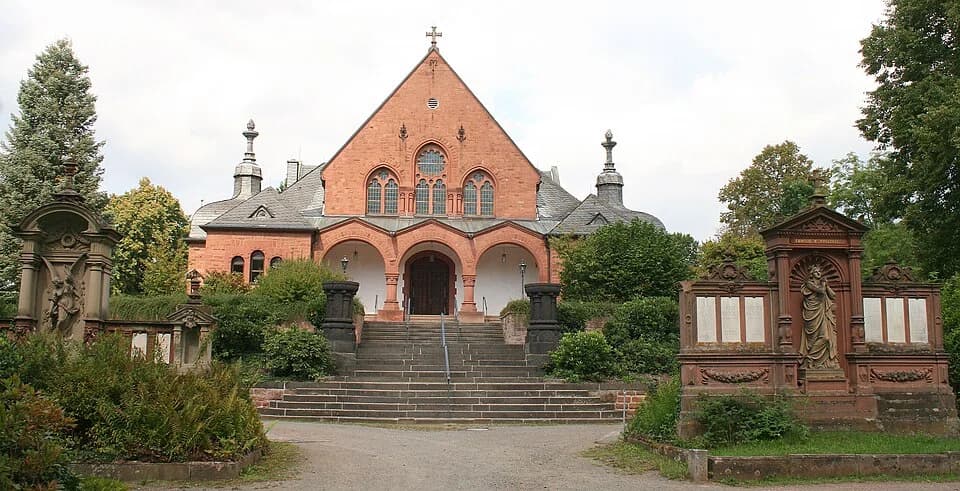
Hauptfriedhof Kaiserslautern
Kaiserslautern

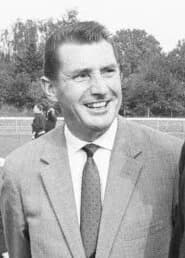
German association football player
1 candle
Emoria lights a memorial candle in remembrance of Fritz Walter.
Emoria
June 16th, 2026
0 Entries
Be the first to share a memory.
Fritz Walter (born 31 October 1920 in Kaiserslautern; died 17 June 2002 in Enkenbach-Alsenborn) was a German footballer. As captain of the 1954 World Cup-winning team, he became a central figure in German football. At the same time, almost his entire sporting life remained connected with 1. FC Kaiserslautern and the Betzenberg.
Walter grew up in Kaiserslautern and joined 1. FC Kaiserslautern as a child. From the city's street football he developed into a technically strong, alert and team-minded player. He played for FCK, interrupted by the Second World War, until 1959. He resisted offers from abroad and made the club his sporting home. With Kaiserslautern he became German champion in 1951 and 1953.
In 1940 Walter made his debut for the national team. The war interrupted his career. He became a soldier, played at times in military teams and was taken into Soviet captivity at the end of the war. The often-told story of his rescue in a camp in Romania shows how closely football and the experience of survival became connected in his memory. These years also explain why rainy weather later gained the nickname Fritz Walter weather: after a bout of malaria he coped less well with heat and was considered especially strong in cool, wet conditions.
National coach Sepp Herberger saw in Walter a player who could combine order and feeling. Walter was not a loud driver of others, but a playmaker who brought teammates into the game, recognised spaces and accepted responsibility. After German football returned to international competition, he became a key figure in the national team. His brother Ottmar also belonged to the group of players who travelled to Switzerland in 1954.
On 4 July 1954 Fritz Walter captained the German team against Hungary in Bern. The 3-2 victory in the World Cup final later became known as the Miracle of Bern. For many people in the Federal Republic, the title was more than a sporting success: it came in the early postwar years and became a moment of shared joy. Walter remained a reserved figure. His importance lay not only in the trophy, but in the way he represented team, club and country without loud self-display.
After his farewell match in 1959, Walter remained connected to football. He worked with the Sepp Herberger Foundation, supported young people and became an honorary citizen of Kaiserslautern and Rhineland-Palatinate. The stadium on the Betzenberg has carried his name since 1985. For Kaiserslautern he became not only its most successful player, but a figure of identification who connected sporting class with fairness and modesty.
Fritz Walter died in Enkenbach-Alsenborn on 17 June 2002. He was 81 years old. His name remains connected with 1. FC Kaiserslautern, the national team and the 1954 World Cup title, but also with an idea of football in which ability, comradeship and attitude belong together.
Fritz Walter wird in Kaiserslautern geboren.
Walter spielt erstmals für Deutschland und erzielt gegen Rumänien mehrere Tore.
Der 1. FC Kaiserslautern gewinnt das Endspiel um die deutsche Meisterschaft gegen Preußen Münster.
Fritz Walter führt die deutsche Mannschaft als Kapitän zum 3:2-Sieg gegen Ungarn.
Fritz Walter stirbt im Alter von 81 Jahren in Enkenbach-Alsenborn.
No obituary has been uploaded for this memorial page yet. If you are one of the loved ones and would like to upload one, you can register as the owner of this memorial page and add it afterward.
Kaiserslautern
Fritz Walter. Forever remembered.