RIF
August 14th, 2026
— Anonymous
Sonstige

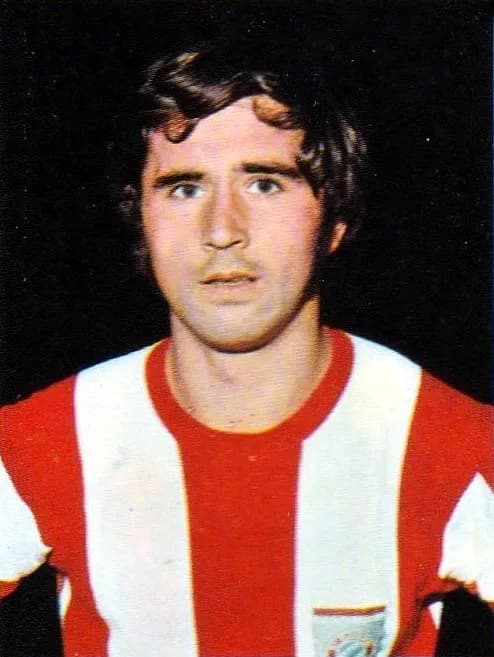
German association football player
7 candles
“Unvergessen. Einer unserer Größten ”
Gerhard Mertin
August 18th, 2026
“Ein Idol meiner Zeit”
Axel
August 17th, 2026
Emoria lights a memorial candle in remembrance of Gerd Müller.
Emoria
August 15th, 2026
“König des Strafraums, unvergessen! Danke Gerd”
Wolfgang Becker
August 14th, 2026

“Du bist unvergessen Gerd! 4Ever!”
Bernd H.
August 14th, 2026
“R.I.F.”
Bernd
August 14th, 2026
“Ruhe in Frieden Bomber der Nation du bist unvergessen”
Werner H.
August 14th, 2026
1 Entry
RIF
August 14th, 2026
— Anonymous
Sonstige
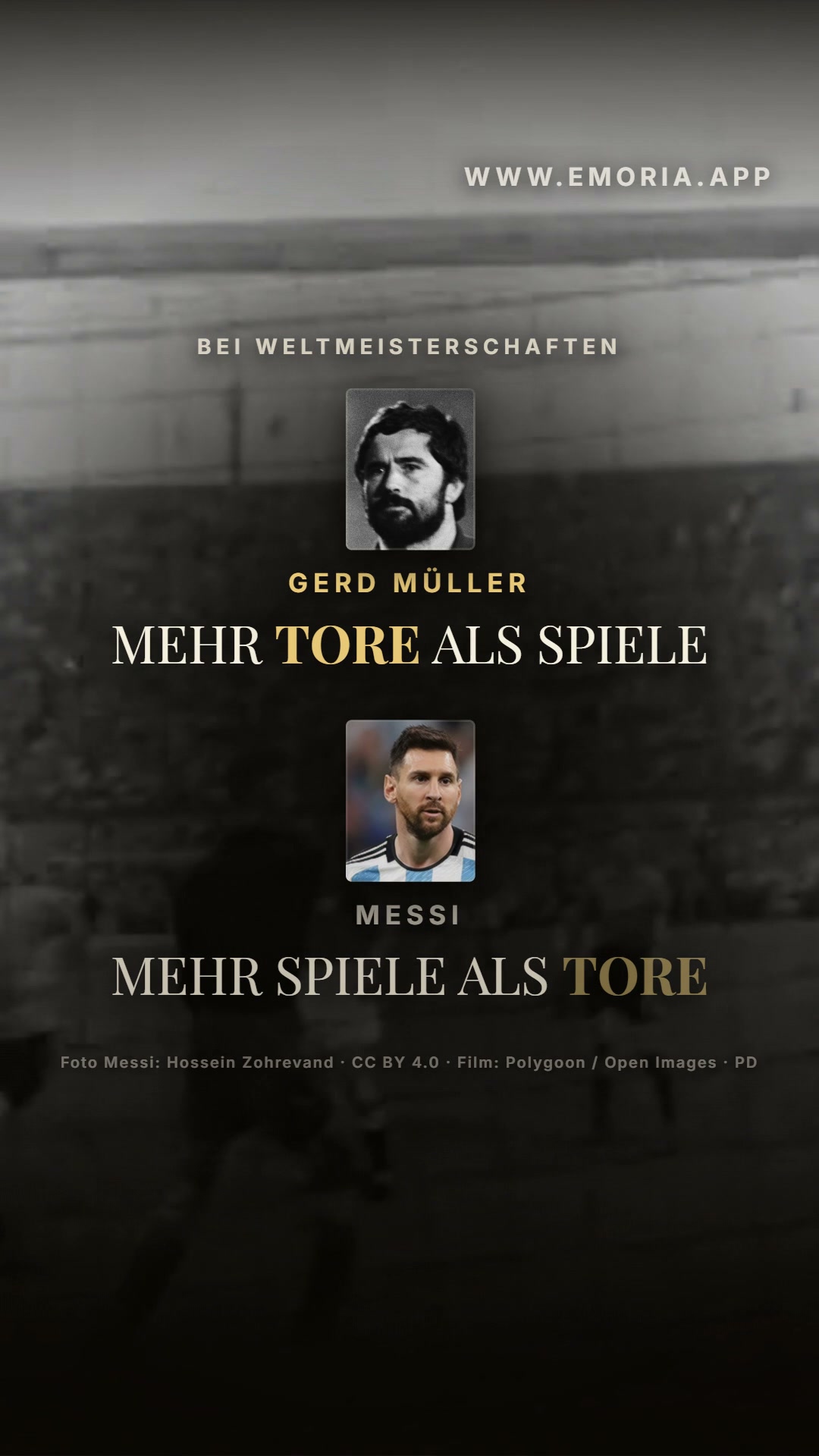
🕯️ Anniversary of death
Gerd Müller (born 3 November 1945 in Nördlingen; died 15 August 2021) was a German footballer and one of the greatest goalscorers in the history of the game. As a striker for FC Bayern Munich and the German national team, he shaped the 1960s and 1970s. He scored 365 Bundesliga goals in 427 matches, 68 goals in 62 internationals and the decisive goal in the 1974 World Cup final. His style was not elegant in the classical sense, but direct, explosive and almost unbelievably efficient.
Gerhard Müller grew up in Nördlingen and played for TSV 1861 Nördlingen. His extraordinary danger in front of goal was visible early. In 1964 he moved to FC Bayern Munich, then not yet the later German record champion. Together with players such as Franz Beckenbauer and Sepp Maier, Müller belonged to the generation that made Bayern great. His build was mocked at first, but in the penalty area he was quicker, more agile and mentally earlier to the ball than almost every opponent.
Müller’s strength lay close to goal. He needed little space and little time. He scored with his right foot, his left foot, his head, on the turn, while falling and from impossible angles. What looked easy was a rare mixture of anticipation, balance, acceleration and instinct. For Bayern he scored 566 goals in 607 competitive matches. In the Bundesliga, his mark of 365 goals remained the benchmark for every later striker.
With FC Bayern, Müller won four German championships, four German Cups, three European Cups, one European Cup Winners’ Cup and the Intercontinental Cup. These titles do not only describe a successful club, but a transformation in German football. Bayern changed during these years from a rising club into a European power. Müller was not decorative in that story; he was the most reliable source of goals.
For West Germany, too, Müller’s ratio was extraordinary: 68 goals in 62 international matches. At the 1970 World Cup in Mexico he finished as top scorer. In 1972 Germany won the European Championship; Müller scored twice in the final against the Soviet Union. On 7 July 1974 he became part of German football history for good. In the World Cup final in Munich, he scored the 2-1 winner against the Netherlands shortly before half-time. It was not his most beautiful goal, but it was his most important.
In 1970 Müller received the Ballon d’Or. His numbers still seem barely believable: 40 Bundesliga goals in the 1971/72 season, seven Bundesliga top-scorer titles, 14 World Cup goals, plus European and national titles in series. Yet the numbers explain only part of his meaning. Müller changed the idea of what a centre-forward could be. He was not a player of long routes, but of the final metres. Exactly there, he decided matches.
In 1979 Müller left Bayern and played in the United States for the Fort Lauderdale Strikers. After the end of his playing career he went through difficult years; later reports described depression and problems with alcohol. Former teammates and FC Bayern helped him find stability again. In 1992 he returned to the club and worked for many years as a youth and amateur coach. His experience and his closeness to the game therefore remained part of the club.
In 2015 it became public that Müller had Alzheimer’s disease. FC Bayern and his family asked for consideration at the time. On 15 August 2021 Gerd Müller died at the age of 75. Reactions from the football world showed how deep his traces were: at Bayern, in the national team and among people who remember goals not only as numbers, but as games, voices and images in the mind.
Gerd Müller’s legacy lies in an almost pure form of goalscoring. He did not make a grand gesture of his greatness. He was modest, often quiet, but on the pitch relentlessly precise. Without his goals, FC Bayern and the German national team of the 1970s would be told differently. Müller remains the measure for instinct, finishing and reliability in the penalty area: a player whose name still means that half a chance can become a goal.
Gerhard Müller wird in Nördlingen in Bayern geboren.
Die Bundesrepublik gewinnt die EURO 1972; Müller erzielt im Finale gegen die Sowjetunion zwei Tore.
Müller erzielt im WM-Finale gegen die Niederlande das entscheidende Tor zum 2:1.
Gerd Müller stirbt im Alter von 75 Jahren.
No obituary has been uploaded for this memorial page yet. If you are one of the loved ones and would like to upload one, you can register as the owner of this memorial page and add it afterward.
Gerd Müller. Forever remembered.