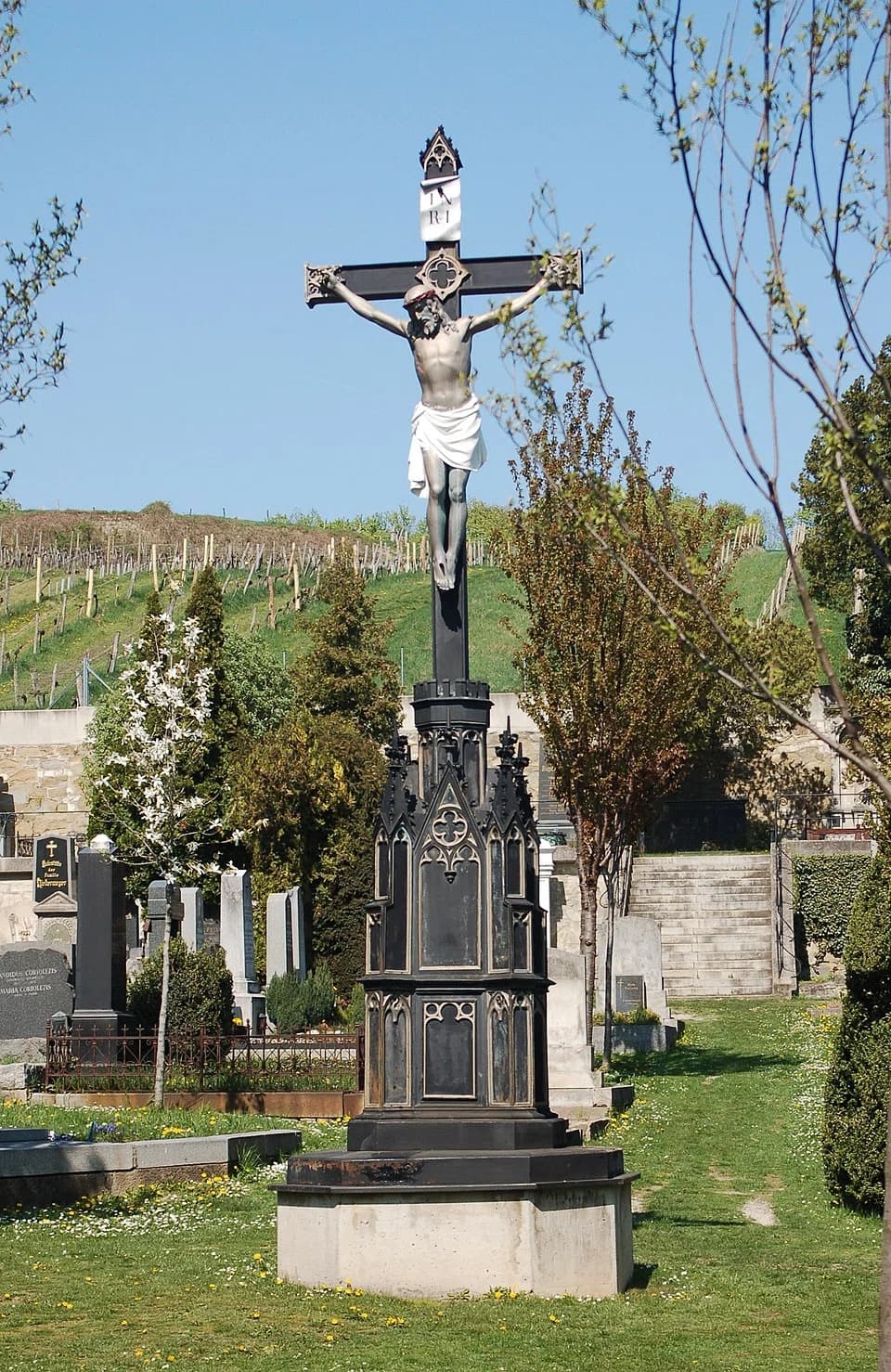
Heiligenstädter Friedhof
Döbling


Austrian former Formula 1 driver
1 candle
Emoria lights a memorial candle in remembrance of Niki Lauda.
Emoria
May 20th, 2026
0 Entries
46 memories

Mercedes-Benz 500 SL Rallye at Stars and Cars 2015; Driver: Niki Lauda

Museo Ferrari: Helmet of Niki Lauda, in the 1970s.

Grand Prix Zandvoort; Niki Lauda in actie.

Lauda at 1977 Dutch Grand Prix

Grand Prix Zandvoort; Niki Lauda op kop met daarachter Jacques Laffite die tweede werd.

niki lauda

Lauda McLaren MP4-2 1984 Dallas F1

Niki Lauda im Ferrari 312 T2 beim Training zum GP von Deutschland auf dem Nürburgring in der Südkehre

Lauda and Jarier at 1975 Dutch Grand Prix

Brands Hatch GP74 Druids Bend

Brand Hatch Druids GP 74

Niki Lauda (12), Patrick Depailler (4) en Emerson Fittipaldi (1) tijdens de training.
Andreas Nikolaus "Niki" Lauda (born 22 February 1949 in Vienna; died 20 May 2019 in Zurich) was one of Formula One's defining figures: a three-time World Champion, entrepreneur, pilot and public voice whose life is remembered far beyond motorsport. Lauda won the World Championship in 1975 and 1977 with Ferrari and in 1984 with McLaren. His meaning cannot be reduced to titles and statistics; it also lies in the clarity, discipline, courage and technical precision with which he approached racing, business and decisions.
Niki Lauda was born into a wealthy Viennese industrial family. A secure conventional career was expected of him; motor racing did not fit that plan. Lauda chose the track anyway. He began racing in the late 1960s and financed his climb with loans rather than waiting for family approval. Even this early stage reveals something essential about him: he made his own decisions, even when they carried financial and personal risk.

Lauda made his Formula One debut at the 1971 Austrian Grand Prix for March. After further steps with March and BRM, he joined Scuderia Ferrari in 1974. His sober technical eye became one of his strengths. Lauda did not build his reputation through gestures, but through preparation, setup work and clear feedback to engineers. In 1974 he took his first Grand Prix victory for Ferrari; in 1975 he became World Champion. For Ferrari, for Austria and for Formula One, he became a new reference point: controlled, precise and direct.
The 1975 season made Lauda the benchmark. He won the Drivers' Championship ahead of Emerson Fittipaldi and helped return Ferrari to the top. At the same time, a rivalry emerged that still shapes the way the sport remembers that era: Lauda and James Hunt represented very different temperaments, but also mutual respect. Lauda was seen as the cool analyst from Vienna, Hunt as the charismatic Briton with an attacking style. From that contrast came one of Formula One's best-known stories.

On 1 August 1976, Lauda's life changed at the German Grand Prix on the Nürburgring Nordschleife. His Ferrari left the track, struck a barrier and caught fire. Lauda suffered severe burns and lung damage after inhaling toxic fumes. Other drivers helped pull him from the burning car; in hospital, his condition became so serious that he was given the last rites. The accident shaped his health, his return to the sport and his later way of speaking about risk.
Only weeks after the crash, Lauda returned to Formula One at the Italian Grand Prix in Monza and finished fourth. The comeback was an extreme physical and mental test. At the season finale in Japan, he withdrew from the race because of dangerous rain conditions. James Hunt became World Champion by one point. That decision remains central to Lauda's legacy: he showed that courage does not mean accepting every risk. For Lauda, his own judgement mattered more than a title at any price.
In 1977 Lauda answered with sporting consistency. He became Formula One World Champion for the second time, again with Ferrari. After the fire, the injuries and the lost 1976 championship, this title was more than another line in the record book. It showed that Lauda could control races and a championship again by his own standards: concentration, routine and clear decisions.

After his Ferrari years, Lauda drove for Brabham, then retired from active racing in 1979 and turned more fully toward aviation. The distance from Formula One did not last. In 1982 he returned with McLaren. In 1984 he won his third World Championship by just 0.5 points over his team-mate Alain Prost. It remains the closest title finish in Formula One history. Lauda was not only a three-time champion; he was also the rare driver to win championships with both Ferrari and McLaren.

Lauda's Formula One record reflects a career that was never smooth and was extraordinary partly for that reason:
These numbers speak of success. They also speak of interruptions, returns and a driver who was rarely the loudest person in the room, but often the most exact.
Niki Lauda did not live in the shadow of his racing career after Formula One. Aviation became his second life's work. In 1979 he founded Lauda Air. Later ventures included the airline Niki and Laudamotion. Lauda was not merely a name on the fuselage; he took flying seriously and sat in the cockpit himself as a qualified pilot. After the crash of a Lauda Air aircraft in Thailand in 1991, he publicly and persistently searched for the technical cause and visibly accepted responsibility.
Lauda remained connected to Formula One after his driving career. He worked as a consultant for Ferrari, served as Jaguar team principal and, from 2012, held a leadership role at Mercedes. He became Non-Executive Chairman of the Formula One team, held a stake in it and helped persuade Lewis Hamilton to join. In the era that followed, Mercedes won serial titles and defined the turbo-hybrid years. Lauda remained an authority in the paddock: experienced, direct and instantly recognisable in his red cap.
Lauda's marriage to Marlene Knaus produced his sons Lukas and Mathias. In 2008 he married Birgit Wetzinger; the couple had twins, Max and Mia. The health consequences of the 1976 accident stayed with him for decades. He underwent kidney transplants and, in August 2018 in Vienna, a lung transplant that sources connect to the long-term effects of his injuries. On 20 May 2019, Niki Lauda died in Zurich at the age of 70. At his farewell in Vienna, companions, drivers, representatives of the sport and many others paid tribute to a man they saw as more than a racing driver.
Niki Lauda's public life brought together three world championships, entrepreneurship, aviation and a direct voice in motorsport. He did not romanticise motor racing; he spoke about risk, technology and responsibility with a clarity that made him credible. His red cap became a sign of his presence in the paddock; his life stands for discipline, judgement and the ability to continue after severe setbacks.

Andreas Nikolaus Lauda wird in Wien in eine wohlhabende Industriellenfamilie geboren.
Lauda startet beim Großen Preis von Österreich erstmals in der Formel 1.
Beim Saisonauftakt in Argentinien fährt Lauda sein erstes Formel-1-Rennen für die Scuderia Ferrari.
Lauda gewinnt mit Ferrari seinen ersten Formel-1-Weltmeistertitel.
Beim Großen Preis von Deutschland verunglückt Lauda schwer und erleidet Verbrennungen sowie Lungenschäden.
Nur wenige Wochen nach dem Unfall kehrt Lauda beim Großen Preis von Italien ins Cockpit zurück.
Mit Ferrari sichert sich Lauda seinen zweiten Weltmeistertitel.
Mit McLaren wird Lauda mit 0,5 Punkten Vorsprung auf Alain Prost zum dritten Mal Weltmeister.
Lauda wird zum Vorsitzenden des Aufsichtsratsgremiums des Mercedes-Formel-1-Teams berufen.
In Wien erhält Lauda eine Lungentransplantation, die mit den Spätfolgen seines Unfalls verbunden ist.
Niki Lauda stirbt im Alter von 70 Jahren in Zürich.
No obituary has been uploaded for this memorial page yet. If you are one of the loved ones and would like to upload one, you can register as the owner of this memorial page and add it afterward.
Döbling
Niki Lauda (née Andreas Nikolaus Lauda). Forever remembered.