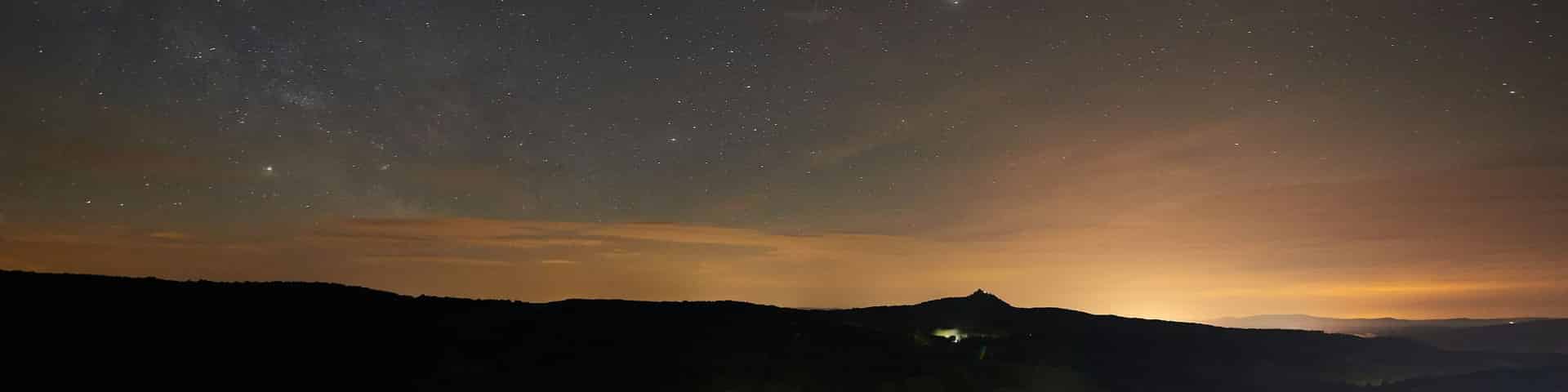
Château of Vauvenargues
Vauvenargues

Spanish painter and sculptor
1 candle
Emoria lights a memorial candle in remembrance of Pablo Picasso.
Emoria
April 8th, 2026
0 Entries
22 memories

Plaque Pablo Picasso, 9 rue Gay-Lussac, Paris 5

Picasso qga

Bust of Pablo Picasso

Amedeo Modigliani, c.1915, Portrait de Picasso, oil on cardboard, 43.2 x 26.7 cm

Portrait photograph of Pablo Picasso, 1908

The statue "Head of female" by Pablo Picasso in Halmstad, Sweden.

Picasso Museum, Málaga, Spain.

Near to Casa Natal de Pablo Ruiz Picasso

Picasso Signature

Памятник Пабло Пикассо на площади Мерсед в Малаге

Juan Gris - Portrait of Pablo Picasso - Google Art Project

Fundación Picasso, Casa Natal. Málaga.
Pablo Picasso (born 25 October 1881 in Málaga; died 8 April 1973 in Mougins) was a Spanish painter, draftsman, sculptor, printmaker, ceramicist and stage designer. He is one of the most influential artists of the twentieth century. Picasso changed not only individual motifs, but the idea of what a picture could do: bodies, space, perspective, material and style became mobile, contradictory and newly assembled.

Picasso was born Pablo Ruiz Picasso. His father, José Ruiz Blasco, was a painter and art teacher, so Picasso drew early and learned academic techniques. In 1895 the family moved to Barcelona, where Picasso studied at La Llotja art school and encountered an urban, politically and artistically active environment. In 1900 he first traveled to Paris. From then on, Spain, Catalonia and France were not separate worlds in his work, but a shifting field of experience.
At the beginning of the twentieth century Picasso quickly found very different tonal registers. The Blue Period shows poverty, loneliness, blindness, age and marginal figures in cool, muted colors. Later the paintings became warmer; in the Rose Period, circus performers, acrobats and theatrical figures came more strongly to the fore. These phases are more than color labels. They show how Picasso moved between compassion, staging, figure study and formal search.
In 1907 Picasso painted Les Demoiselles d'Avignon, a work that sharply broke with traditional beauty, perspective and the representation of the body. In the following years he developed Cubism with Georges Braque. Objects and figures were no longer shown from one stable viewpoint, but broken into planes, edges and simultaneous views. Cubism was not merely a stylistic fashion, but a new pictorial logic. It asked how seeing works when an object cannot be fully grasped in a single instant.

Picasso did not remain with Cubism. He worked with collage, printmaking, sculpture, ceramics, stage design and monumental formats. After the First World War he also took up classical forms without simply returning to the past. This mobility makes his career hard to reduce to one formula. Picasso could be graphically strict, playful, aggressive, tender, monumental or spare. That capacity for change made him a lasting point of reference for collectors, museums, critics and other artists.
In 1937 Picasso made Guernica for the Spanish pavilion at the Paris World's Fair. The large painting responded to the bombing of the Basque town of Guernica during the Spanish Civil War. Without painting a naturalistic battle scene, Picasso compressed pain, fear, violence and destruction into broken figures, animals, cries and hard black-and-white contrasts. The work later became one of the best-known antiwar images of the twentieth century. Picasso's political stance was not limited to this painting; after the Second World War he joined the French Communist Party, while remaining as an artist independent and difficult to classify.

Picasso's private life was closely connected with his work, but it cannot be told only as artistic inspiration. His relationships with women, including Fernande Olivier, Olga Khokhlova, Marie-Thérèse Walter, Dora Maar, Françoise Gilot and Jacqueline Roque, were often marked by deep inequality, dependence and harm. Many of these women appear in his work, but they were not merely motifs. A present-day account has to hold Picasso's artistic force and the troubling power relations of his life side by side.
Pablo Picasso died in Mougins in southern France on 8 April 1973. He was 91 years old. His work remained powerful because it does not tell a linear history of style, but a sequence of breaks: academic virtuosity, the Blue Period, the Rose Period, Cubism, classicism, political monumentality and a late, often fierce old-age work. Picasso did not invent the twentieth century by himself, but he played a decisive part in making modern art visible as permanent change.
Pablo Ruiz Picasso wird in Málaga in Andalusien geboren.
Picasso zieht mit seiner Familie nach Barcelona und setzt dort seine künstlerische Ausbildung fort.
Picasso reist erstmals nach Paris, wo die Kunstszene seine Arbeit dauerhaft prägt.
In der Blauen Periode entstehen melancholische, sozial aufgeladene Bilder in kühlen Farbtönen.
Picasso lässt sich in Paris nieder; Motive aus Zirkus, Theater und Bohème gewinnen an Bedeutung.
Mit Les Demoiselles d'Avignon bereitet Picasso eine radikale Veränderung von Form, Körper und Bildraum vor.
Picasso und Georges Braque entwickeln in enger Zusammenarbeit den Kubismus.
Picasso heiratet die Tänzerin Olga Khokhlova; in den folgenden Jahren entstehen auch neoklassizistische Werke.
Picasso vollendet Guernica als Reaktion auf die Bombardierung der baskischen Stadt im Spanischen Bürgerkrieg.
Picasso heiratet Jacqueline Roque, die in seinem späten Werk häufig erscheint.
Pablo Picasso stirbt im Alter von 91 Jahren in Mougins in Südfrankreich.
No obituary has been uploaded for this memorial page yet. If you are one of the loved ones and would like to upload one, you can register as the owner of this memorial page and add it afterward.
Vauvenargues
Pablo Picasso (née Pablo Diego José Francisco de Paula Juan Nepomuceno María de los Remedios Cipriano de la Santísima Trinidad Ruiz y Picasso). Forever remembered.