
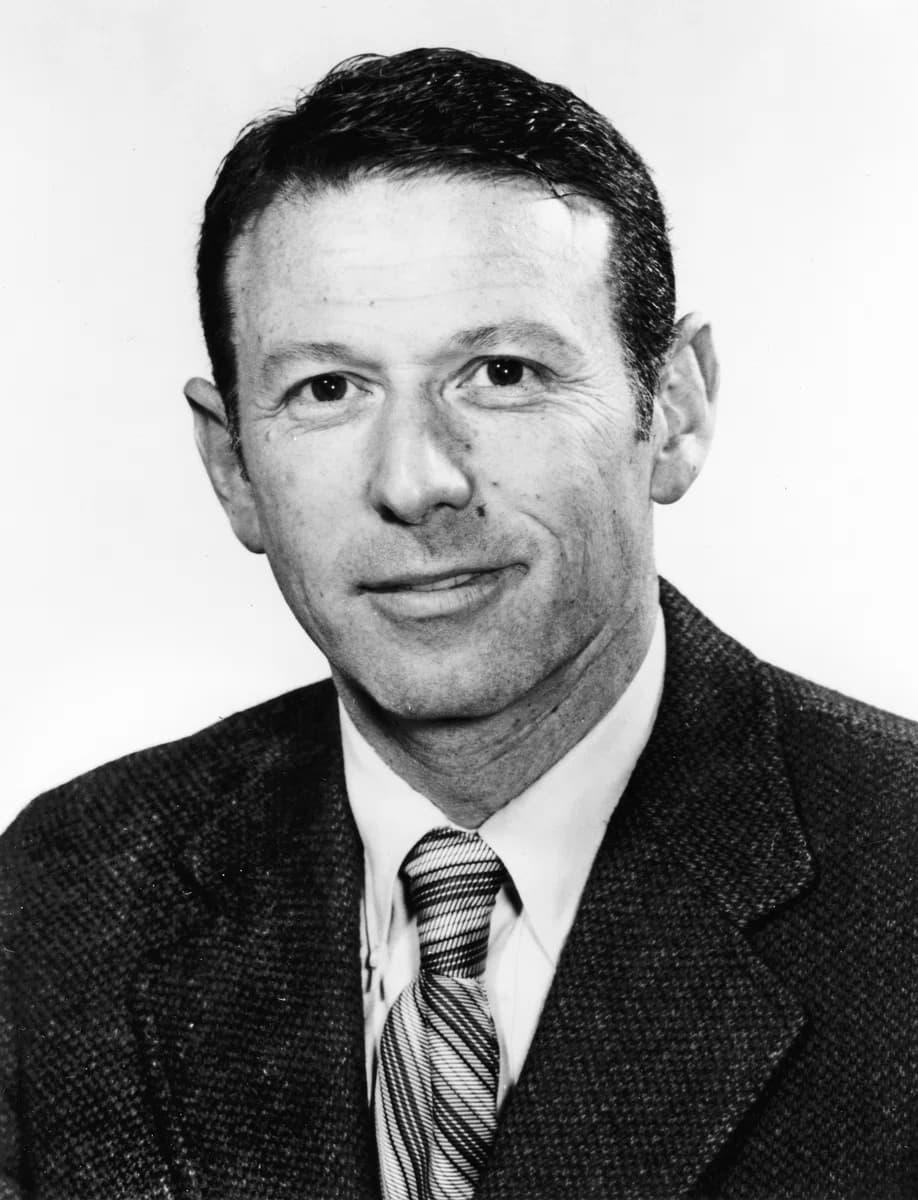
Memorial Page for Paul Berg
American biochemist, Professor emeritus at Stanford University & Nobel laureate in Chemistry
Memorial Candles
1 candle
Emoria lights a memorial candle in remembrance of Paul Berg.
Emoria
June 21st, 2026
Condolence Book
0 Entries
Memories
No memories shared yet
Be the first to share a memory.
Biography
Paul Berg (born 30 June 1926 in New York City; died 15 February 2023 in Stanford, California) was an American biochemist. He is one of the central figures of molecular biology because his work on recombinant DNA showed that genetic material from different organisms could be deliberately joined. In 1980 he received half of the Nobel Prize in Chemistry. Berg stands not only for a technical breakthrough, but also for the early question of how research should handle new biological possibilities responsibly.
Education and Stanford
Berg grew up in New York and developed an early interest in experimental science. After service in the U.S. Navy, he studied at Pennsylvania State University and earned his doctorate at Western Reserve University. Further research positions took him to Copenhagen and to Washington University in St. Louis. In 1959 he joined the Stanford University School of Medicine, where he spent decades researching, teaching and helping shape the development of biochemistry.
Recombinant DNA
His scientific breakthrough grew out of the question of how genes could be isolated, joined and studied in cells. In work with the tumor virus SV40, Berg's group succeeded in 1972 in inserting bacterial DNA into viral DNA. Such molecules became known as hybrid or recombinant DNA. This work opened a new approach to biology: genes could no longer only be observed, but deliberately combined and studied in their function.
Opportunity and responsibility
Berg saw early that the new technique created not only possibilities, but also risks and social questions. In the mid-1970s he was among the researchers who called for a cautious pause and clear safety rules for certain experiments. From 24 to 27 February 1975, scientists, lawyers and other experts met at Asilomar in California. The conference became an important example of a research community developing standards before a technology was widely used.
Nobel Prize
On 14 October 1980 the Royal Swedish Academy of Sciences announced that Paul Berg would receive half of the Nobel Prize in Chemistry. He was honored for fundamental studies of the biochemistry of nucleic acids, especially in relation to recombinant DNA. The other half of the prize was shared by Walter Gilbert and Frederick Sanger for work on determining base sequences. Together, the award marked a moment when modern gene research and DNA technology moved visibly into the center of chemistry and biology.
Later years and legacy
After the Nobel Prize, Berg remained active at Stanford and continued to engage with science education, research policy and the responsible use of biomedical technologies. He died on the Stanford University campus on 15 February 2023. His importance lies in two closely connected achievements: he helped create the tools of genetic engineering, and he took seriously the question of what rules such tools require. That made Paul Berg a key figure for molecular biology, biotechnology and scientific responsibility.
Life Events
4 EventsGeboren in New York
1926Paul Berg wird in New York City geboren.
Asilomar-Konferenz beginnt
1975Die von Berg mitorganisierte Konferenz zu rekombinanter DNA beginnt in Pacific Grove, Kalifornien.
Nobelpreis für Chemie
1980Die Königlich Schwedische Akademie der Wissenschaften gibt Bergs Auszeichnung mit dem Nobelpreis für Chemie bekannt.
Gestorben in Stanford
2023Paul Berg stirbt im Alter von 96 Jahren auf dem Campus der Stanford University.
Obituary
No obituary yet
No obituary has been uploaded for this memorial page yet. If you are one of the loved ones and would like to upload one, you can register as the owner of this memorial page and add it afterward.
Paul Berg. Forever remembered.