
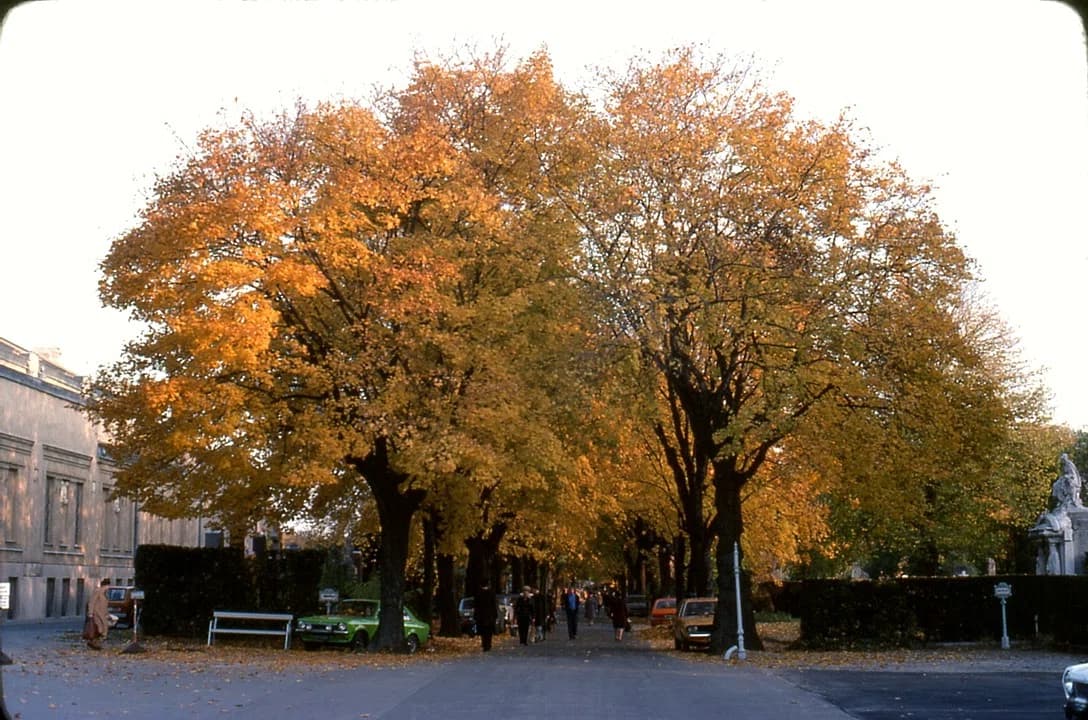
Wiener Zentralfriedhof
Simmeringer Hauptstraße, Kaiserebersdorf
Austrian diplomat and politician
1 candle

Emoria lights a memorial candle in remembrance of Thomas Klestil.
Emoria
July 6th, 2026
0 Entries
Be the first to share a memory.
Thomas Klestil (born 4 November 1932 in Vienna; died 6 July 2004 in Vienna) was an Austrian diplomat and politician. From 1992 until his death he served as Federal President of the Republic of Austria. His presidency fell into a period in which Austria redefined its international role after the Cold War, EU accession and debates over its responsibility for the Nazi past.
Klestil came from Vienna and studied at the University of World Trade. After receiving his doctorate he entered public service. His career took him to the OECD in Paris, to the Austrian embassy in Washington, to the Federal Chancellery and later to important foreign postings. He was consul general in Los Angeles, Austria's ambassador to the United Nations in New York and ambassador to the United States. In 1987 he returned to Vienna as secretary general for foreign affairs.
In 1992 Klestil ran for president as a candidate supported by the Austrian People's Party. After the Kurt Waldheim era, many people at home and abroad expected a head of state who would open Austria more strongly to the world. Klestil won the runoff election on 24 May 1992 and took the oath of office on 8 July. He brought diplomatic experience to an office that is constitutionally limited, but carries weight through symbols, speeches and international representation.
One focus of his presidency was Austria's relationship to the Nazi period. Klestil repeatedly spoke about the shared responsibility of Austrians for Nazi crimes. This became especially clear on 15 November 1994 in Jerusalem, when he addressed the Knesset. The speech stood for an attempt to strengthen international trust in Austria not through avoidance, but through public recognition of historical responsibility.
During Klestil's term Austria joined the European Union. He supported an active European role for the country and also sought more foreign-policy influence for the presidency than Austria's constitution allowed in practice. After the 1999 parliamentary election he entered a severe conflict over the formation of an ÖVP-FPÖ government under Wolfgang Schüssel. Klestil could not prevent the coalition, but insisted on a declaration committing the government to democracy, human rights and Europe.
Klestil was elected to a second term in 1998. The following years were shaped by European debates, international criticism of Austria and recurring questions about the limits of presidential influence. He remained a president with a strong foreign-policy self-understanding. That tension made his term unusual: he did not only represent Austria ceremonially, but also tried to explain the republic politically and morally to the outside world.
Thomas Klestil died at Vienna General Hospital on 6 July 2004, two days before the regular end of his second term. He was 71 years old. His presidency remains connected with the attempt to strengthen Austria's international credibility, especially where history, diplomacy and democratic responsibility met.
Thomas Klestil wird in Wien geboren.
Klestil gewinnt die Stichwahl der österreichischen Bundespräsidentenwahl.
Thomas Klestil legt vor der Bundesversammlung den Amtseid als Bundespräsident ab.
In Jerusalem spricht Klestil vor der Knesset über Österreichs Verantwortung für NS-Verbrechen.
Klestil wird bei der Bundespräsidentenwahl für eine zweite Amtszeit bestätigt.
Thomas Klestil stirbt wenige Tage vor dem Ende seiner Amtszeit in Wien.
No obituary has been uploaded for this memorial page yet. If you are one of the loved ones and would like to upload one, you can register as the owner of this memorial page and add it afterward.
Simmeringer Hauptstraße, Kaiserebersdorf
Thomas Klestil. Forever remembered.