

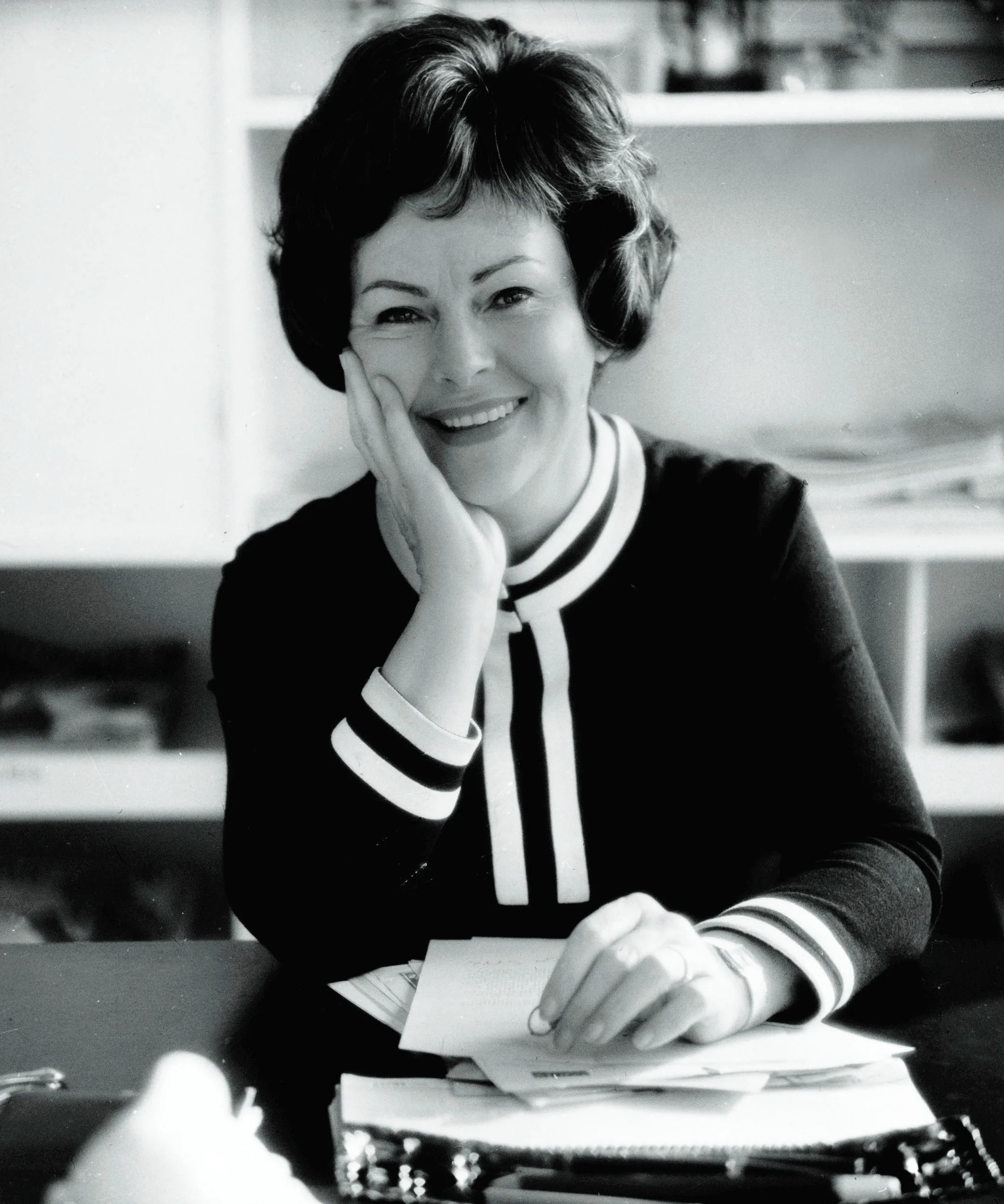
Photo: 📷 Unknown - Hubert Burda Media
Biography of Aenne Burda
28. Jul 1909 – 3. Nov 2005(96 years)Died in:Offenburg, Ortenaukreis
German magazine publisher
0
Candles
0
Condolences
3
Family Tree
Biography
Awards(4)
Spouse(2)
Franz Burda sr.Franz Burda
Aenne Burda (born 28 July 1909 in Offenburg; died 3 November 2005 in Offenburg), born Anna Magdalene Lemminger, was a German publisher and entrepreneur. With Burda Moden she turned fashion, sewing patterns and the idea of self-made clothing into an international media business. Her publishing house grew out of postwar Germany and reached women far beyond the country.
Offenburg and the path into publishing
Aenne Burda grew up in Offenburg. In 1931 she married Franz Burda, who ran a printing and publishing business. After the Second World War, private and business conflict opened an entrepreneurial opportunity of her own: Aenne Burda took over a small fashion publisher in Lahr. From that starting point she did not build a mere extension of the family company, but a distinct publishing brand with a clear readership and its own economic weight.
Burda Moden
The success of Burda Moden did not lie only in fashion photography. The decisive element was the sewing pattern. It gave readers the ability to make, adapt and alter clothing themselves. In postwar Germany this joined practical need with the desire for elegance, independence and participation. Aenne Burda understood that mixture very precisely: the magazine had to look beautiful, but it also had to work. Fashion was therefore not only shown; it was translated into homes, sewing rooms and workshops.
Postwar entrepreneur
Burda built her company with toughness, clear leadership and a strong sense of markets. She paid down debts, increased circulation and turned a regional publisher into an international business. Her public manner could be direct and blunt. That side belongs to her image as well: she was not a decorative publisher's wife, but an entrepreneur who wanted control, understood numbers and knew the value of her own work.
International reach
From the 1960s onward, Burda Moden became increasingly international. A particularly visible step came in 1987 with the Russian-language edition in the Soviet Union. For many readers the magazine meant access to images, patterns and ideas of consumption that were not part of everyday life. Its strength rested on a simple but powerful principle: a magazine could do more than report; it could enable a concrete action.
Farewell
Aenne Burda withdrew from day-to-day management in 1994, but remained connected to the company. She died in Offenburg on 3 November 2005. She was 96 years old. Her life's work stands for a part of German postwar history in which consumption, handwork, women's self-organization and media business were closely connected.
Life Events
5 Events1909
Born in Offenburg, Ortenaukreis
1974
Knight Commander's Cross of the Order of Merit of the Federal Republic of Germany
1985
Order of Merit of Baden-Württemberg
1990
Order of Karl Valentin
2005