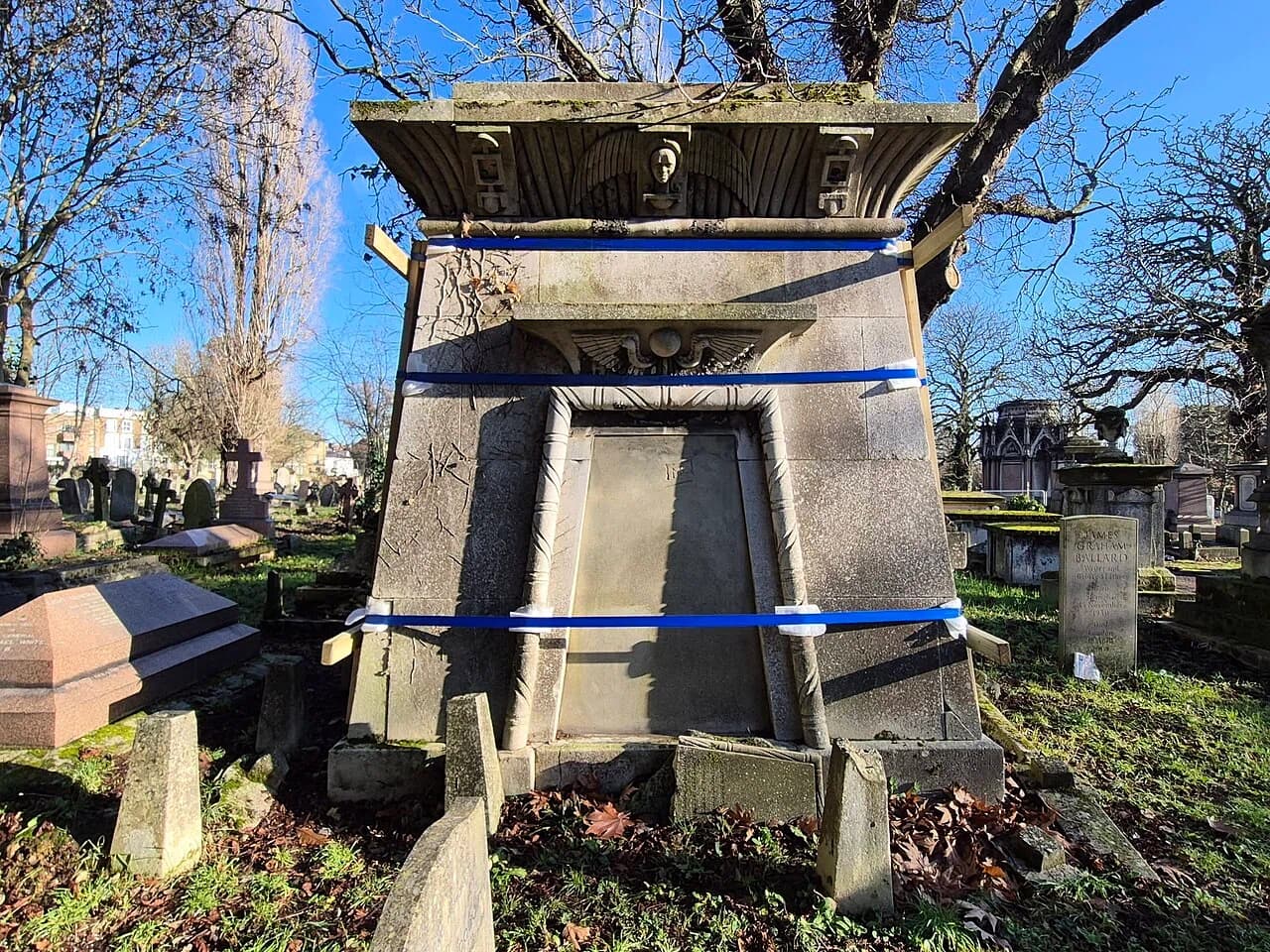
Kensal Green Cemetery
England

British singer, songwriter and musician, frontman of the rock band Queen
0 Entries
17 memories

West London Crematorium
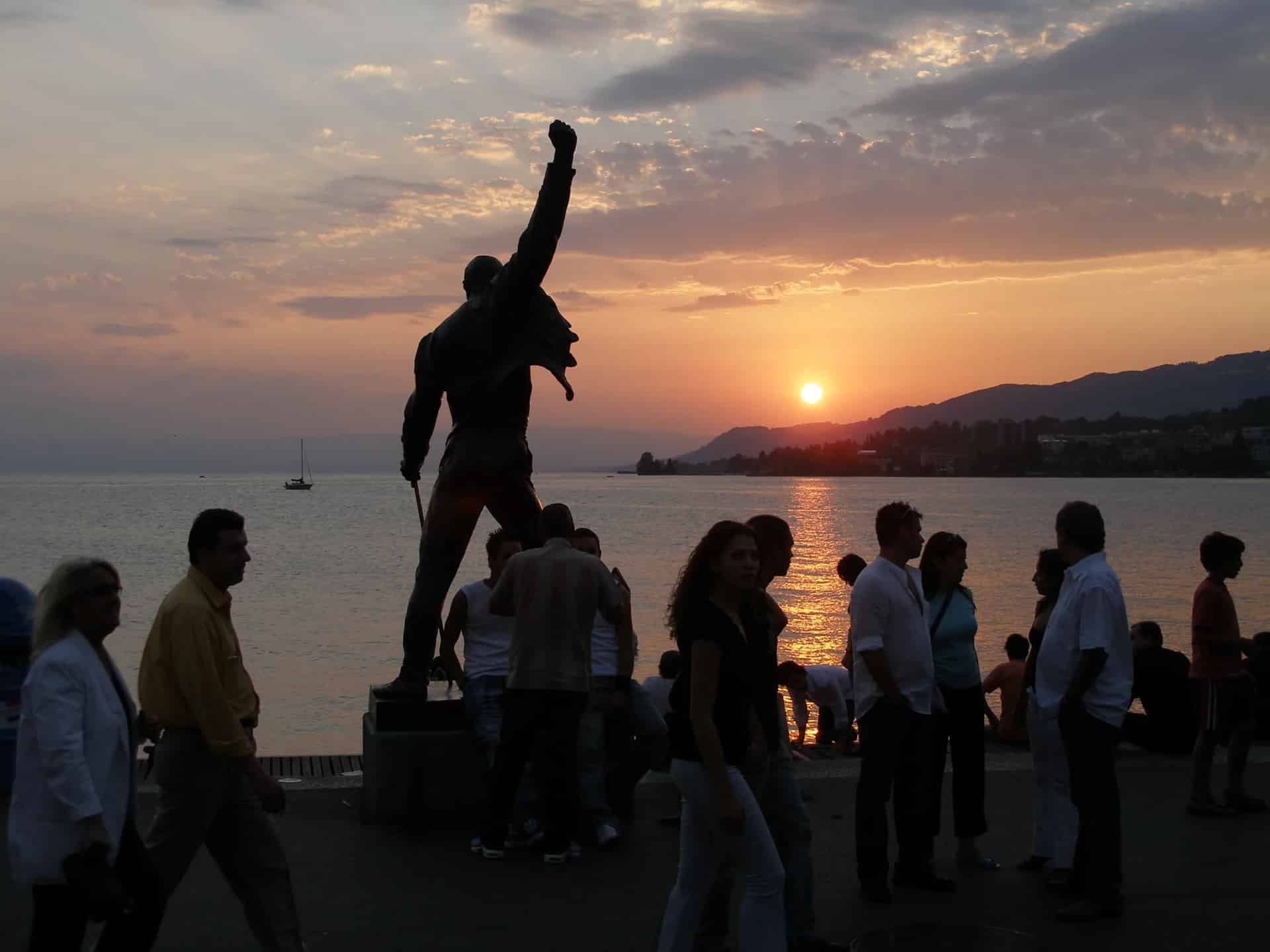
![Freddie Mercury Statue in Montreux, Switzerland. According to [1]](/_next/image?url=%2Fapi%2Fmedia%3Fkey%3Dmedia%252Fcommons%252Ffamouspersonimage%252Fcmljdnzsd020rubto47qikeo0_640w.webp%26sig%3D34b4829933a57b5fd6a6fdb4cf234e4f8134d1039ff252edea2e2d4338df8ff2%26exp%3D1790134318&w=1920&q=75)
Freddie Mercury Statue in Montreux, Switzerland. According to [1]

Freddie Mercury in New Haven, CT at a WPLR Show.

Freddie Mercury in New Haven, CT at a WPLR Show.

The house where Freddie Mercury was born — in Stone Town, Zanzibar City, Zanzibar Archipelago.

Bronze statue of Freddie Mercury without tourists.

West London Crematorium

West Chapel, West London Crematorium, London

The place at the West London Crematorium where Freddie Mercury wanted to have his grave.

The former house of Freddie Mercury in Kensington (backside)

The former house of Freddie Mercury in Kensington

Street-sign where Freddie Mercury used to live
Freddie Mercury, born Farrokh Bulsara on 5 September 1946 in Stone Town, Zanzibar, and died 24 November 1991 in Kensington, London, was a British singer, songwriter, pianist and frontman of Queen. His voice, theatrical instinct, physical stage presence and songs such as Bohemian Rhapsody, Somebody to Love, We Are the Champions and Crazy Little Thing Called Love made him one of the best-known figures in rock and pop history.

Mercury was born to Bomi and Jer Bulsara in a Parsi Indian family. Much of his childhood was spent in India, where he attended St. Peter's School in Panchgani and learned piano. In 1964 the family moved to England. In Middlesex and London, Farrokh Bulsara gradually became a consciously shaped artist: he studied graphic design at Ealing College of Art, sang in bands and found people in the London music scene who were willing to think on a similarly large scale.

When Mercury met Brian May and Roger Taylor, their band Smile already existed as a starting point. In 1970 it became Queen; in 1971 John Deacon joined. Mercury brought not only a voice, but a name, a logo, a visual instinct and the willingness to make rock music larger, more theatrical and riskier. The debut album appeared in 1973, and Sheer Heart Attack brought wider recognition in 1974. Queen soon sounded like a band in which four musicians had very different ideas and Mercury could turn them into one stage presence.
In 1975 Bohemian Rhapsody appeared, a nearly six-minute mixture of ballad, operatic parody, hard rock and studio craft. Its success was far from obvious. That is why it reveals so much about Mercury: he trusted exaggeration, rupture and melody without underestimating the audience. A Night at the Opera made Queen visible around the world. In the following years came anthems such as We Will Rock You and We Are the Champions, songs that turned concerts almost into public rituals.
Mercury's stage presence was not simply eccentricity. He could read large spaces: when an arm, a look, a call-and-response or a short walk across the stage was enough to carry tens of thousands of people with him. In the late 1970s and early 1980s Queen became a stadium band, toured internationally and played to huge audiences in South America in 1981. The force lay in the connection between precision and play: Mercury seemed free, but that freedom was highly controlled.
On 13 July 1985 Queen performed at the Live Aid concert at London's Wembley Stadium. The set lasted only about twenty minutes, but became one of the most famous concert moments in rock history. Mercury made brevity feel concentrated: Bohemian Rhapsody, Radio Ga Ga, Hammer to Fall, Crazy Little Thing Called Love, We Will Rock You and We Are the Champions did not merely follow one another; they felt like a single, carefully built arc.
Mercury also searched for other forms outside Queen. Mr. Bad Guy appeared in 1985. With The Great Pretender in 1987 he knowingly played with mask, pose and self-irony. Especially important was his collaboration with Montserrat Caballé: Barcelona connected his love of big voice, pathos and opera with pop. At the same time Queen remained active. The Magic Tour ended at Knebworth in 1986; it was the last Queen concert with Mercury. Later he continued to work on recordings in Montreux, even as his health declined.
Mercury's life came under increasing observation, yet he did not turn his private relationships or sexual identity into a public obligation to explain himself. In a tabloid culture that often confused curiosity with entitlement, that restraint was itself a form of control. Mercury was an artist who played with masks, and a person who retained the right to his own boundaries. That belongs to his image just as much as the grand gestures on stage.

On 23 November 1991 Freddie Mercury publicly confirmed that he had AIDS. One day later he died at his home in Kensington of AIDS-related pneumonia. He was 45 years old. In 1992 musicians and fans gathered at Wembley Stadium for the Freddie Mercury Tribute Concert; it led to the Mercury Phoenix Trust, which continues to support HIV and AIDS projects. Mercury's afterlife is not only a matter of record sales or rankings. It lies in the rare combination of voice, courage of form, vulnerability, humour and the feeling that one person can make a stage larger than it was before.
Farrokh Bulsara, später bekannt als Freddie Mercury, wird auf Sansibar geboren.
Bulsara besucht die St. Peter's School in Panchgani und erhält früh Klavierunterricht.
Die Familie Bulsara zieht nach Middlesex; Freddie studiert später Grafikdesign am Ealing College of Art.
Freddie Mercury beendet seine Ausbildung am Ealing College of Art und bewegt sich in der Londoner Musikszene.
Queen tritt erstmals unter diesem Namen in Truro, Cornwall, auf.
Mit John Deacon am Bass ist die langjährige Queen-Besetzung mit Mercury, Brian May und Roger Taylor vollständig.
Queen veröffentlicht ihr erstes Album und geht auf die erste größere UK-Tour.
Sheer Heart Attack macht Queen international sichtbar und bereitet den Sprung zum Weltstar-Status vor.
Die von Mercury geschriebene Single erscheint und wird zu einem der bekanntesten Songs von Queen.
Queen veröffentlicht das Album mit We Will Rock You und We Are the Champions.
Mit The Game erreicht Queen erneut ein großes internationales Publikum; Another One Bites the Dust wird ein US-Hit.
Queen spielt in Brasilien vor riesigen Publikumszahlen und festigt den Ruf als Stadionband.
Mercury veröffentlicht sein erstes Soloalbum, während Queen weiter aktiv bleibt.
Queen spielt beim Live-Aid-Konzert in London einen der berühmtesten Kurzauftritte der Rockgeschichte.
Queen beendet die Magic Tour im Knebworth Park; es bleibt der letzte Queen-Liveauftritt mit Freddie Mercury.
Das gemeinsame Album mit Montserrat Caballé erscheint und verbindet Rock, Pop und Oper.
Queen veröffentlicht Innuendo, das letzte zu Mercurys Lebzeiten erschienene Studioalbum der Band.
Mercury bestätigt öffentlich, dass er an AIDS erkrankt ist.
Freddie Mercury stirbt im Alter von 45 Jahren in seinem Haus in London.
Das Freddie Mercury Tribute Concert erinnert an ihn und führt zur Gründung des Mercury Phoenix Trust.
No obituary has been uploaded for this memorial page yet. If you are one of the loved ones and would like to upload one, you can register as the owner of this memorial page and add it afterward.
England
Freddie Mercury. Forever remembered.