Memorial Page for Georg Baselitz (née Hans-Georg Kern)
German artist (born 1938)
Memorial Candles
4 candles

No message
Ferdinand
May 26th, 2026

No message
Maximilian
May 8th, 2026
“Deine Werke werden nie vergessen sein!”
Markus F.
May 8th, 2026

Emoria lights a memorial candle in remembrance of Georg Baselitz.
Emoria
April 30th, 2026
Condolence Book
0 Entries
Memories
7 memories

Untitled sculpture by Georg Baselitz

Orangenesser II, óleo sobre tela de 1981 de Georg Baselitz, na exposição "Capturing The Moment", na Tate Modern

Georg Baselitz: Yellow Song (2013, Bronze patiniert, Standort: Museum Würth 2, Künzelsau)

Georg Baselitz: BDM Gruppe (2012, Bronze patiniert, Standort: Museum Würth 2, Künzelsau)

Georg Baselitz: BDM Gruppe (2012, Bronze patiniert, Standort: Museum Würth 2, Künzelsau)

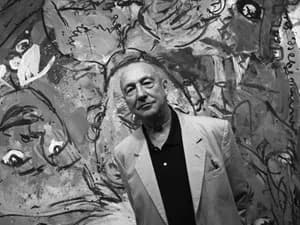
Valokuva Georg Baselitzista Helsingin taidemuseossa 15.4.2010

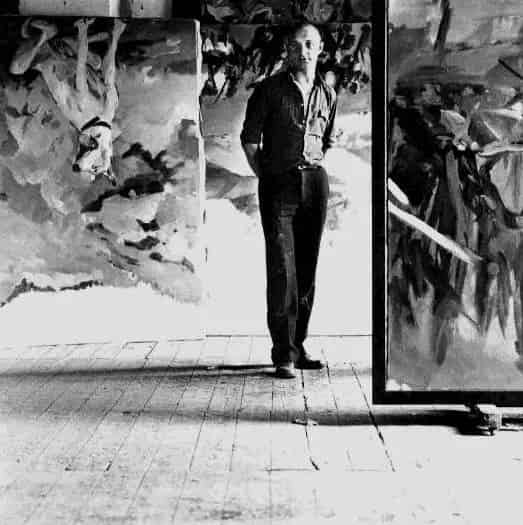
Georg Baselitz photographed by Lothar Wolleh, Mülheim, 1971
Biography
Georg Baselitz (born Hans-Georg Kern on 23 January 1938 in Deutschbaselitz; died 30 April 2026) was a German-Austrian painter, printmaker and sculptor. He became internationally known for expressive figures, roughly worked sculptures and, above all, for paintings whose motifs he turned upside down from 1969 onward. This inversion was not a simple effect, but a way to set figuration and abstraction against each other.

Origins and training
Baselitz grew up in Saxony, in a landscape marked by National Socialism, war and the postwar years. In 1956 he began studying art in East Berlin, but was expelled after a short time. In 1957 he went to West Berlin and continued his training at the Academy of Fine Arts. He took the artist name Baselitz from his birthplace, Deutschbaselitz. From the beginning, he did not seek a smooth postwar modernism, but a painting that made rupture, violence, physicality and German history visible.
Scandal and early paintings
His first solo exhibition in Berlin in 1963 became a scandal when police confiscated two works for alleged obscenity. In the following years he created the so-called Heroes and New Types paintings: injured, staggering figures that do not triumph, but appear damaged. Baselitz set this language against the idea of an unburdened postwar art. His figures looked rough, large, fragmented and deliberately unreconciled.
Paintings upside down
In 1969 Baselitz began to paint and show motifs upside down. What mattered was that he did not simply rotate finished works; he composed them in the inverted orientation from the start. The motif remained recognizable, but lost its narrative obviousness. Viewers see subject, painted surface, color, gesture and disturbance at the same time. This method became his best-known sign, but it was more than a trademark: it forced a new look at the relation between image and meaning.
Sculpture, documenta and international effect
Baselitz also worked as a printmaker and sculptor. In 1980 he showed a roughly hewn wooden sculpture in the German Pavilion at the Venice Biennale and carried the unrest of his painting into space. He appeared several times at documenta; at the same time, his appearances and decisions remained controversial. His art repeatedly circled around memory, violence, national symbols and the question of how German art could appear after 1945. Later came international retrospectives, high market prices and awards such as the Praemium Imperiale.

Late years and criticism
Even in old age, Baselitz continued working and exhibiting internationally. His importance for postwar art is considerable, but his public presence remained contradictory. Early on, his art provoked institutions and audiences; later, statements in interviews, especially about women artists, also drew criticism. His work stands not only for formal renewal, but also for the difficult role of an artist who sought contradiction and provoked contradiction himself.

Farewell
Georg Baselitz died on 30 April 2026 at the age of 88. His paintings and sculptures keep open the tension between figure and disturbance, memory and material, representation and an attack on representation. The upside-down motifs became his best-known sign, but their effect lay in making familiar images uncertain.
Life Events
5 EventsGeboren in Deutschbaselitz
1938Hans-Georg Kern, später bekannt als Georg Baselitz, wird in Deutschbaselitz in Sachsen geboren.
documenta 5 in Kassel
1972Die documenta 5 eröffnet in Kassel; Baselitz gehört zu den beteiligten Künstlern.
Deutscher Pavillon in Venedig
1980Die 39. Biennale von Venedig beginnt; Baselitz ist Teil des deutschen Beitrags und zeigt Modell für eine Skulptur.
Died
2026Abschied mit 88 Jahren
2026Georg Baselitz stirbt im Alter von 88 Jahren.
Obituary
No obituary yet
No obituary has been uploaded for this memorial page yet. If you are one of the loved ones and would like to upload one, you can register as the owner of this memorial page and add it afterward.
Georg Baselitz (née Hans-Georg Kern). Forever remembered.