
Memorial Page for Gerald Ford (née Leslie Lynch King Jr.)
President of the United States from 1974 to 1977
Memorial Candles
1 candle
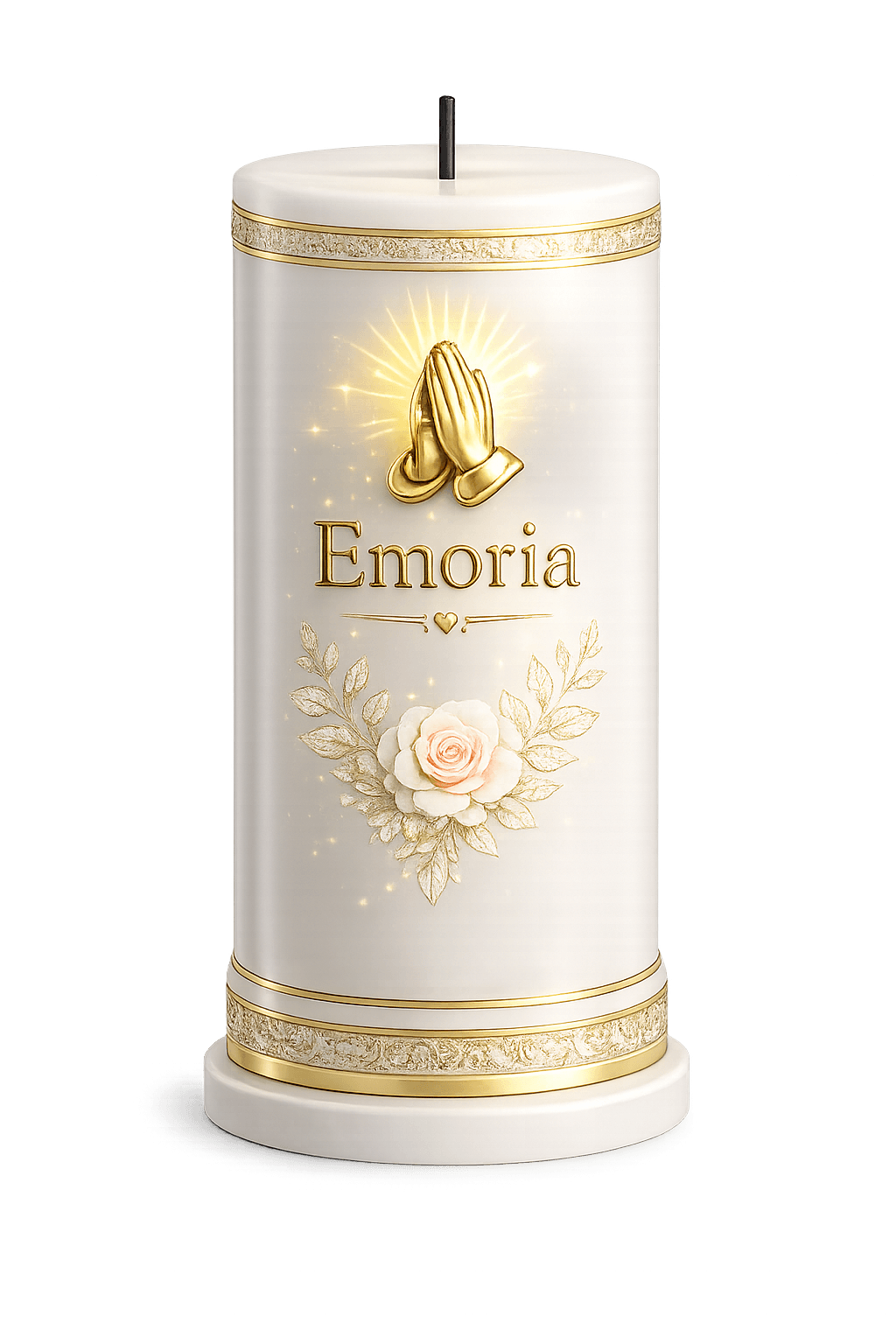
Emoria lights a memorial candle for Gerald Ford's birthday.
Emoria
July 14th, 2026
Condolence Book
0 Entries
Memories
No memories shared yet
Be the first to share a memory.
Biography
Gerald Ford (born Leslie Lynch King Jr. on 14 July 1913 in Omaha, Nebraska; died 26 December 2006 in Rancho Mirage, California) was an American politician and the 38th president of the United States from 1974 to 1977. He became president after Richard Nixon's resignation and remains the only U.S. president who had been elected neither president nor vice president. His term stands for the attempt to restore public trust after Watergate, but also for one of the most disputed decisions in postwar American politics: the pardon of Nixon.

Grand Rapids, football and law
Ford was born in Omaha but grew up in Grand Rapids, Michigan. After his parents separated, he took the name of his stepfather, Gerald R. Ford Sr. At the University of Michigan he played successful college football and graduated in 1935. He then studied law at Yale. During the Second World War he served in the U.S. Navy in the Pacific and reached the rank of lieutenant commander. These early stations shaped a public image that was often invoked later: Ford was seen as disciplined, physically robust, collegial and less ideological than many other politicians of his generation.
Congress and Republican leadership
In 1948 Ford married Elizabeth Anne Bloomer, known as Betty Ford, and was elected to the House of Representatives in the same year. He represented Michigan for decades. He rose less through grand speeches than through reliability, committee work, relationships and party organization. In 1965 he became Republican minority leader in the House. Ford was conservative on fiscal questions, but personally more accessible and pragmatic than many of the conflicts around him. That is why in 1973 many members of Congress saw him as an acceptable solution when a new vice president was needed after Spiro Agnew's resignation.
A president without election
Ford became vice president in December 1973 under the Twenty-fifth Amendment. Only eight months later Richard Nixon resigned because of Watergate. On 9 August 1974 Ford became president. His first words aimed at reassurance: the long national crisis was over. But that sentence could not simply end the situation. The administration inherited distrust of the White House, inflation, recession, the late consequences of the Vietnam War and a Republican Party badly damaged by Watergate.
The Nixon pardon
On 8 September 1974 Ford granted Richard Nixon a full pardon for possible crimes during his presidency. Ford explained the decision as an attempt to release the country from permanent fixation on Watergate. Many citizens, however, saw it as a break with justice or suspected a political bargain. The White House press secretary resigned, Ford's approval collapsed, and the decision overshadowed his term. In October 1974 Ford voluntarily appeared before a House subcommittee to explain the pardon. Later the decision was judged more gently; in 2001 Ford received the Profile in Courage Award for it.
Governing an exhausted country
Ford's administration worked in a country that was politically, economically and socially tired. Inflation remained high, recession pressed on employment, and his Whip Inflation Now campaign could not solve the problems. In foreign policy Henry Kissinger remained a central figure. The Vietnam War ended in 1975; the evacuation of South Vietnamese allies and the Mayaguez crisis showed how difficult it was to show agency after a lost war without opening new wounds. Domestically Ford also met limits: a Democratic-controlled Congress, many vetoes and an administration in transition made his presidency a work against mistrust and fatigue.
Betty Ford and public openness
Betty Ford also belongs to the history of this presidency. She spoke unusually openly about breast cancer, and later about addiction and treatment, becoming an important public figure in her own right. This changed the perception of the presidential couple: beside Gerald Ford's sober, institutional role stood a first lady who made personal vulnerability and social taboos visible. That openness did not always fit conservative expectations, but it shaped the Ford family's public image permanently.
The 1976 election and later years
In 1976 Ford first had to defeat a serious internal party challenge from Ronald Reagan. He then narrowly lost the presidential election to Jimmy Carter. The loss was connected to the Nixon pardon, but not only to it: Ford also fought economic uncertainty, perceptions of weakness and the burden of an office that had never been confirmed by election. After leaving the presidency, he remained publicly active, worked with foundations and boards, and was later honored for his integrity.
Farewell
Gerald Ford died in Rancho Mirage on 26 December 2006. He was 93 years old. His political legacy is quiet and contradictory: he was not a president of grand visions, but one who tried to restore stability in a damaged situation. The Nixon pardon remains the central dispute of his life. That is precisely where Ford's historical meaning lies: he made a decision that many people then considered wrong, but that later also came to be read as an attempt to recover the state's ability to act after Watergate.
Life Events
18 EventsGeboren in Omaha
1913Gerald Ford wird als Leslie Lynch King Jr. in Omaha, Nebraska, geboren.
Abschluss in Michigan
1935Ford schließt sein Studium an der University of Michigan ab, wo er auch Football gespielt hat.
Jurastudium in Yale
1941Ford beendet sein Jurastudium an der Yale University.
Dienst in der U.S. Navy
1942Während des Zweiten Weltkriegs dient Ford in der U.S. Navy im Pazifik.
Heirat mit Betty Bloomer
1948Ford heiratet Elizabeth Anne Bloomer, die später als Betty Ford öffentliche Wirkung entfaltet.
Wahl in den Kongress
1948Ford wird als republikanischer Abgeordneter aus Michigan in das Repräsentantenhaus gewählt.
Fraktionsführer im Repräsentantenhaus
1965Ford wird Minority Leader der Republikaner im Repräsentantenhaus.
Vizepräsident der USA
1973Nach dem Rücktritt Spiro Agnews wird Ford als Vizepräsident vereidigt.
Präsident nach Nixons Rücktritt
1974Ford wird nach Richard Nixons Rücktritt der 38. Präsident der Vereinigten Staaten.
Begnadigung Richard Nixons
1974Ford begnadigt Richard Nixon für mögliche Straftaten während dessen Präsidentschaft.
Aussage vor dem Kongress
1974Ford erklärt die Nixon-Begnadigung vor einem Unterausschuss des Repräsentantenhauses.
Ende des Vietnamkriegs
1975Während der letzten Kriegsphase unterstützt Fords Regierung die Evakuierung vieler südvietnamesischer Verbündeter.
Zwei Anschlagsversuche
1975Im September 1975 übersteht Ford zwei Anschlagsversuche in Kalifornien.
Nominierung gegen Reagan
1976Ford setzt sich auf dem republikanischen Parteitag gegen Ronald Reagan durch.
Wahlniederlage gegen Carter
1976Ford verliert die Präsidentschaftswahl knapp gegen Jimmy Carter.
Presidential Medal of Freedom
1999Präsident Bill Clinton zeichnet Ford mit der Presidential Medal of Freedom aus.
Profile in Courage Award
2001Ford erhält die Auszeichnung für die politisch riskante Nixon-Begnadigung.
Gestorben in Rancho Mirage
2006Gerald Ford stirbt im Alter von 93 Jahren in Kalifornien.
Obituary
No obituary yet
No obituary has been uploaded for this memorial page yet. If you are one of the loved ones and would like to upload one, you can register as the owner of this memorial page and add it afterward.
Family Tree
- Dorothy Ayer Gardner Ford
Gerald Ford (née Leslie Lynch King Jr.). Forever remembered.