
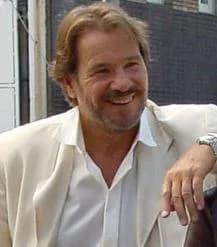
Photo: 📷 Ulrich.fuchs at German Wikipedia
Biography of Götz George
23. Jul 1938 – 19. Jun 2016(77 years)Died in:Hamburg, Germany
German actor
1
Candles
0
Condolences
1
Family Tree
Biography
Burial Place
Friedhof Zehlendorf
Occupation(4)
Awards(8)
Spouse(1)
Loni von Friedl
Education(1)
Götz George (born 23 July 1938 in Berlin; died 19 June 2016 in Hamburg) was a German actor. A broad audience connected him with Horst Schimanski from Tatort, but his career covered cinema, television, theatre and intense character roles.
Family and early formation
George was born as the son of actors Berta Drews and Heinrich George. His father died in 1946 in Soviet internment; the family history therefore remained closely linked to German film and contemporary history. Götz George appeared on stage and before the camera early. Even as a young man he worked in film and theatre and learned the craft through practice.
Cinema and range
In the 1950s and 1960s George appeared in entertainment films, adventure films and Karl May adaptations. Later he sought harder and sharper roles. He could be physically present, but also closed, vulnerable or controlled. This range became decisive for his later work: George was not an actor built around friendly recognisability.
Horst Schimanski
In 1981 George first appeared as Horst Schimanski in Tatort: Duisburg-Ruhrort. The character changed German television crime drama: an investigator from the Ruhr, rough, direct, physical and placed in a social environment rather than a clean office world. George gave Schimanski energy, anger and fatigue at the same time. The role remained popular, yet George repeatedly returned to other characters.
Der Totmacher and later work
In 1995 George played Fritz Haarmann in Der Totmacher, a chamber-like film by Romuald Karmakar. For this work he received the acting prize at the Venice Film Festival. In Rossini, Die Bubi-Scholz-Story and George, a film about his father, he also showed later sides of his acting: concentrated, contradictory and often uncomfortable.
Farewell
Götz George died in Hamburg on 19 June 2016 after a short illness. He was 77 years old. His work remains connected with Schimanski, but extends far beyond it: toward acting that made conflict, hardness, vulnerability and German postwar history visible in very different forms.
Life Events
7 Events1938
Born in Berlin, Germany
1992
Bavarian TV Awards
Tatort: Der Fall Schimanski
1992
Berliner Bär
1996
Order of Merit of North Rhine-Westphalia
2001
Golden Feather
2003
Bavarian TV Awards
2016