/

Biography
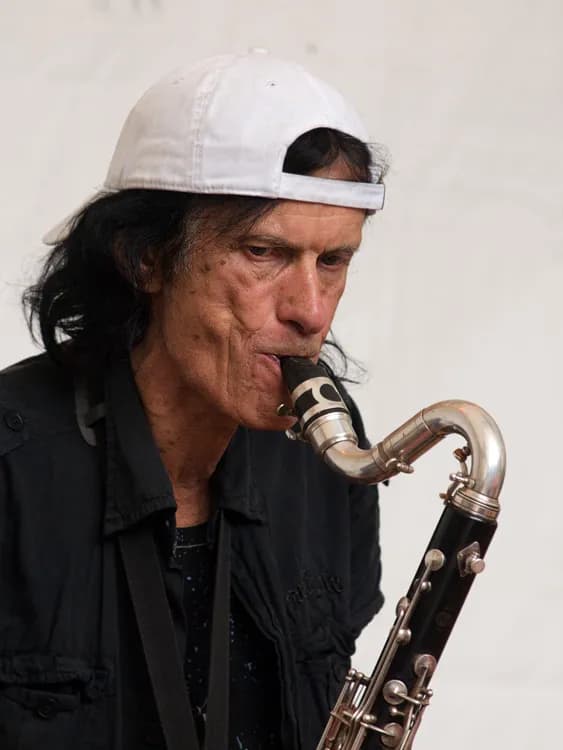
Gunter Hampel (born 31 August 1937 in Göttingen; died 18 May 2026) was a German jazz musician, composer, bandleader and producer. He played vibraphone, bass clarinet, flute, saxophone, piano and other instruments. From the 1960s onward he became one of the formative voices of European free jazz, developing music that connected European traditions, African American jazz, improvisation, poetry and movement.
Göttingen and the first groups
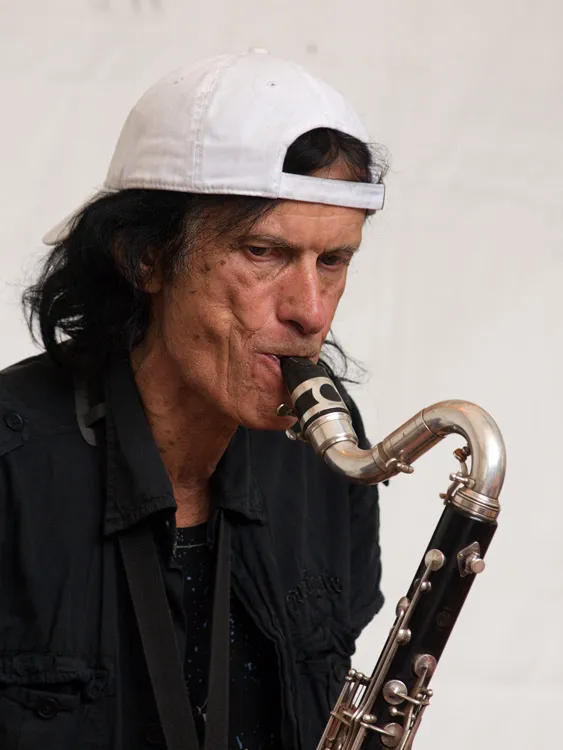
Hampel grew up in Göttingen and encountered jazz early through the music of the American postwar years. He first studied architecture, but turned more and more toward music. From 1958 he led his own groups and performed in West Germany, France and Switzerland. The vibraphone became one of his most distinctive instruments, but his profile grew precisely from moving between sound colours: mallets, woodwinds, voice, rhythm and movement were not meant to remain separate roles.
Heartplants and European free jazz
In the mid-1960s Hampel worked with musicians including Manfred Schoof, Alexander von Schlippenbach, Buschi Niebergall and Pierre Courbois. From this period came Heartplants, a recording important to the development of an independent European jazz language. Hampel did not simply copy American models. He took their freedom seriously, but connected it with his own melodic, rhythmic and compositional ideas.

New York, Birth Records and the Galaxie Dream Band
In 1969 Hampel moved to New York and founded his own label, Birth Records. On 8 July 1969 he recorded with Jeanne Lee, Anthony Braxton, Willem Breuker, Steve McCall and Arjen Gorter; the music later appeared as The 8th of July 1969. In the early 1970s he formed the Galaxie Dream Band. It became an open ensemble in which European and American musicians, improvised forms, songs, dance, speech and long arcs came together.
Independence and collaboration
Hampel worked with Jeanne Lee, Marion Brown, Anthony Braxton, Willem Breuker, Perry Robinson, Don Cherry, Archie Shepp and many others. His music often remained independent of the major structures of the market. Birth Records was not only a label name, but part of his working method: record independently, produce independently and find his own paths for releases. From that came a far-reaching discography with projects that cannot be reduced to a fixed format.
Workshops, hip-hop and late ensembles
Alongside concerts and recordings, Hampel gave workshops for children and young people. His concern was less notation than shared listening, response and improvisation. In the 1990s he also opened his work to hip-hop and younger scenes, worked with Jazzkantine and founded Next Generation. In 2001 he created the Music + Dance Improvisation Company. His children Ruomi Lee-Hampel and Cavana Lee-Hampel also appeared in some of his projects.
Recognition
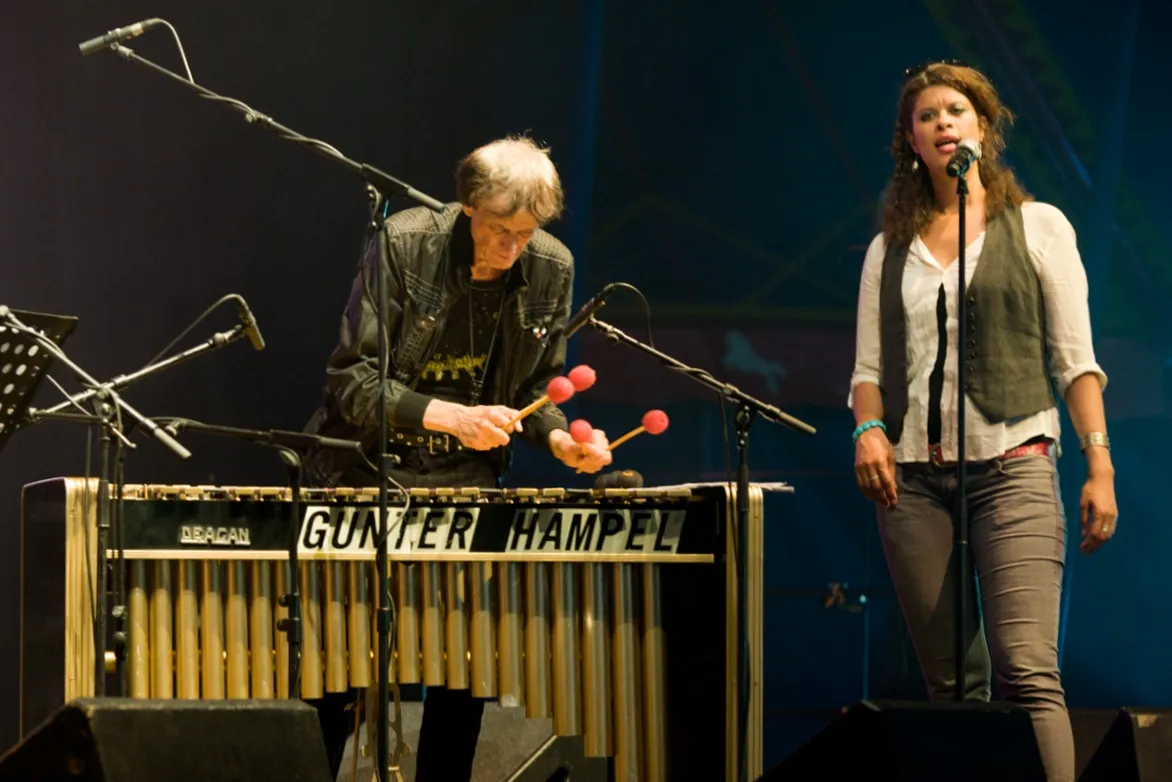
Hampel's honours included the Lower Saxony State Prize in 1997. On 28 October 2007 Göttingen awarded him the city's Medal of Honor, and a few days later he received the Albert Mangelsdorff Prize at JazzFest Berlin. In 2009 he received the Order of Merit of the Federal Republic of Germany, followed in 2010 by the Praetorius Music Prize in the category of music innovation. These honours recognized not only individual recordings, but a life in which music was understood as open exchange between people, generations and continents.
Farewell
Gunter Hampel died on 18 May 2026 at the age of 88. In his work, departure, independence and collaboration stand close together. He was a vibraphonist and woodwind player, composer and improviser, label founder and teacher. Above all, he remained a musician who treated freedom not as a pose, but as daily practice in collective playing.
Life Events
2 Events1937
Born in Göttingen, Landkreis Göttingen
2026