/

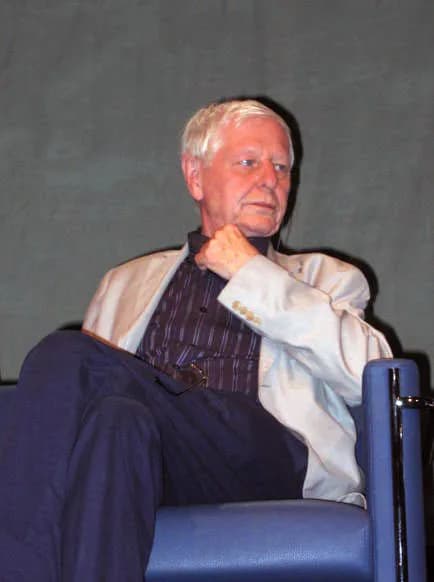
Biography
Awards(10)
Pour le Mérite for Sciences and Arts orderGeorg Büchner PrizePrincess of Asturias Award for Communications and HumanitiesPrize of the city of NurembergHeinrich-Böll-PreisLiterature Award of the Bavarian Academy of the Fine ArtsLudwig-Börne-PreisErnst Robert Curtius AwardHeinrich Heine PrizeGolden Wreath
Spouse(3)
Hans Magnus Enzensberger (born 11 November 1929 in Kaufbeuren; died 24 November 2022 in Munich) was a German writer, poet, essayist, translator and editor. He was one of the formative voices of postwar German-language literature, without permanently submitting to a political or aesthetic school. His work ranges from poems and essays to reportage, editing, children's books and literary experiments.
Postwar years and literature
Enzensberger grew up in Bavaria and studied literature, languages and philosophy. After the war he belonged to a generation that could not simply continue using the German language as if nothing had happened. His early poems connected sharpness, wit, political attention and formal flexibility. With books such as Verteidigung der Wölfe, he became an author who did not treat poetry as withdrawal, but as an intervention in perception and public life.
Essayist and editor
Enzensberger worked as a radio editor, publisher's reader and editor. In 1965 he co-founded the journal Kursbuch, which became important for intellectual debates in West Germany and for the student movement. He observed political movements with sympathy, but also with distrust toward slogans, camp thinking and moral certainty. This independence made him difficult to classify: he could be left-wing, skeptical, polemical, playful and detached at the same time.
Forms and themes
His books often changed form. Enzensberger wrote poems, essays, reportage, montages, historical narratives and texts for young readers. Der Untergang der Titanic connected images of catastrophe with political and poetic reflection. The Number Devil made mathematics narratively accessible for children and became internationally known. Under several pseudonyms he played with authorship, roles and tones.
Public voice
Enzensberger took part in debates, but repeatedly withdrew from fixed labels. He wrote about media, migration, violence, Europe, bureaucracy, revolution and everyday reason. His texts could analyze coolly and then suddenly become light; they could provoke without wanting only to provoke. This mobility helps explain why he remained present for decades, even when he resisted expectations of a clear political position.
Farewell
Hans Magnus Enzensberger died in Munich on 24 November 2022. His life's work includes more than seventy books and many roles: poet, essayist, editor, translator, observer and disturber of fixed certainties. In German-language literature he remains present as an author who understood language as a movement of thought.
Life Events
11 Events1929
Born in Kaufbeuren, Bavaria
1963
Georg Büchner Prize
1966
Prize of the city of Nuremberg
1980
Golden Wreath
1985
Heinrich-Böll-Preis
1987
Literature Award of the Bavarian Academy of the Fine Arts
1997
Ernst Robert Curtius Award
1998
Heinrich Heine Prize
2002
Princess of Asturias Award for Communications and Humanities
2002
Ludwig-Börne-Preis
2022