

Biography of Pelé
23. Oct 1940 – 29. Dec 2022(82 years)Died in:São Paulo, Brazil
Brazilian footballer
1
Candles
0
Condolences
2
Family Tree
Biography
Died at
Albert Einstein Israelite Hospital
Children
7
Burial Place
Memorial Necropole Ecumenica
Occupation(4)
Awards(10)
Honorary Knight Commander of the Order of the British EmpireOrder of Rio Brancohonorary citizen of BaltimoreDistinguished Guest of Mexico CityLlaves de la Ciudad de MexicoBBC World Sport Star of the YearSouth American Footballer of the YearNational Order of MeritBallon d'Or Dream TeamFWA Tribute Award
Spouse(3)
Rosemeri dos Reis CholbiAssíria NascimentoMarcia Aoki
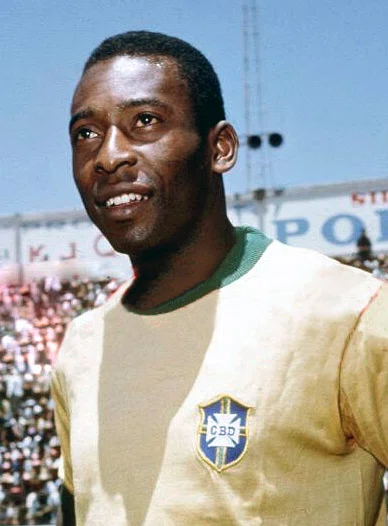
Pelé, born Edson Arantes do Nascimento on 23 October 1940 in Três Corações, Minas Gerais, and died 29 December 2022 in São Paulo, was a Brazilian footballer and one of the best-known athletes of the twentieth century. With Brazil he won the World Cup in 1958, 1962 and 1970; no other player has won the tournament three times as a player. Pelé stood for goal instinct, technique, intelligence, physical lightness and an image of football that shaped Brazil's reputation around the world.
Background and Santos
Pelé was born into a family where football was close, but money was not. His father, João Ramos do Nascimento, known as Dondinho, was also a footballer; his mother Celeste held the family together. Pelé grew up partly in Bauru and played early with improvised balls. Former Brazil player Waldemar de Brito brought him to Santos FC. There Pelé made his debut in 1956 as a teenager. Within a few years the gifted boy became a player who could not only decide matches, but change their rhythm.
The breakthrough of 1958
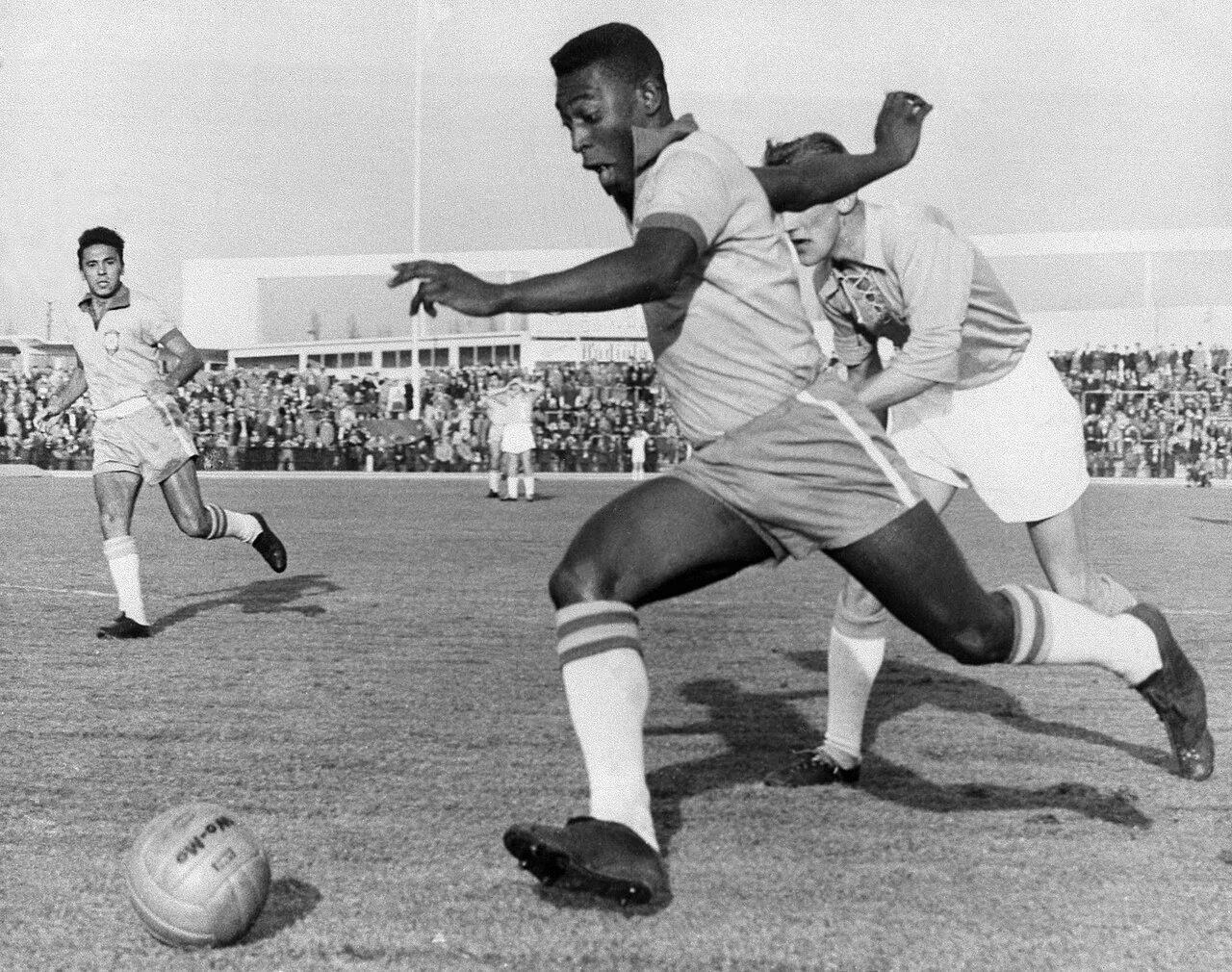
At the 1958 World Cup in Sweden, Pelé was only 17 years old. He scored against Wales in the quarter-final, scored three times against France in the semi-final and twice more against Sweden in the final. Brazil won the World Cup for the first time. Pelé's impact was not only in the goals. He played with a mixture of speed, balance, directness and imagination that remains alive even in black-and-white footage. Within a few weeks, a teenager from Brazil became a world star.
Santos as a world club
With Santos, Pelé became a club legend. The team won championships in Brazil, the Copa Libertadores and the Intercontinental Cup. Santos traveled across continents, played friendlies before large crowds and became an international showcase for Brazilian footballing art. Pelé was more than a penalty-area finisher. He could score, create, dribble, leap, deceive and change pace at the right moment. His goal total is given differently depending on how friendlies and official competitions are counted. What is beyond dispute is that his productivity was exceptional.
Brazil, injuries and 1970
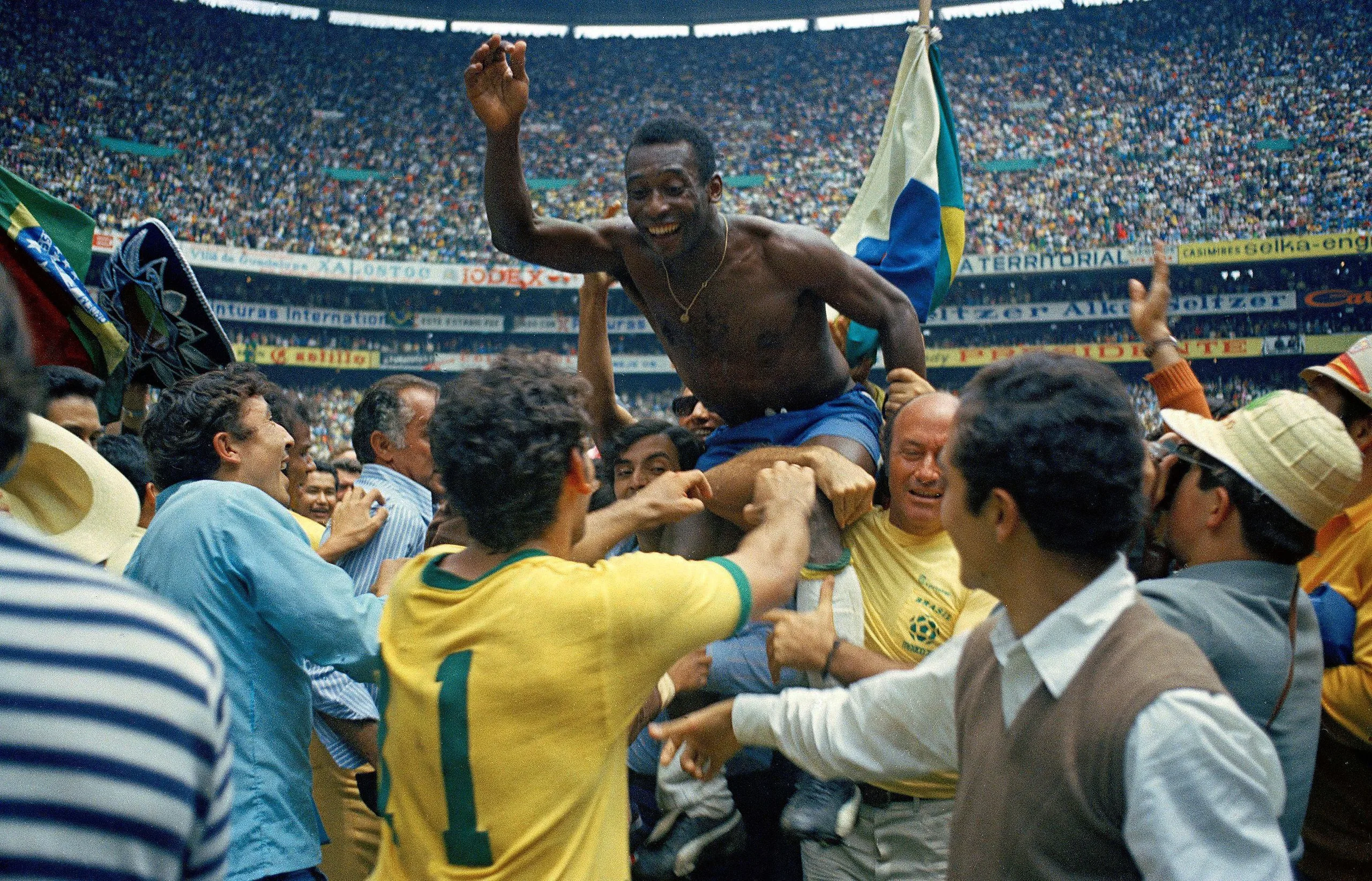
In 1962 Brazil won the World Cup again, but Pelé was injured early in the tournament. In 1966 in England he was repeatedly fouled, Brazil went out early and Pelé's relationship with the World Cup seemed burdened. In 1970 he returned in Mexico to the largest stage. The Brazil side of Pelé, Jairzinho, Gérson, Tostão, Rivelino and Carlos Alberto became an ideal image of the game: technical, mobile, collective and full of individual class. Pelé scored the opening goal in the final against Italy and helped create other decisive moves. That title made him a historical figure for good.
The name Pelé
Pelé became a brand, a symbol and almost a language in his own lifetime. In Brazil he was at once pride, projection and a figure open to political use. During the military dictatorship his popularity was used by the state; Pelé himself usually remained cautious and less openly confrontational than some other public figures. That does not reduce his sporting greatness, but it belongs to an honest account of his public role. He was not a simple political hero, but an athlete whose fame became larger than any stadium and could therefore be used from many sides.
New York Cosmos and later years
After leaving Santos, Pelé joined New York Cosmos in 1975. There he helped make football more visible in the United States, long before the country became a regular center of major international tournaments. His final professional match in 1977 between Cosmos and Santos was deliberately staged as a farewell to two worlds. Later Pelé remained present as ambassador, businessman, advertising figure and political actor. He was honored, criticized, appropriated and again and again named as a benchmark for great footballers.
Farewell
Pelé died in São Paulo on 29 December 2022. He was 82 years old. His coffin was later laid in state at Vila Belmiro, the Santos stadium where his name had grown for decades. His legacy lies not only in three World Cup titles or in goal counts. It lies in an idea of football as movement, courage, invention and national story. Pelé made Brazil visible to many people around the world first as a football country, and he showed how much one player can change the meaning of a sport.
Life Events
15 Events1940
Born in Três Corações, Minas Gerais
1966
Married Rosemeri dos Reis Cholbi
until 1982
1967
Order of Rio Branco
1970
BBC World Sport Star of the Year
1973
South American Footballer of the Year
1973
honorary citizen of Baltimore
1991
National Order of Merit
1994
Married Assíria Nascimento
until 2008
1997
Honorary Knight Commander of the Order of the British Empire
2009
Distinguished Guest of Mexico City
2009
Llaves de la Ciudad de Mexico
2016
Married Marcia Aoki
until 2022
2018
FWA Tribute Award
2020
Ballon d'Or Dream Team
2022