/

PE
Biography of Peter Dimmel
31. Aug 1928 – 5. May 2026(97 years)Born in:Vienna, Austria
Austrian sculptor
1
Candles
0
Condolences
0
Family Tree
Biography
Awards(4)
Education(1)
Peter Hans Dimmel (born 31 August 1928 in Vienna; died 5 May 2026) was an Austrian sculptor and advocate for deaf people. His works in bronze, stone and liturgical furnishings shaped church interiors in Upper Austria for decades, especially in the Diocese of Linz. At the same time he worked for sign language to be recognised as a language in its own right and for deaf people to be seen as a self-determined community.
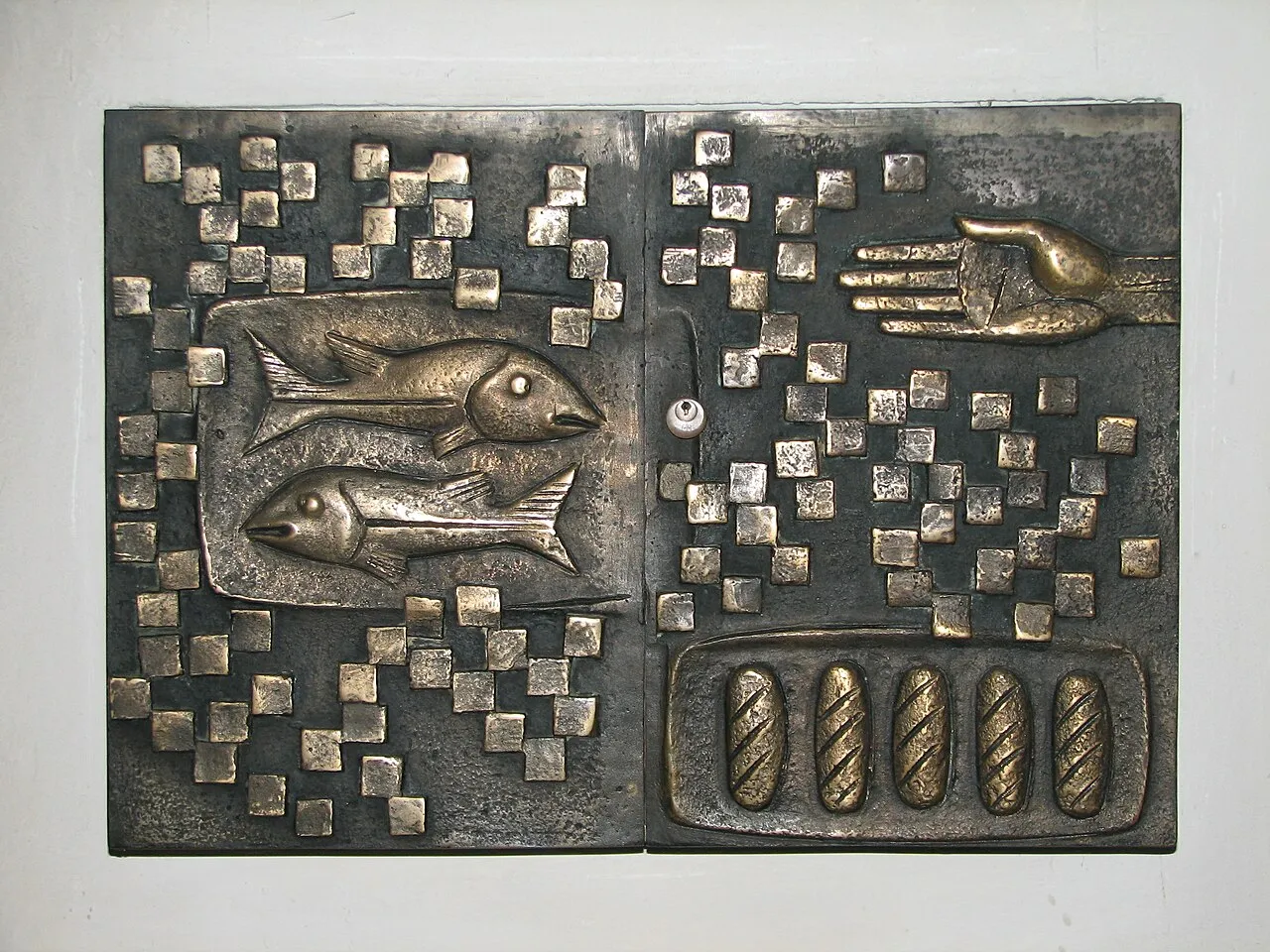
Vienna, Upper Austria and training
Dimmel was born in Vienna. Shortly after birth he lost his hearing as a result of severe meningitis. His father Herbert Dimmel, himself a painter and later director of the Linz art school, had him supported in both spoken and sign language. From 1943 to 1945 Peter Dimmel studied at the Academy of Applied Arts in Vienna, then worked in the Angermayr ceramics workshop in Eberschwang. From 1949 to 1957 he studied sculpture at the art school of the City of Linz.
Sculptor in Linz
After his studies Dimmel worked as an independent artist in Linz. Early works in public space included Die Welt des Kindes, the sculpture Spielhahn, the bronze Liegende in the Botanical Garden and the Nibelungenschiff near the castle entrance. His forms often appear condensed, narrative and directly crafted. They did not seek smoothness, but legibility: figures, signs and material were meant to speak to one another.
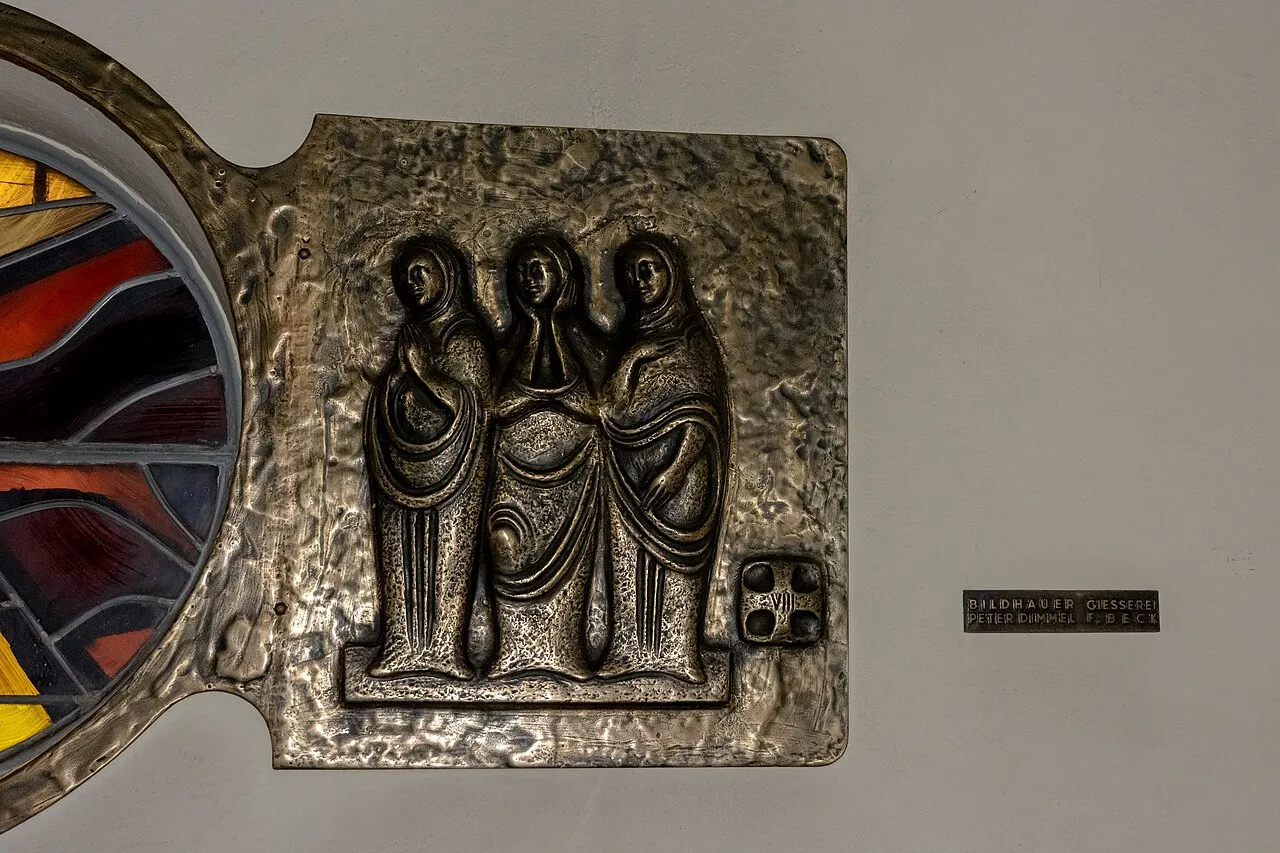
Church interiors after the Council
A major focus of his work lay in sacred spaces. For the church of St. Konrad in Linz he received an early major commission in 1962: bronze doors, Stations of the Cross, processional cross and tabernacle. In the following decades he created baptismal font covers, candlesticks, tabernacles, reliefs, portals and other furnishings for churches in Upper Austria. The Diocese of Linz honoured Dimmel as an artist who helped shape liturgical spaces in the spirit of the Second Vatican Council.
Art and understanding
Dimmel's deafness was not a side note in his biography. It shaped how he thought about language, image and understanding. In an interview he said in essence that his pictures had to speak for themselves because he could not simply discuss his work orally. This experience did not lead to withdrawal, but to an art that took signs, hands, doors, paths and touch seriously. Many of his church works are therefore also translations: matters of faith become forms, surfaces and movements.

Advocacy for deaf people
Alongside his art, Dimmel was active for decades in deaf advocacy. Austria-Forum and the Diocese of Linz especially highlight his contribution to the recognition of Austrian Sign Language in Upper Austria. For this work he received, among other honours, the Solidarity Prize of the Kirchenzeitung. Dimmel connected artistic work with social responsibility: visibility was to belong not only to works of art, but also to people.
Farewell
Peter Dimmel died on 5 May 2026 in his 98th year. The Diocese of Linz remembered an artist who had helped shape church spaces for more than three decades, and a man who persistently stood up for deaf people. His work remains visible in doors, tabernacles, Stations of the Cross, reliefs and public sculptures.
Life Events
2 Events1928
Born in Vienna, Austria
2026