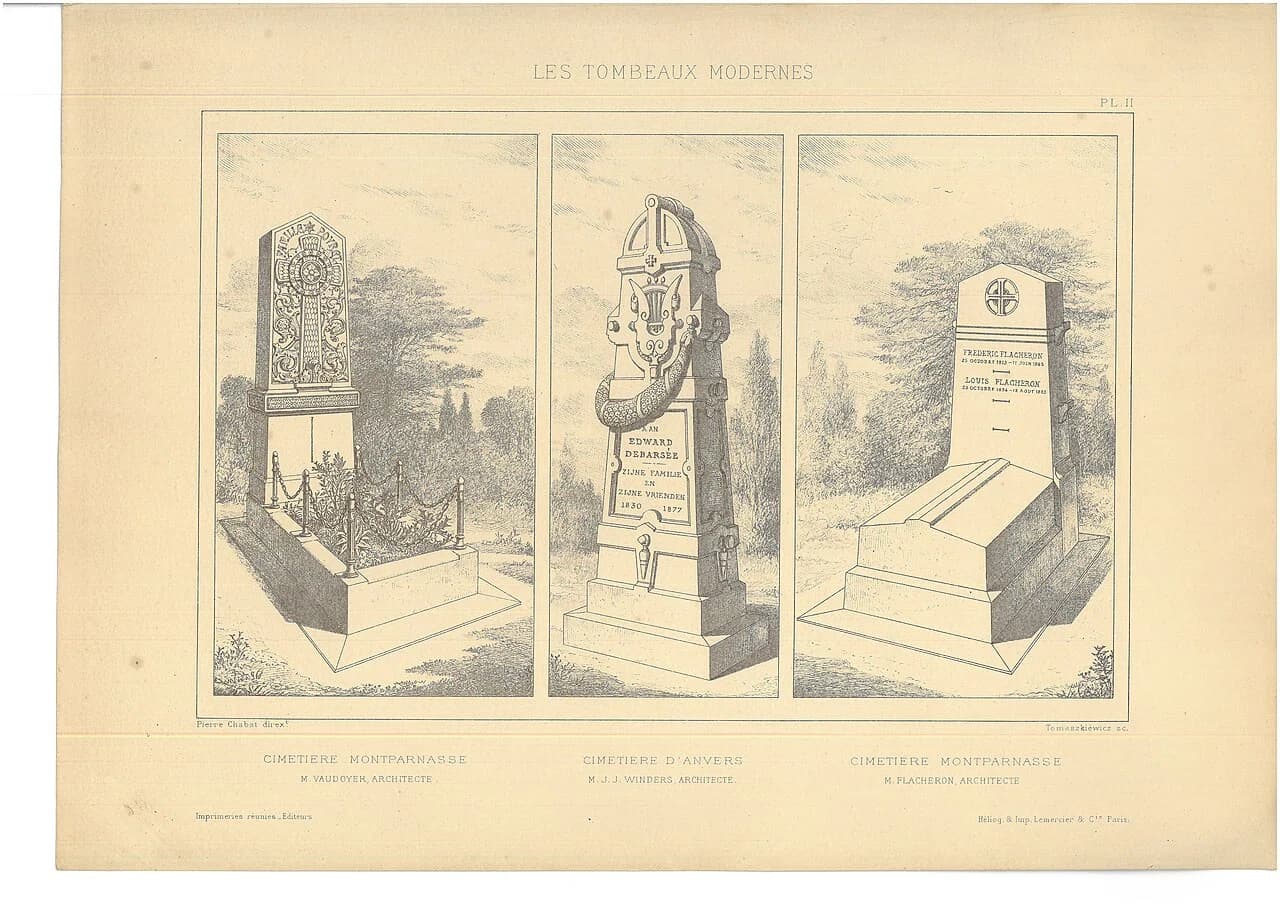
Cimetière Montparnasse
14th arrondissement of Paris

Romanian-French philosopher and essayist
1 candle
Emoria lights a memorial candle in remembrance of Emil Cioran.
Emoria
June 20th, 2026
Emoria lights a memorial candle for Emil Cioran's birthday.
Emoria
April 8th, 2026
0 Entries
🕯️ Anniversary of death
Emil Cioran (born 8 April 1911 in Rășinari; died 20 June 1995 in Paris) was a Romanian-French essayist and aphorist. He wrote first in Romanian and later in French. His texts circle around skepticism, insomnia, despair, history, religion, failure and the fragility of human attempts at meaning. His influence rests less on a philosophical system than on a brief, literary and sharpened form of thinking.
Cioran studied philosophy at the University of Bucharest and belonged to the circle around Nae Ionescu. Mircea Eliade and Eugène Ionesco were among his early contemporaries. In 1934 his first book Pe culmile disperării, usually translated as On the Heights of Despair, appeared. Already there he connected personal crisis, insomnia and radical negation in a prose that sharpens more than it argues.
Cioran's biography also includes his fascist sympathies in the 1930s. During his stay in Berlin and in Romanian texts he expressed approval of authoritarian and fascist movements. Schimbarea la față a României, The Transfiguration of Romania, is especially tied to this phase. Cioran later distanced himself from many of these positions and removed extreme passages from later editions. The later corrections do not change the fact that these early texts remain a compromised part of his work.
In 1937 Cioran went to Paris on a scholarship; from 1938 onward he remained there permanently. He never completed the planned doctorate. After the war he wrote in French. With Précis de décomposition in 1949, his French period began. The change of language changed his style: the sentences became shorter, more controlled and more aphoristic. Cioran lived withdrawn, but published books that found a distinct readership in France and beyond.
Cioran's writing is fragmentary and anti-systematic. He distrusted narratives of progress, political promises of salvation and philosophical systems of concepts. Books such as Syllogismes de l'amertume, La tentation d'exister, Histoire et utopie and De l'inconvénient d'être né connect cultural criticism with dark self-observation. His radicalism lies not in a closed doctrine, but in the repeated testing of consolation, faith, history and language.
Emil Cioran died in Paris on 20 June 1995. His biography remains contradictory: a precise stylist of skepticism, an author with a compromised political youth and a thinker whose later prose distrusts every simple certainty. Cioran's legacy therefore includes both: the literary force of his texts and the problematic early political writings.
Emil Cioran wird in Rășinari in Siebenbürgen geboren.
Emil Cioran stirbt im Alter von 84 Jahren in Paris.
No obituary has been uploaded for this memorial page yet. If you are one of the loved ones and would like to upload one, you can register as the owner of this memorial page and add it afterward.
14th arrondissement of Paris
Emil Cioran. Forever remembered.