/


Biography
Died at
Little White House
Children
6
Burial Place
Franklin Delano and Anna Eleanor Roosevelt tomb
Occupation(5)
Awards(8)
Spouse(1)
Education(3)
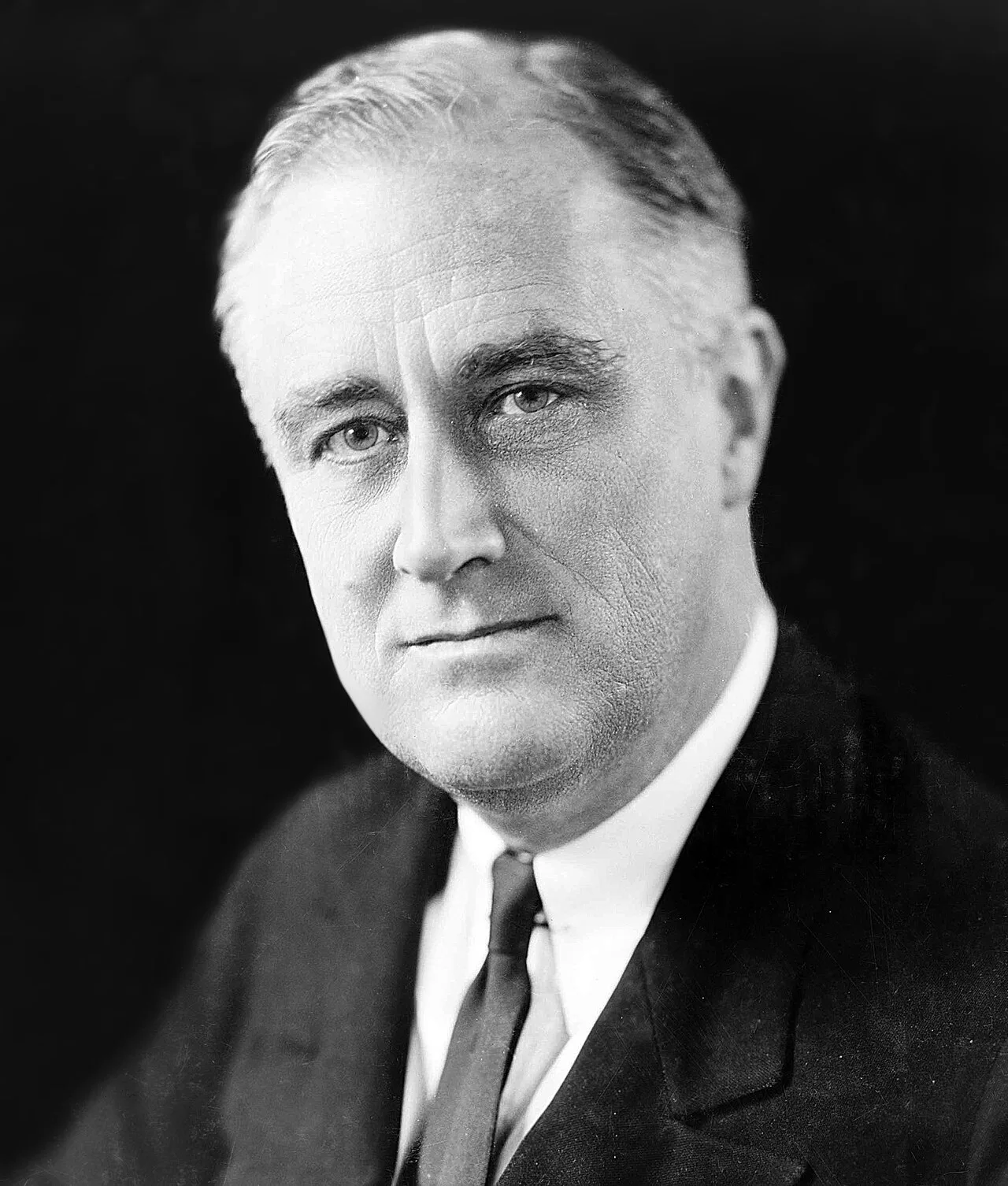
Franklin Delano Roosevelt (born 30 January 1882 in Hyde Park, New York; died 12 April 1945 in Warm Springs, Georgia) was the 32nd president of the United States. He led the country through the Great Depression and the Second World War, was elected president four times and changed the relationship between government, economy and citizens through the New Deal. His political legacy is immense, but not free of grave contradictions.
Background and political rise
Roosevelt came from a wealthy family in Hyde Park on the Hudson River. He attended Harvard, later studied at Columbia Law School and in 1905 married Eleanor Roosevelt. His political career began in the New York State Senate; under President Woodrow Wilson he became Assistant Secretary of the Navy. These early years joined privilege, ambition and an instinct for administration. Eleanor Roosevelt later became far more than a first lady: she shaped public debate, social policy and human rights questions in her own right.
Illness and return
In the summer of 1921 Roosevelt became seriously ill on Campobello Island, diagnosed at the time as poliomyelitis. He permanently lost full use of his legs. Disability did not end his political career, but it changed his physical reality and public presentation. At Warm Springs, Georgia, he sought therapy and later founded an institution to help other people affected by polio. Politically he returned as governor of New York and in 1932 won the presidential election against Herbert Hoover.
New Deal and radio
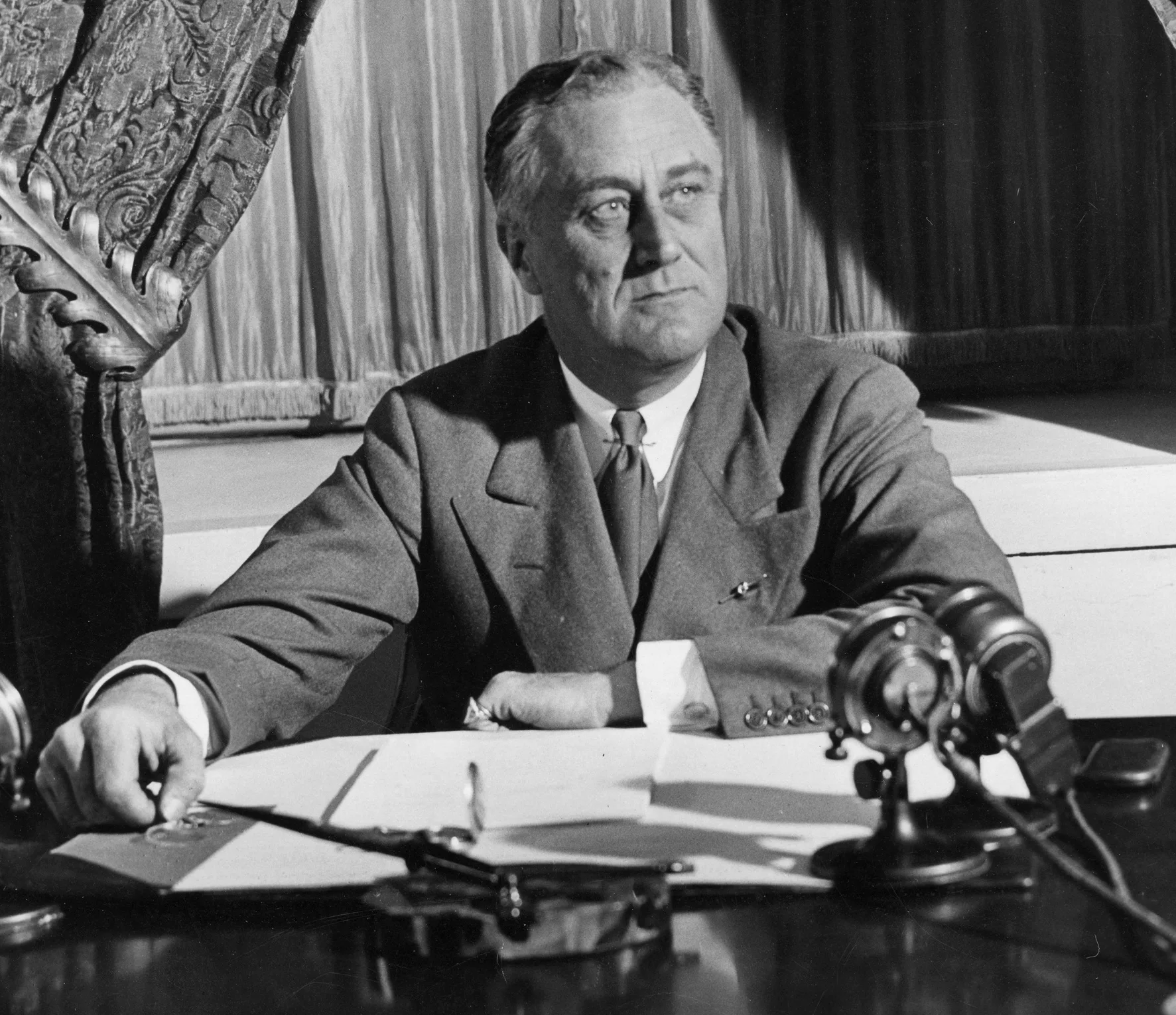
When Roosevelt took office on 4 March 1933, banks, the labor market and public confidence were in deep crisis. The New Deal brought banking reform, work programmes, support for agriculture and infrastructure, and later social security and stronger labor rights. Not every programme worked, and many reforms remained unequally accessible to African American and migrant workers. Even so, Roosevelt set a new standard: the federal government was not merely to observe, but to take responsibility for economic stability and social security.
Power, limits and conflict
Roosevelt's presidency greatly expanded the practical power of the president and the federal administration. His Fireside Chats made radio a direct political medium. At the same time his politics met limits and resistance. The 1937 attempt to change the Supreme Court by adding new justices damaged trust. The New Deal also did not fully resolve social distress and remained limited on racism, housing and regional inequality. Roosevelt was a pragmatic crisis politician, not a flawless reformer.
World war and four freedoms
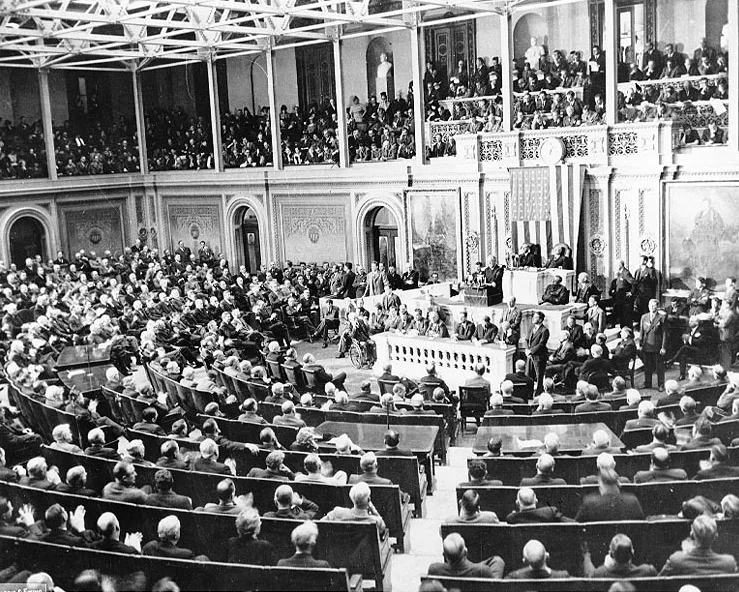
As war spread in Europe, Roosevelt's policy moved from neutrality toward support for the Allies. In 1941 his Four Freedoms speech set out a vision of freedom of speech, freedom of worship, freedom from want and freedom from fear. The Lend-Lease Act made the United States a decisive supporter of Britain and other allies. After the attack on Pearl Harbor, Roosevelt asked Congress for a declaration of war against Japan; soon afterward the United States was at war with Japan, Germany and Italy.
War leadership and shadows
Roosevelt led the United States through a global war as commander in chief. His administration coordinated industry, military power, diplomacy and alliances on a scale that permanently made the United States a world power. At the same time, Executive Order 9066 of 1942 belongs among the gravest failures of his presidency: it enabled the forced incarceration of about 120,000 people of Japanese ancestry, many of them U.S. citizens. The American response to the Holocaust is also still critically discussed. FDR's wartime leadership was historically decisive, but morally not free of failure.
Farewell
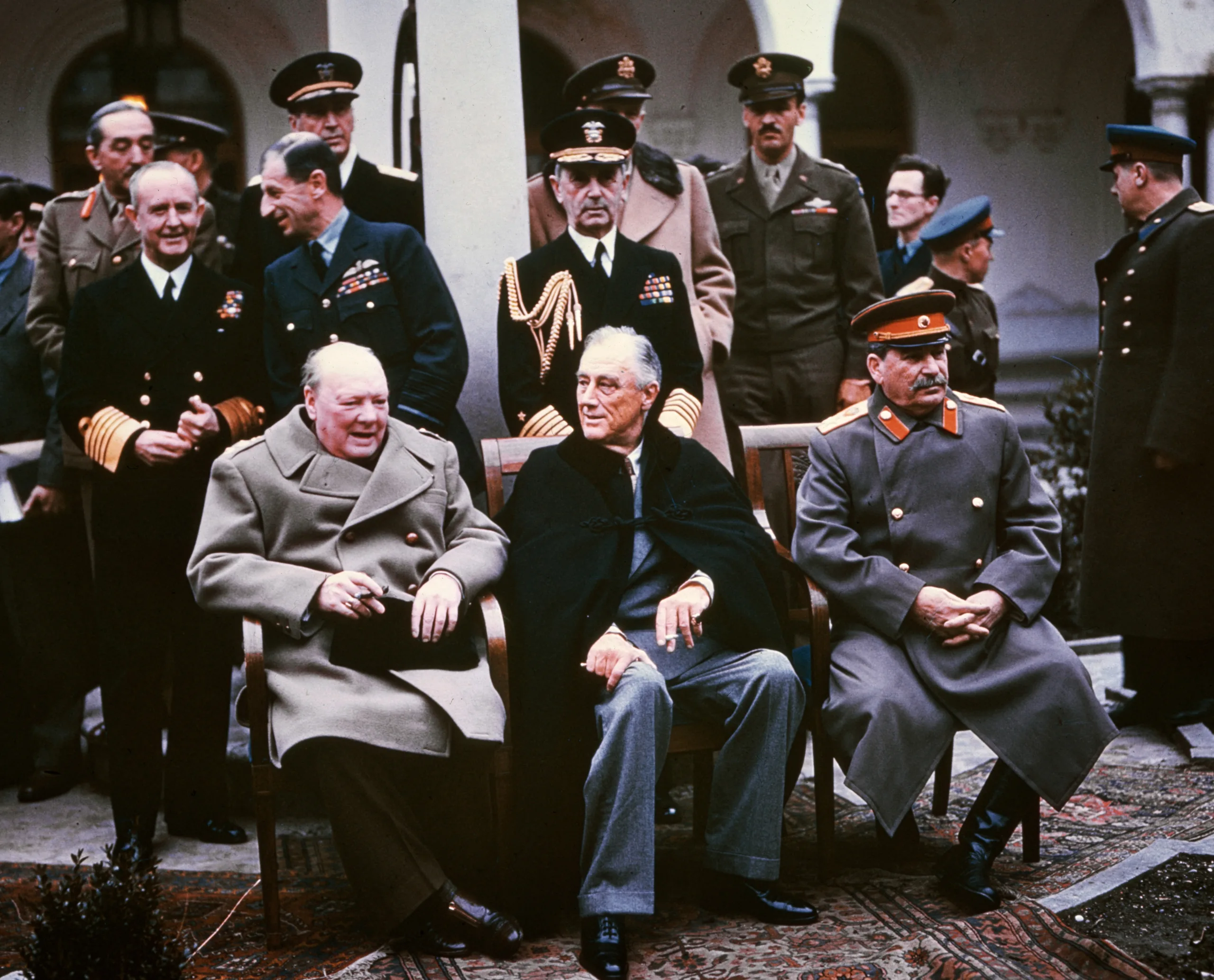
In February 1945 Roosevelt met Winston Churchill and Joseph Stalin at Yalta while the postwar order was already taking shape. His health was visibly weakened. On 12 April 1945 he died in Warm Springs after a stroke, only weeks before Germany's surrender. Roosevelt was 63 years old. He remains one of the defining figures of the 20th century: a president who reshaped crisis politics, the welfare state, mass communication and America's role as a world power, while leaving enduring questions about power, law and responsibility.
Life Events
10 Events1882
Born in Hyde Park, Dutchess County
1903
Married Eleanor Roosevelt
until 1945
1904
Columbia Law School
until 1907
1932
Time Person of the Year
1934
Time Person of the Year
1941
Time Person of the Year
1941
Albert Medal
1945
American Philatelic Society Hall of Fame
1945
Died in Warm Springs, Meriwether County (cerebral hemorrhage)
1948