Petersdom
Vatican City

264th pope of the Catholic Church
2 candles
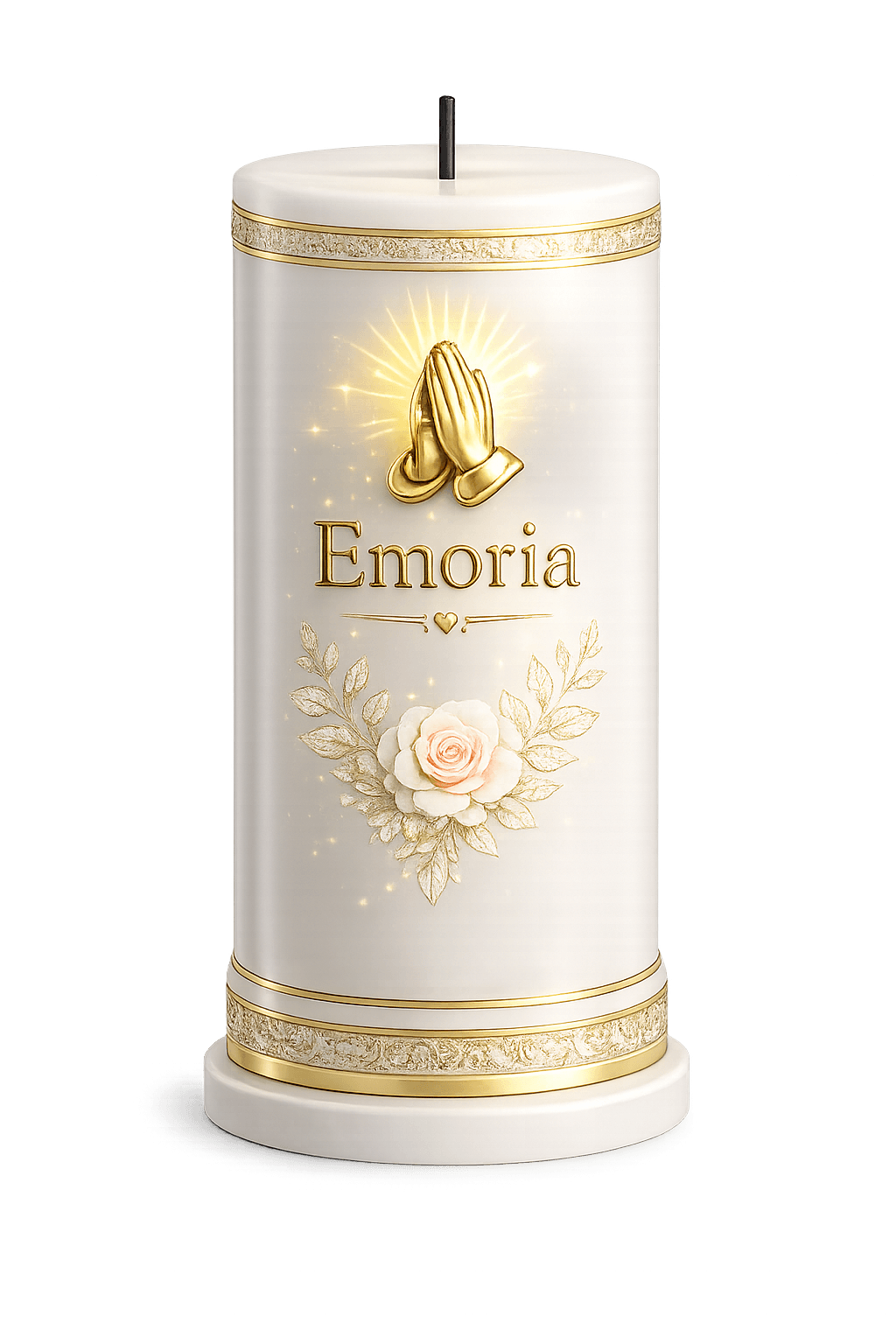
Emoria lights a memorial candle for Johannes Paul II.'s birthday.
Emoria
May 18th, 2026
Emoria lights a memorial candle in remembrance of Johannes Paul II..
Emoria
April 2nd, 2026
0 Entries
Be the first to share a memory.
John Paul II (born Karol Józef Wojtyła on 18 May 1920 in Wadowice; died 2 April 2005 in Vatican City) was pope of the Roman Catholic Church from 1978 to 2005. He was the first non-Italian pope in centuries, the first pope from Poland and one of the most visible religious figures of the twentieth century. His pontificate joined spiritual presence, political impact, global travel, firm teaching and decisions that remain debated today.

Karol Wojtyła grew up in Wadowice in southern Poland. He lost his mother early, and later his brother and father. After finishing school he began studying in Kraków, but the Second World War and the German occupation changed his life. He worked in a quarry and in a chemical factory, acted in theatre and in 1942 entered the clandestine seminary of the Archdiocese of Kraków. Those years joined personal loss, Polish culture, faith and the experience of totalitarian violence.
Wojtyła was ordained a priest in 1946. After studies in Rome he worked as a pastor, academic and philosopher. In 1958 he became auxiliary bishop of Kraków, in 1964 archbishop and in 1967 cardinal. At the Second Vatican Council he brought the experience of a church living under communist pressure while remaining socially present. His thought circled around human dignity, conscience, freedom, work, family and the question of how faith can speak publicly in the modern world.
On 16 October 1978 Wojtyła was elected pope and took the name John Paul II. His election immediately had political significance: a Pole now stood at the head of the Catholic Church while Poland belonged to the Soviet-dominated Eastern bloc. His first journey to his homeland in 1979 became a moment of spiritual encouragement and political symbolism. John Paul II did not simply support a party, but his language of truth, freedom and dignity strengthened the social movement from which Solidarity grew.
John Paul II travelled more than any pope before him and turned the papacy into a global presence. He spoke before crowds, met heads of state, young people, workers, religious communities and representatives of other faiths. He published encyclicals, ordered the publication of the Catechism of the Catholic Church and spoke for human rights, religious freedom and the protection of life. At the same time he upheld conservative positions on sexuality, women's ordination, contraception and church authority, positions strongly disputed inside and outside the church.
On 13 May 1981 John Paul II was shot and seriously wounded by Mehmet Ali Ağca in St Peter's Square. Later he visited Ağca in prison. The meeting became a powerful image of his pontificate: personal faith, forgiveness and public symbolism were closely connected. Marian devotion, the relationship to Fátima and large liturgical celebrations also shaped his public presence. For many Catholics he became a spiritual point of reference far beyond Rome.
The legacy of John Paul II also includes the severe crisis of sexual abuse in the Catholic Church. During the final years of his pontificate abuse cases became increasingly visible internationally. Critics argued that his style of governance relied too heavily on church authority and too little on transparent accountability. The Vatican's 2020 report on Theodore McCarrick further burdened perceptions of his handling of warnings and appointments. This criticism remains part of his legacy alongside his canonization.
John Paul II died in Vatican City on 2 April 2005. He was 84 years old. Millions followed his final days and the funeral ceremonies. Benedict XVI beatified him in 2011, and Francis canonized him in 2014. His afterlife remains unusually broad: for many he is a saint, a witness against communism and a pope of youth and the world church. For others his pontificate is also tied to centralization, conservative church policy and unresolved questions of responsibility.
Karol Józef Wojtyła wird in Wadowice in Polen geboren.
Wojtyła beginnt ein Studium an der Jagiellonen-Universität in Krakau.
Während der deutschen Besatzung tritt er in das geheime Priesterseminar des Erzbistums Krakau ein.
Karol Wojtyła wird in Krakau zum Priester geweiht.
Wojtyła empfängt die Bischofsweihe und wird Weihbischof in Krakau.
Papst Paul VI. ernennt ihn zum Erzbischof von Krakau.
Paul VI. nimmt Wojtyła in das Kardinalskollegium auf.
Wojtyła wird zum Papst gewählt und nimmt den Namen Johannes Paul II. an.
Seine Reise nach Polen wird zu einem wichtigen geistlichen und politischen Signal im Ostblock.
Mehmet Ali Ağca schießt auf Johannes Paul II.; der Papst überlebt schwer verletzt.
Johannes Paul II. besucht seinen Attentäter im Gefängnis.
Johannes Paul II. ordnet die Veröffentlichung des Katechismus der Katholischen Kirche an.
Im Heiligen Jahr bittet der Papst öffentlich um Vergebung für Schuld von Christen in der Geschichte.
Johannes Paul II. stirbt im Alter von 84 Jahren im Vatikan.
Papst Benedikt XVI. spricht Johannes Paul II. selig.
Papst Franziskus spricht Johannes Paul II. heilig.
No obituary has been uploaded for this memorial page yet. If you are one of the loved ones and would like to upload one, you can register as the owner of this memorial page and add it afterward.
Vatican City
Johannes Paul II. (née Karol Józef Wojtyła). Forever remembered.