/


Biography of John F. Kennedy
29. May 1917 – 22. Nov 1963(46 years)Died in:Parkland Memorial Hospital, Dallas County
President of the United States from 1961 to 1963
1
Candles
0
Condolences
29
Family Tree
Biography
Place of Death
Parkland Memorial Hospital, Dallas County
Children
4
Burial Place
Arlington National Cemetery
Awards(10)
Spouse(1)
John F. Kennedy (born 29 May 1917 in Brookline, Massachusetts; died 22 November 1963 in Dallas, Texas) was the 35th president of the United States. He joined youthful presence, rhetorical strength and a modern instinct for media to a short, conflict-filled presidency. Kennedy is associated with renewal, the Cold War, civil rights and the moon program, but also with political risk, unfinished reforms and the difficulty of separating myth from historical reality.
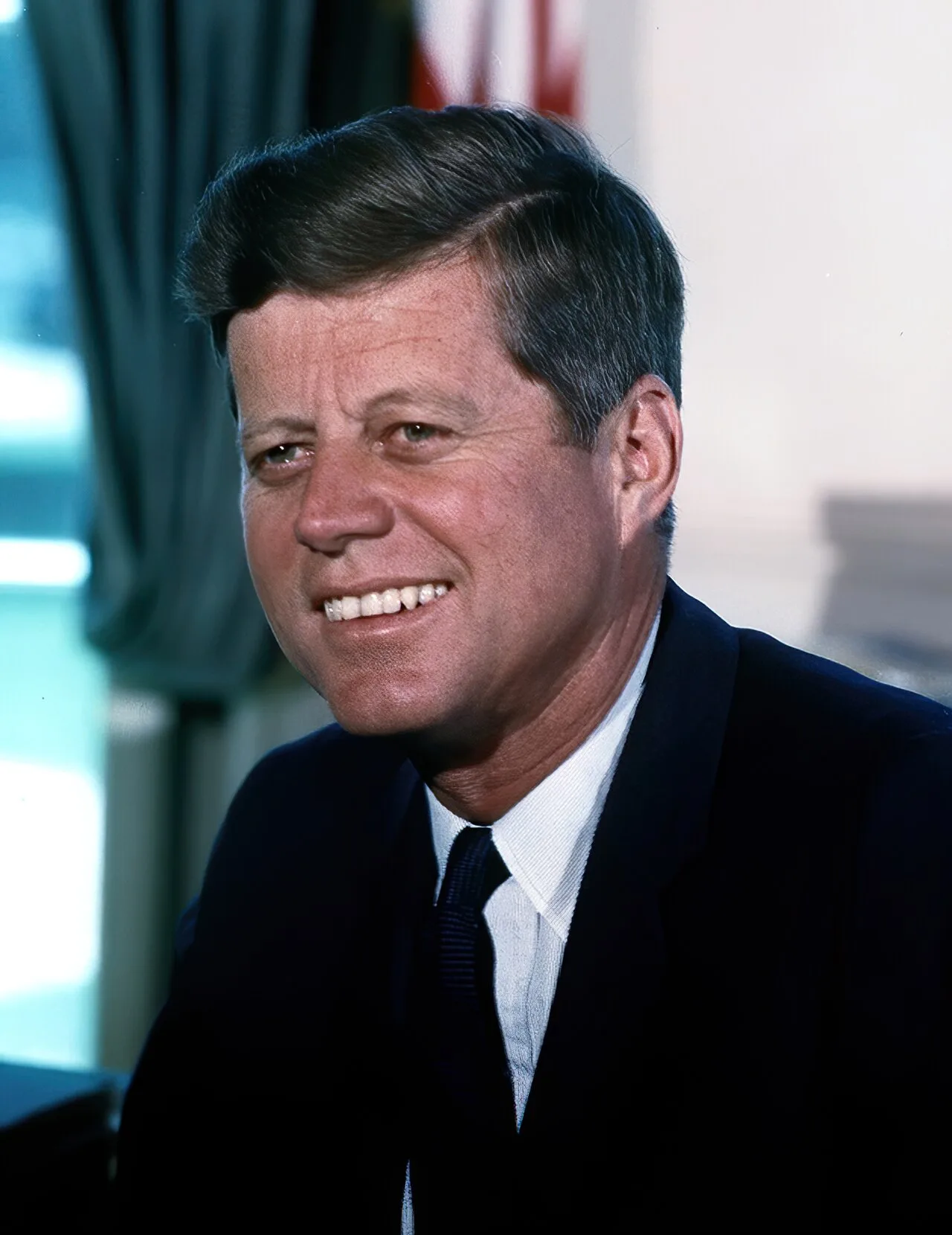
Family, illness and ambition
John Fitzgerald Kennedy grew up in a wealthy Irish Catholic family. His father, Joseph P. Kennedy, expected political and social achievement, and the children were trained in competition, public performance and self-discipline. Kennedy was not an effortless young man: he suffered from serious illnesses and back problems from early on. That vulnerability sits uneasily beside the later image of a charming politician, but it helps explain his mixture of toughness, speed and controlled self-presentation.
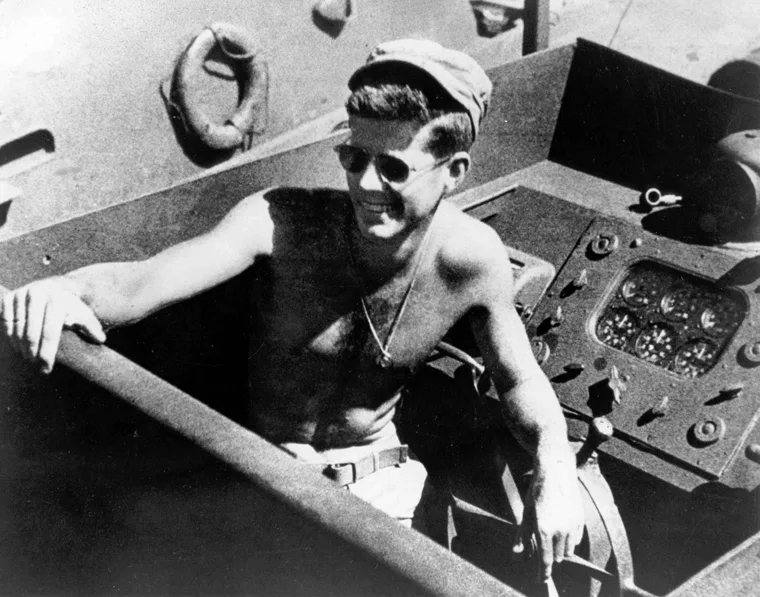
War and PT-109
After Harvard, Kennedy served in the United States Navy during the Second World War. In 1943 his patrol torpedo boat PT-109 was rammed by a Japanese destroyer in the South Pacific. Two crew members died and the others had to reach nearby islands. Despite his own injuries, Kennedy helped pull a wounded crewman and kept the group together until rescue came. The episode shaped his public image, but it should not stand as a simple heroic tale: it was war experience, survival and later political capital.
Rise in politics
Kennedy was elected to the House of Representatives in 1946 and to the Senate in 1952. In 1953 he married Jacqueline Bouvier. During a long recovery from back surgery he worked on Profiles in Courage, which won the Pulitzer Prize in 1957. His path to the presidency rested on family organization, money, media skill, roots in Massachusetts and the ability to present himself as the candidate of a new generation. In 1960 he narrowly defeated Richard Nixon and became the first Catholic president of the United States.
New Frontier
Kennedy's presidency began on 20 January 1961. The New Frontier promised modernization, international responsibility and domestic reform. He established the Peace Corps, gave impulses to education, development policy and science, and set a clear goal for the space program: a crewed moon landing before the end of the 1960s. Many of these initiatives were carried forward or completed only after his death. Kennedy's effect often lay in the impulse, not in finished legislation.
Cold War
In foreign policy Kennedy operated in a dangerous world. The Bay of Pigs invasion in 1961 failed and deepened distrust of the United States. In Vietnam his administration increased the number of American advisers. At the same time, the Cuban Missile Crisis of 1962 showed how close the world could come to nuclear war. Kennedy chose a naval blockade and negotiations while maintaining military pressure. The result was not an end to the Cold War, but a moment in which restraint and power politics were both visible.
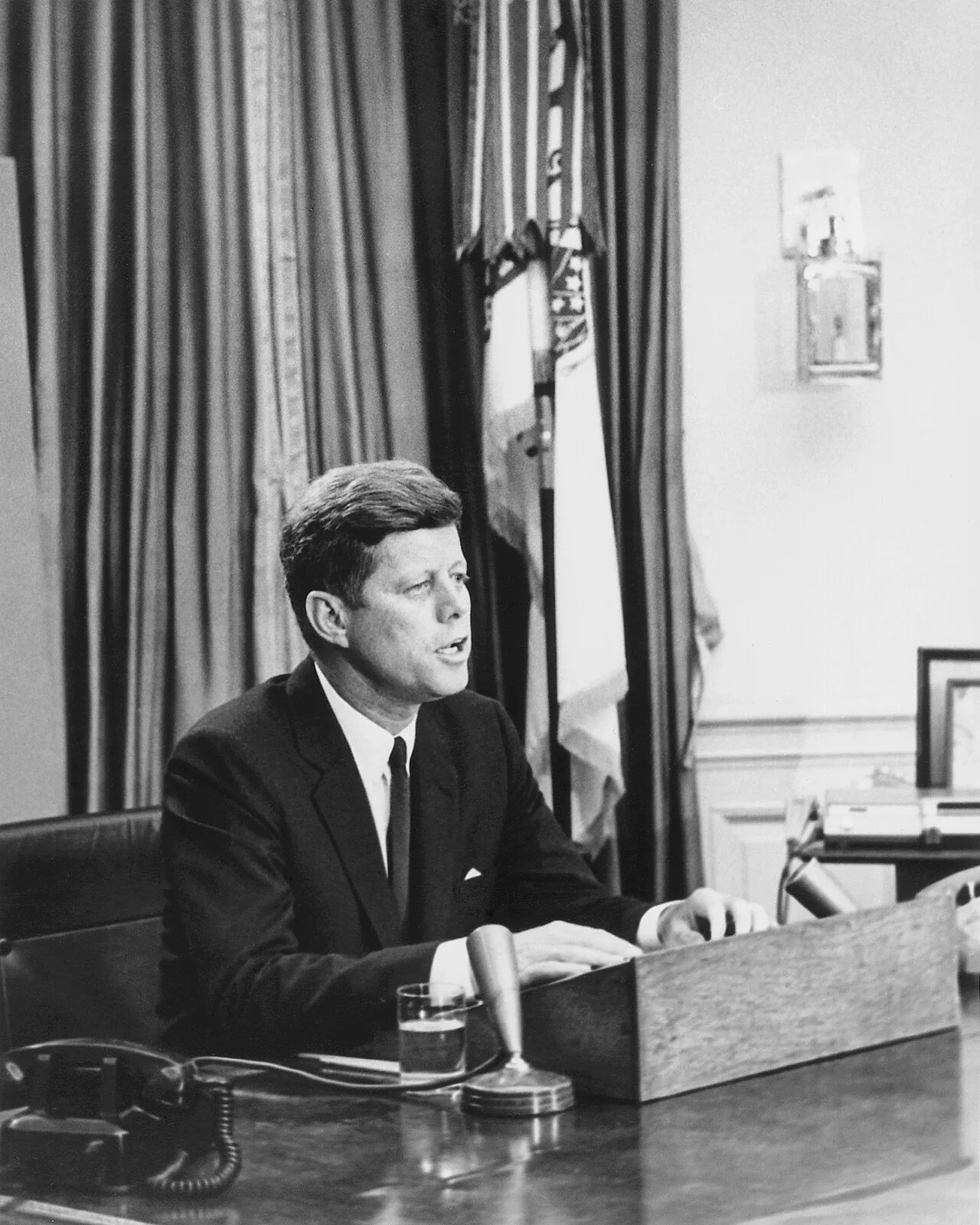
Civil rights
Kennedy's position on civil rights developed under political pressure, through the civil rights movement and through visible violence against Black Americans. On 11 June 1963 he spoke on television of civil rights as a moral issue and announced a broad legislative proposal. That was late, but important. The Civil Rights Act passed only in 1964 under Lyndon B. Johnson. Kennedy's role was therefore neither that of a sole liberator nor a mere bystander, but of a president who finally accepted the political cost of a clearer course.
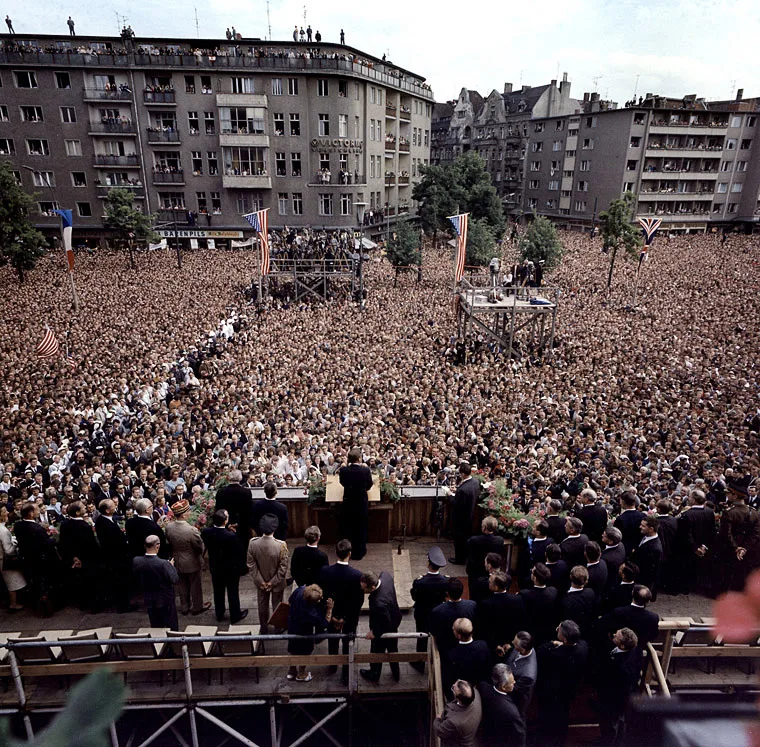
Berlin and public symbolism
On 26 June 1963 Kennedy spoke in West Berlin. His address became a symbol of Western solidarity with a divided city. Berlin suited Kennedy's political language: specific places became signs of larger conflicts. The effect was enormous, but the context still matters. Kennedy could formulate hope while the Wall remained and the Cold War continued. His strongest sentences were promises, not solutions.
Farewell
John F. Kennedy was shot during a motorcade through Dallas on 22 November 1963. He was 46 years old. His death shook the United States and turned a brief presidency into a lasting field of memory. That is exactly why his biography needs distance from myth. Kennedy was charismatic, ambitious and courageous in important moments, but his politics were unfinished, contradictory and marked by the tensions of his time. His significance lies not in perfection, but in the density of a life that became history very early.
Life Events
18 Events1917
Born in Brookline, Norfolk County
1922
Edward Devotion School
1930
Canterbury School
until 1931
1931
Choate Rosemary Hall
until 1935
1935
Princeton University
until 1936
1936
Harvard College
Bachelor of Arts · until 1940
1940
Stanford Graduate School of Business
until 1941
1943
Purple Heart
1944
Navy and Marine Corps Medal
1945
American Defense Service Medal
1945
American Campaign Medal
1945
Asiatic-Pacific Campaign Medal
1945
World War II Victory Medal
1953
Married Jacqueline Kennedy Onassis
until 1963
1957
Pulitzer Prize for Biography
Profiles in Courage
1957
Grand Officer of the Order of Merit of the Italian Republic
1963
Presidential Medal of Freedom
1963