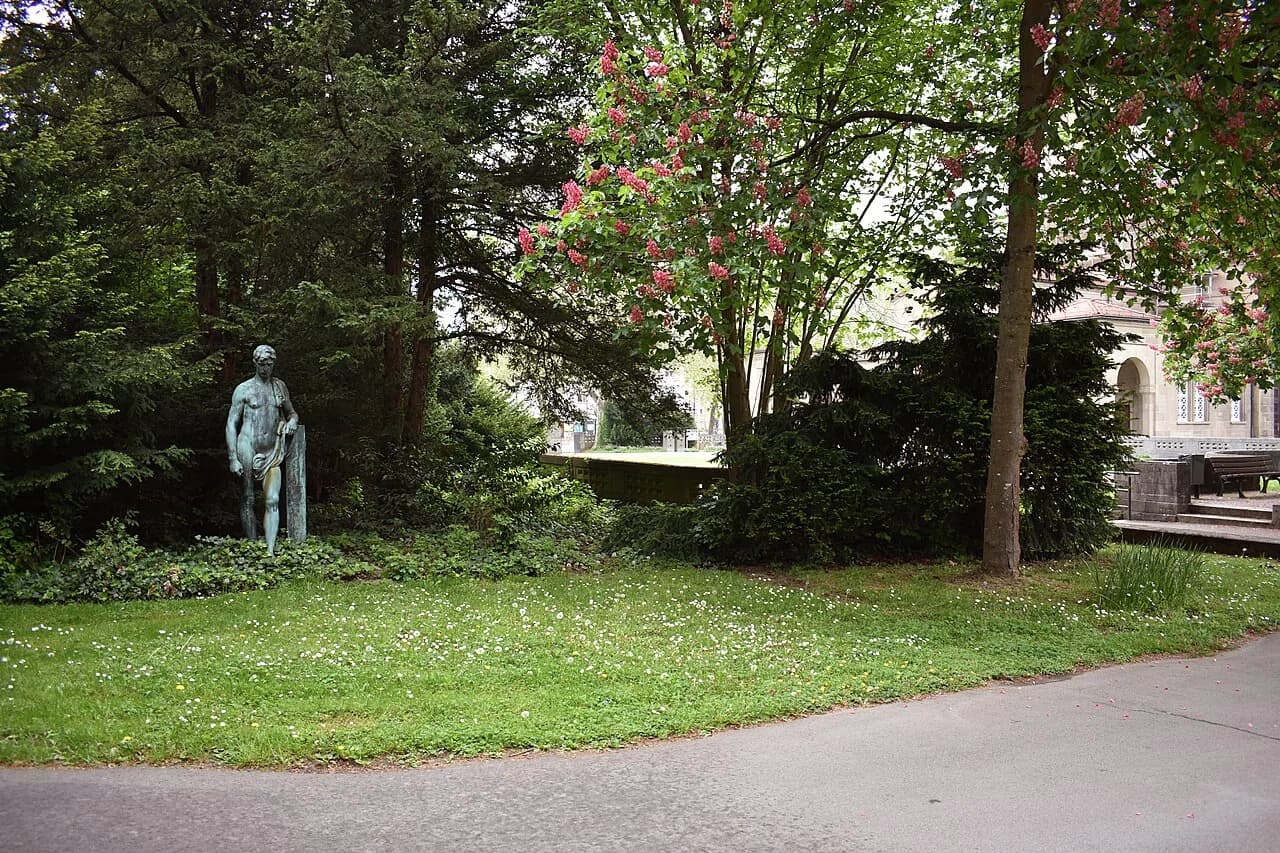
Hauptfriedhof Frankfurt
Frankfurt am Main
Polish-born German literary critic
1 candle

Emoria lights a memorial candle for Marcel Reich-Ranicki's birthday.
Emoria
June 1st, 2026
0 Entries
Be the first to share a memory.
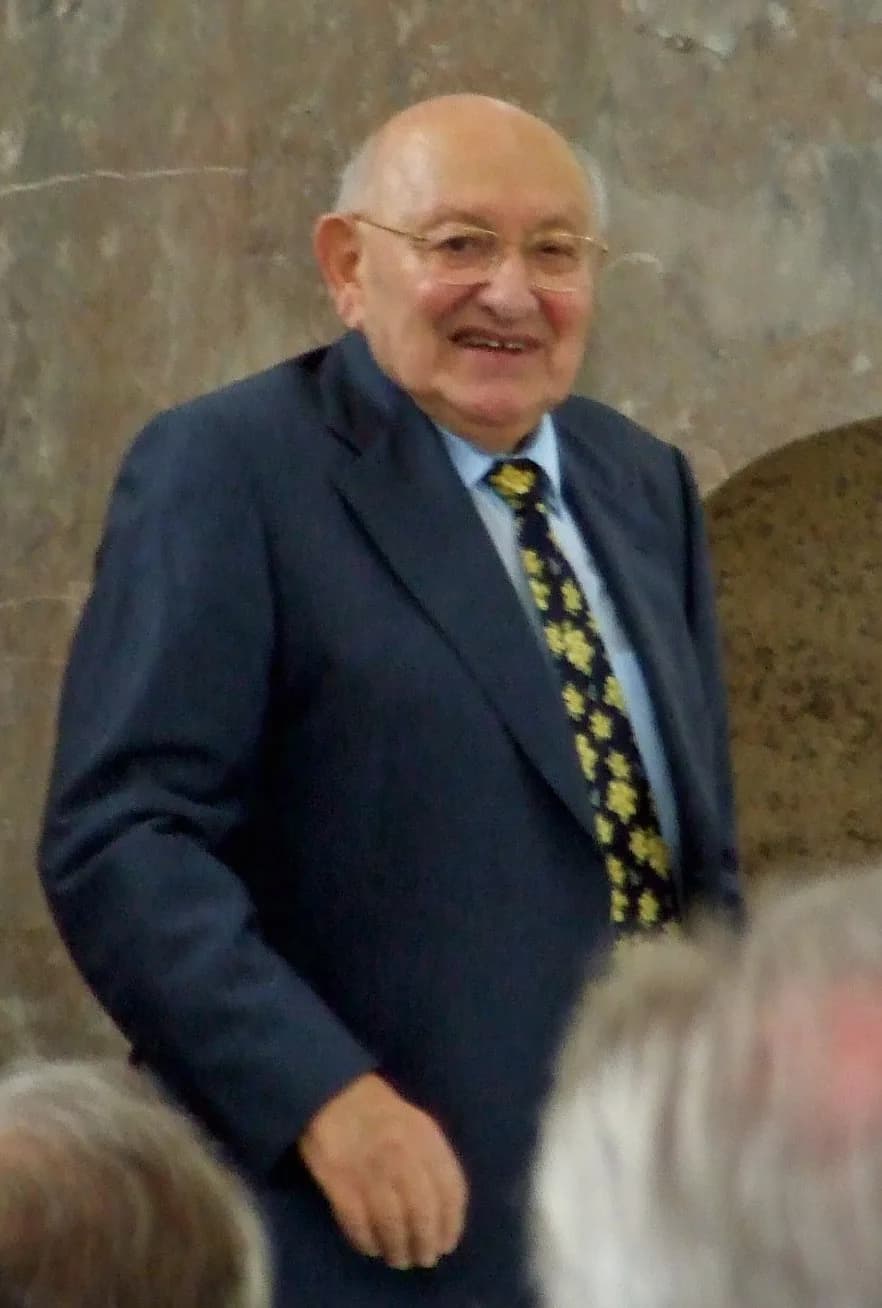
Marcel Reich-Ranicki (born Marcel Reich on 2 June 1920 in Włocławek, Poland; died 18 September 2013 in Frankfurt am Main) was a German-Polish literary critic, publicist and television presenter. He shaped literary criticism in the Federal Republic of Germany for decades and made conversations about books accessible to a broad public.
Reich was born into a Jewish family. His father David Reich was a Polish Jew, and his mother Helene came from a German Jewish family. In 1929 the family moved to Berlin. There Marcel Reich completed school in 1938, but as a Jew and a Polish citizen he was not allowed to study at university. In the autumn of that year he was arrested and deported to Poland. After the German occupation of Poland he had to live in the Warsaw Ghetto, where he worked as a translator for the Jewish Council.
On 22 July 1942 Reich married Teofila Langnas, known as Tosia, in the ghetto. On that same day the deportations of Jews from Warsaw to Treblinka began. His parents and his brother were murdered during the Holocaust. Reich and his wife escaped in 1943 and survived underground, hidden by a Polish couple. These experiences were not merely background; they shaped Reich-Ranicki's relationship to the German language, German literature and public remembrance.
After liberation, Reich first worked for Polish institutions and later in diplomatic service and foreign intelligence. During this period he took the name Ranicki. At the end of 1949, after political conflicts, he was dismissed from service, expelled from the party and imprisoned. He then began working in Poland as a mediator of literature, critic and translator. In 1958 he travelled to West Germany and did not return to Poland.
In West Germany Reich-Ranicki first wrote for radio, newspapers and magazines. In 1960 he became a regular literary critic for the weekly Die Zeit. In 1973 he took over the literature and literary life section of the Frankfurter Allgemeine Zeitung. He could praise, sharply contradict and make books publicly important. His criticism was often polemical, but it sought clarity: literature was not to remain the affair of small circles only.
On 25 March 1988 Das Literarische Quartett began on ZDF. Reich-Ranicki discussed new books with Hellmuth Karasek, Sigrid Löffler and changing guests. The programme made literary criticism work on television without reducing it to mere entertainment. Reich-Ranicki's temperament, his clear judgements and his visible pleasure in argument made him known far beyond the cultural pages.
In 1999 his autobiography Mein Leben appeared and became a major public success. In 2002 he received the Goethe Prize of the City of Frankfurt am Main. On 27 January 2012 Reich-Ranicki spoke in the German Bundestag on the Day of Remembrance for the Victims of National Socialism. He described the beginning of the deportations from the Warsaw Ghetto. The speech was plain, precise and personal; it showed once more how closely his life was bound to German history.
Marcel Reich-Ranicki died in Frankfurt am Main on 18 September 2013. He was 93 years old. His name remains connected with a rare public energy: love of literature, readiness for clear judgement and a life in which German language, persecution, a new beginning and criticism were inseparably intertwined.
Marcel Reich wird im polnischen Włocławek geboren.
Marcel Reich heiratet Teofila Langnas am Tag, an dem die Deportationen aus dem Warschauer Getto beginnen.
Im ZDF läuft die erste Sendung des Literarischen Quartetts mit Marcel Reich-Ranicki.
Reich-Ranicki spricht am Gedenktag für die Opfer des Nationalsozialismus im Deutschen Bundestag.
Marcel Reich-Ranicki stirbt im Alter von 93 Jahren in Frankfurt am Main.
No obituary has been uploaded for this memorial page yet. If you are one of the loved ones and would like to upload one, you can register as the owner of this memorial page and add it afterward.
Frankfurt am Main
Marcel Reich-Ranicki. Forever remembered.