
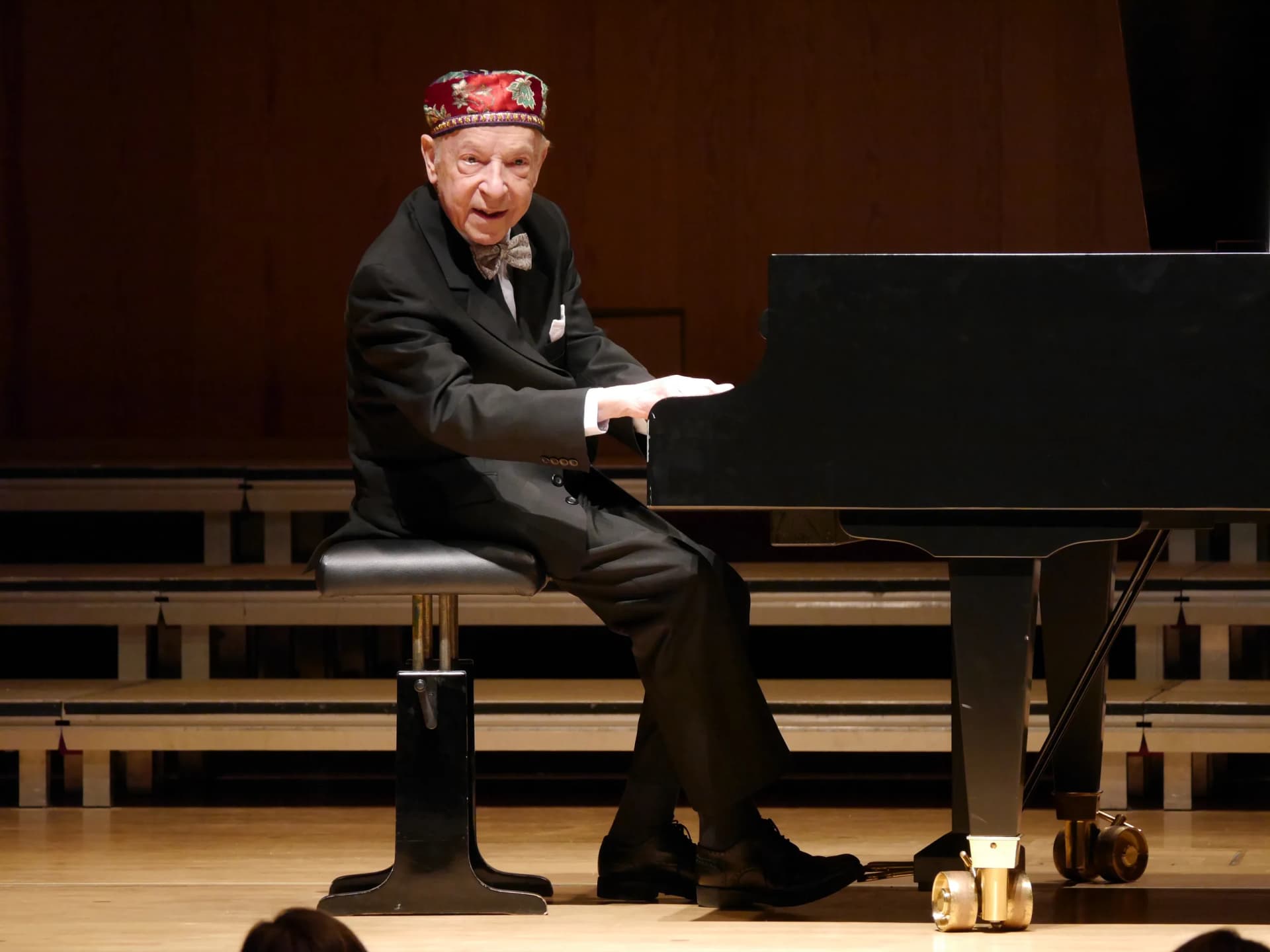
Photo: 📷 Thorsten Krienke from Detmold, Germany
Biography of Paul Badura-Skoda
6. Oct 1927 – 25. Sep 2019(91 years)Died in:Vienna, Austria
Austrian musician
0
Candles
0
Condolences
1
Family Tree
Biography
Burial Place
Ottakringer Friedhof
Awards(4)
Spouse(1)
Paul Badura-Skoda (born 6 October 1927 in Vienna; died 25 September 2019 in Vienna) was an Austrian pianist, music scholar, editor and teacher. He became especially associated with Mozart, Beethoven and Schubert and performed their works on both modern concert grands and historical instruments.
Viennese training
Badura-Skoda grew up in Vienna and studied piano and conducting at the Conservatory of the City of Vienna. In 1947 he won the Austrian Music Competition; afterwards his work with Edwin Fischer in Lucerne shaped him deeply. That early contact with an older European piano tradition remained central to his playing: sound, articulation and form grew from the work itself.
Beginning of the career
In 1949 the young pianist was engaged by Wilhelm Furtwängler and Herbert von Karajan for concerts in Vienna. This opened an international career that took him for decades to concert halls, festivals and recording studios. Badura-Skoda appeared as soloist, chamber musician and conductor, working with orchestras and partners rooted in the Central European musical tradition.
Mozart, Beethoven and Schubert
His repertoire was broad, but the Viennese classics and Schubert stood at its center. Badura-Skoda did not seek outward effect, but a speaking tone, clear phrasing and closeness to the score. In Schubert especially, he joined songfulness with intellectual discipline. In Mozart and Beethoven he cared about structure, breath and how a piano work can sound from within the world in which it was written.
Modern and historical instruments
Badura-Skoda held a distinctive place through his work on historical pianos. He collected and played instruments whose sound world was closer to the age of Mozart, Beethoven or Schubert. At the same time he remained connected to the modern concert grand. This double practice made many of his recordings illuminating: the same music could speak differently depending on the instrument, lighter, sharper, more transparent or more densely orchestral.
Scholar, editor and author
Badura-Skoda was also a musician of the desk. Together with his wife Eva Badura-Skoda, he worked on studies and editions, including writings on the interpretation of Mozart and Bach. He wrote about performance practice, edited scores and studied sources. This connection between stage and research explains much of his profile: for him, performance, origin, notation and sonic possibility belonged together.
Farewell
Paul Badura-Skoda died in Vienna on 25 September 2019 after a long illness. He was 91 years old. His legacy lies in an exceptionally rich recording history, in editions, writings and a way of playing that joined Viennese tradition, curiosity about historical sound and patient work with the score.
Life Events
3 Events1927
Born in Vienna, Austria
1997
Commandeur des Arts et des Lettres
2019