Westminsterabtei
City of Westminster


British theoretical physicist, cosmologist and author
1 candle
Emoria lights a memorial candle in remembrance of Stephen Hawking.
Emoria
March 14th, 2026
0 Entries
10 memories

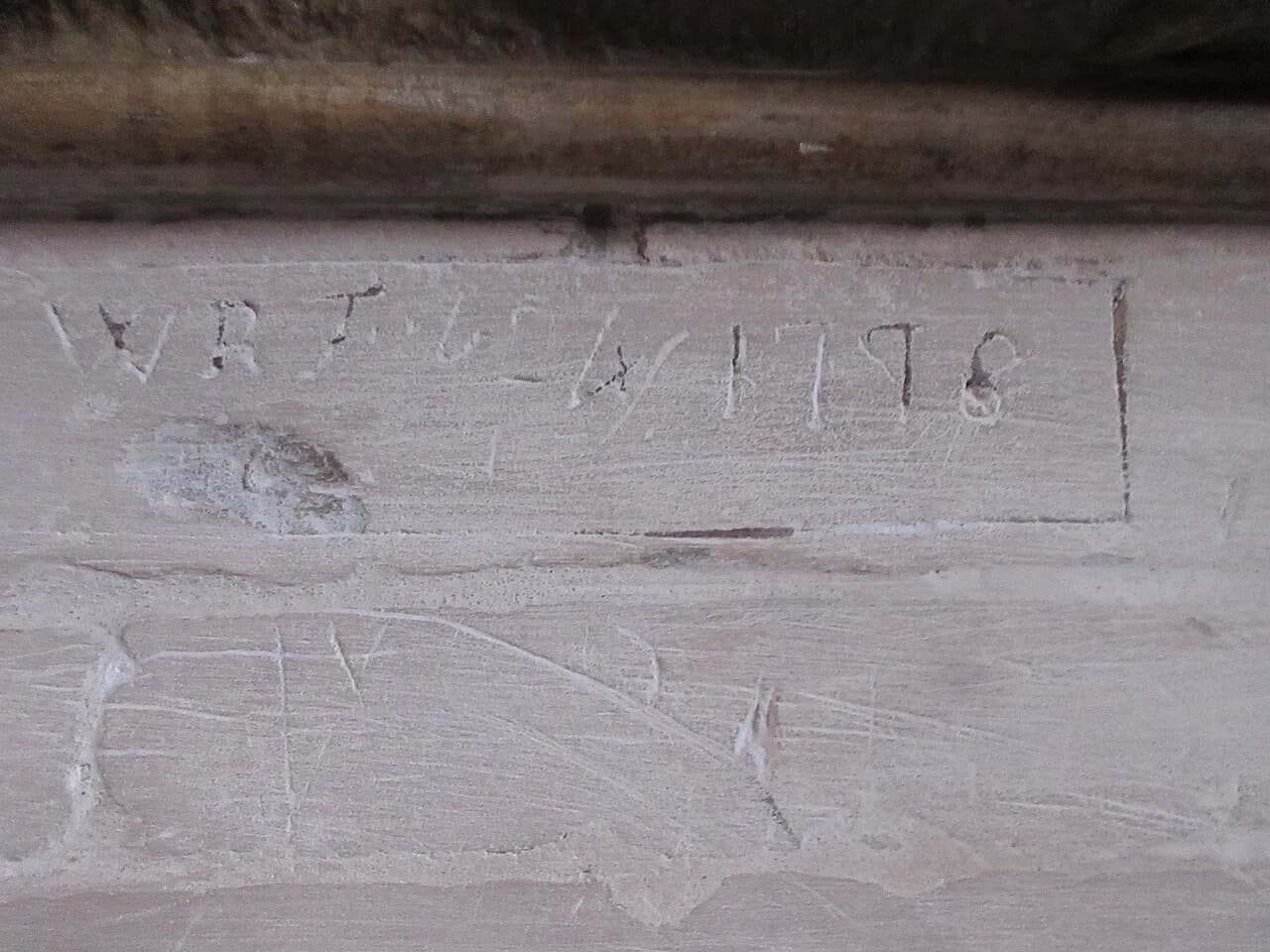
Stephen Hawking's grave at Westminster Abbey

Physicist Stephen Hawking in Zero Gravity NASA (cropped)

Stephen Hawking NASA 50th 200804210001HQ

Stephen Hawking giving a lecture for NASA's 50th anniversary

Stephen Hawking holding a lecture at Stockholm Waterfront Congress Centre, 24 August 2015.

Professor Stephen Hawking in Cambridge, UK.

Stephen Hawking introduces the public to the Corpus Clock, at the Taylor Library, Corpus Christi College, Cambridge.

Physicist Stephen Hawking in Zero Gravity NASA

Stephen Hawking 050506

Prof. Stephen Hawking on his way to a lecture before highschool students in Jerusalem, Dec 10. 2006
Stephen Hawking (born 8 January 1942 in Oxford; died 14 March 2018 in Cambridge) was a British theoretical physicist, cosmologist and science writer. He worked on black holes, singularities, cosmology and the relationship between general relativity, quantum physics and thermodynamics. He also became known worldwide through A Brief History of Time, a book that brought questions about space, time, the Big Bang and black holes to a broad public.

Hawking was born in Oxford and grew up partly in St Albans. From early on he was less interested in memorising facts than in understanding basic structures. In 1959 he began studying at University College Oxford, and in 1962 he moved to Cambridge for doctoral work. There he entered a period in which cosmology and relativity were taking new mathematical forms. The question of whether the universe had a beginning and what happens inside black holes became central to his scientific work.
During his early Cambridge years Hawking was diagnosed with motor neurone disease. The illness increasingly limited his movement; after a tracheotomy in 1985 he could no longer speak with his natural voice. His scientific life should not be reduced to illness. What mattered was how he continued working with assistants, family, colleagues, technology and enormous concentration. His computer voice later became part of his public presence, but the work behind it remained mathematically and conceptually demanding.
With Roger Penrose, Hawking developed work on singularities in general relativity. It showed that singularities were not merely exotic mathematical cases, but under certain conditions lay deep within the structure of the theory. In the 1970s Hawking then connected relativity, quantum physics and thermodynamics in a new way. His most famous idea became Hawking radiation: black holes are not entirely black, but can emit radiation through quantum effects and over time lose energy.
In 1974 Hawking became a Fellow of the Royal Society, and in 1979 Lucasian Professor of Mathematics at Cambridge. The chair visibly connected him with a long scientific tradition, but his own impact lay in a modern borderland: gravity, quantum field theory, information and the origin of the universe. A Brief History of Time appeared in 1988 and became an unusual bestseller. Not every reader understood every physical idea, but many sensed that large questions were being asked without condescension: why is there a universe, what is time, and what can physics explain?

Hawking became a rare public figure in theoretical physics. He appeared in television programmes, wrote popular books and used humour to create distance from his own fame. The zero-gravity flight in 2007 belonged to that side of him: curiosity, performance, enthusiasm for spaceflight and a serious interest in humanity's future beyond Earth came together. At the same time, Hawking should not be read only as a symbol of willpower. His scientific stature rests on concrete contributions to black holes and cosmology, not on a simple story of encouragement.

Stephen Hawking died in Cambridge on 14 March 2018. He was 76 years old. His ashes were buried in Westminster Abbey, near the graves of Isaac Newton and Charles Darwin. His name remains connected with a rare double effect: he changed theoretical ideas about black holes while also making millions of people curious about questions larger than everyday life and still connected to it.
Stephen William Hawking wird in Oxford geboren.
Hawking beginnt am University College Oxford Naturwissenschaften zu studieren.
Er geht für die Promotion nach Cambridge und arbeitet in Kosmologie und allgemeiner Relativitätstheorie.
Bei Hawking wird eine Motoneuron-Erkrankung diagnostiziert.
Stephen Hawking heiratet Jane Wilde.
Hawking schließt seine Promotion in Cambridge ab.
Mit Roger Penrose prägt Hawking Arbeiten zu Singularitäten in der allgemeinen Relativitätstheorie.
Hawking zeigt, dass Schwarze Löcher aufgrund quantenmechanischer Effekte Strahlung abgeben können.
Hawking wird Fellow der Royal Society.
Er wird Lucasian Professor of Mathematics an der University of Cambridge.
Nach schwerer Krankheit und einer Tracheotomie verliert Hawking die natürliche Sprechfähigkeit.
Sein populärwissenschaftliches Buch wird ein internationaler Bestseller.
Die Royal Society zeichnet Hawking mit der Copley Medal aus.
Hawking erlebt bei einem Parabelflug kurze Phasen der Schwerelosigkeit.
US-Präsident Barack Obama verleiht Hawking die Presidential Medal of Freedom.
Stephen Hawking stirbt im Alter von 76 Jahren in Cambridge.
Hawkings Asche wird in Westminster Abbey beigesetzt, nahe den Gräbern von Isaac Newton und Charles Darwin.
No obituary has been uploaded for this memorial page yet. If you are one of the loved ones and would like to upload one, you can register as the owner of this memorial page and add it afterward.
City of Westminster
Stephen Hawking. Forever remembered.