/


Biography of Abraham Lincoln
12. Feb 1809 – 15. Apr 1865(56 years)Died in:Washington, D.C., District of Columbia
President of the United States from 1861 to 1865
1
Candles
0
Condolences
25
Family Tree
Biography
Died at
Petersen House
Children
4
Burial Place
Lincoln Tomb
Spouse(2)
Mary Todd LincolnMary Lincoln
Abraham Lincoln (born 12 February 1809 near Hodgenville, Kentucky; died 15 April 1865 in Washington, D.C.) was an American politician and the 16th president of the United States. He led the Union through the Civil War, connected the war with the emancipation of enslaved people and was assassinated shortly after the war's outcome had been decided. Lincoln is one of the defining figures of American history, but his significance does not rest on a simple heroic image; it rests on political work under extreme pressure.
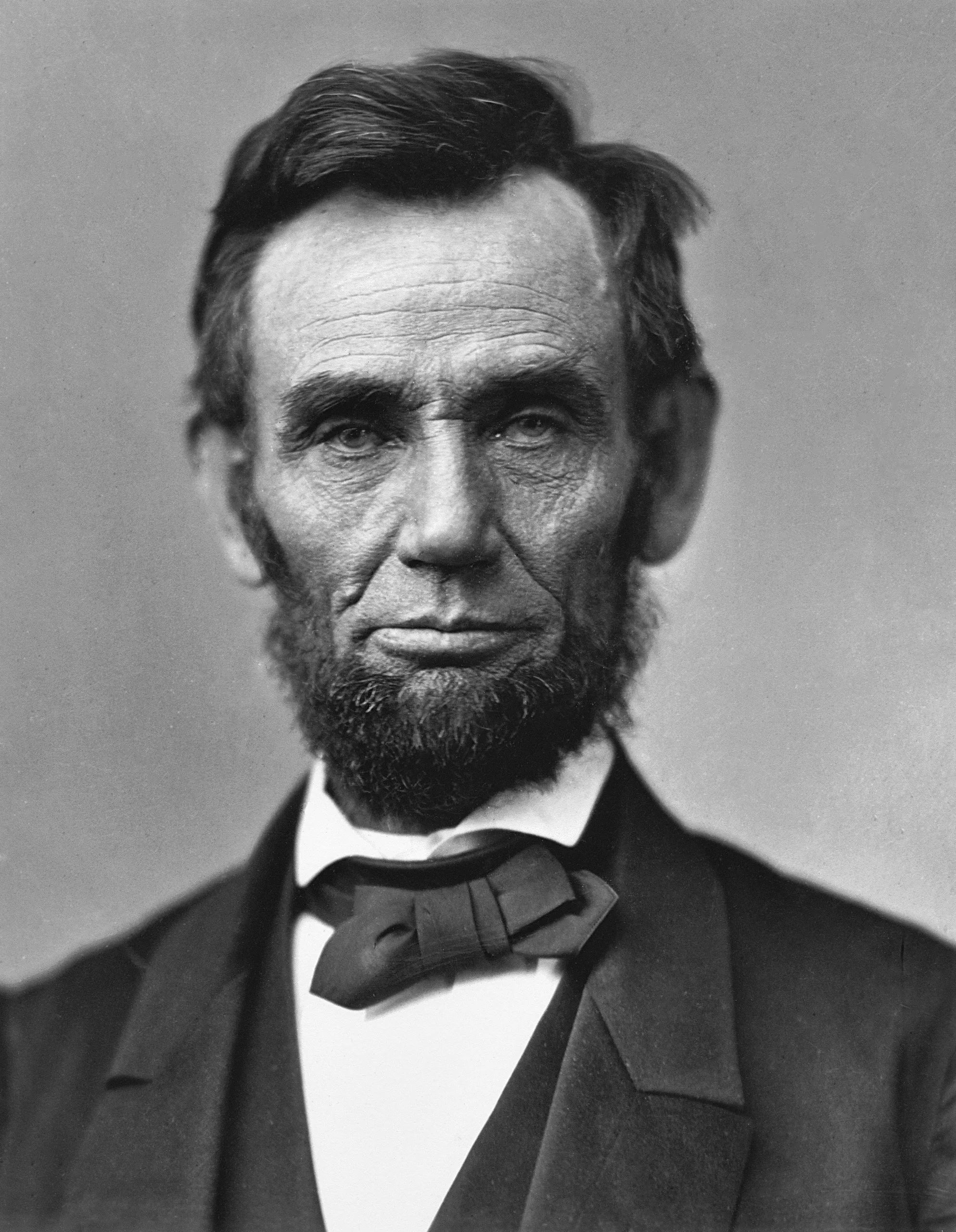
Background and rise
Lincoln was born in a log cabin in Kentucky and grew up in modest circumstances in Kentucky, Indiana and Illinois. His formal schooling was limited, but he educated himself extensively. He worked as a store clerk, surveyor and postmaster before entering politics in Illinois and becoming a lawyer. This background was later often romanticized. In reality, it was part of a long and difficult rise in a young republic where social mobility was possible, but never automatic.
Law, politics and slavery
In the 1830s and 1840s Lincoln became a known figure in Illinois. He first belonged to the Whig Party, served in the Illinois legislature and spent one term in the U.S. House of Representatives. The political core of his later national significance grew from the struggle over the expansion of slavery. Lincoln was not a radical abolitionist from the start. He developed his position in a political world where the Constitution, the Union, property interests, racism and moral argument were entangled. The 1858 debates with Stephen A. Douglas brought him national attention.
President in civil war
In 1860 Lincoln was elected president as the Republican candidate. His election accelerated the secession of southern states; in April 1861 the attack on Fort Sumter began the Civil War. Lincoln had to lead a government, build armies, manage political opponents, hold border states and gradually redefine the meaning of the war. His first stated aim was preservation of the Union. But slavery could not be kept outside the war, because it was both its cause and one of its central sources of power.
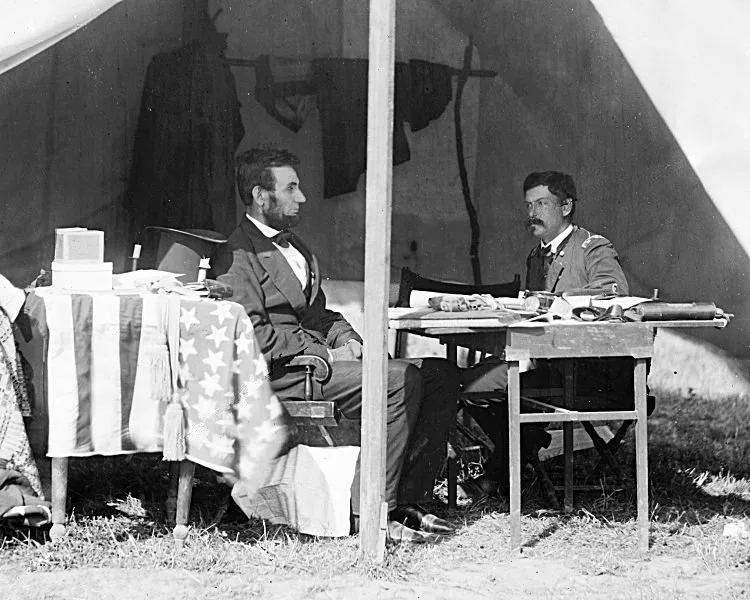
Emancipation and Gettysburg
On 1 January 1863 Lincoln put the Emancipation Proclamation into effect. It did not immediately free every enslaved person in the United States, but it changed the character of the war: the Union now explicitly fought against slavery in the rebellious areas. In November 1863 Lincoln delivered the Gettysburg Address, a very short speech that framed the Civil War as a test of democracy. Its power came not from length or ornament, but from compression: sacrifice, equality, popular government and the question whether free government could endure.
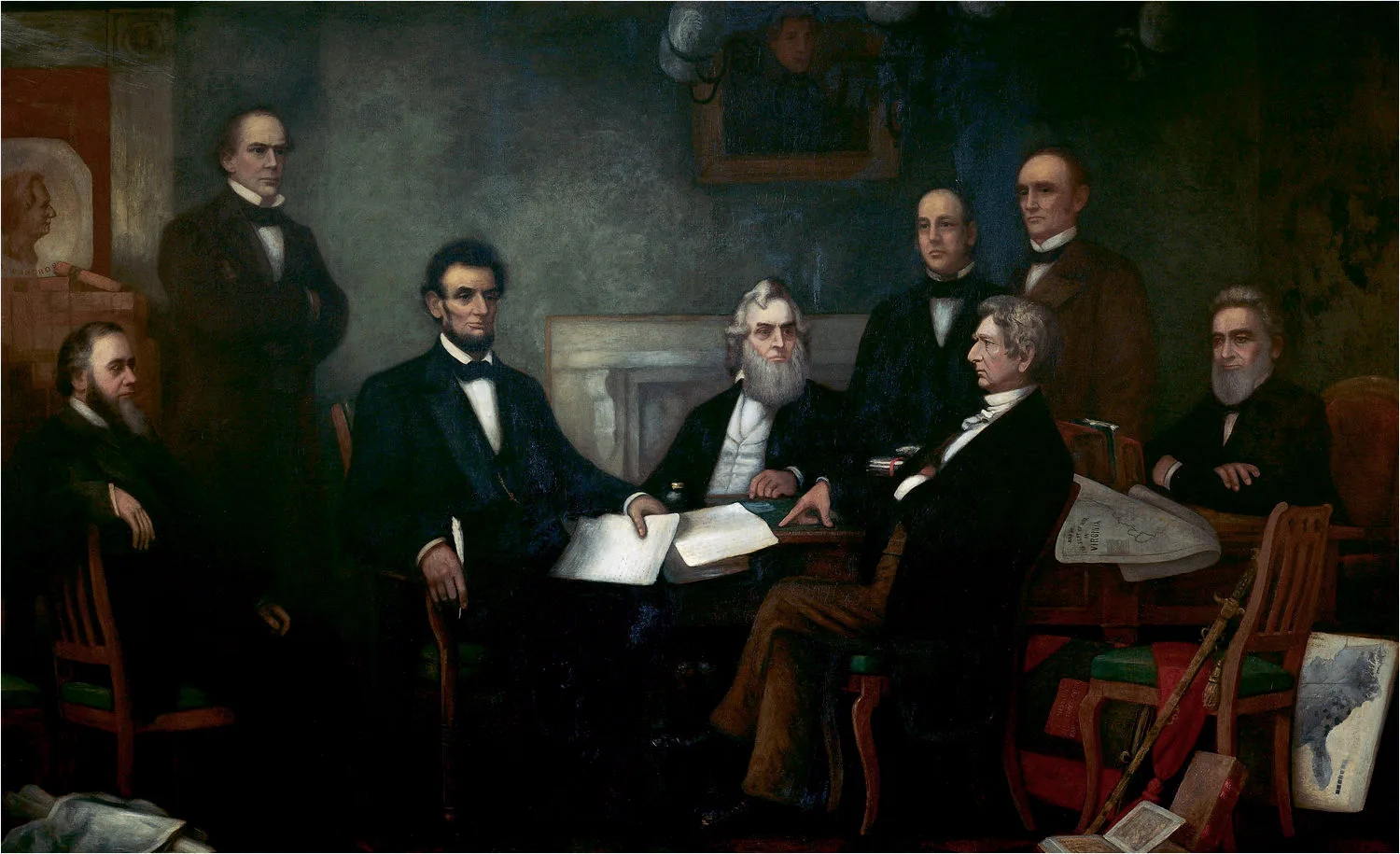
Final months
Lincoln was reelected in 1864. In early 1865 he supported the 13th Amendment, which was intended to abolish slavery permanently in the United States; Congress passed it on 31 January 1865, and ratification followed after Lincoln's death. In his second inaugural address, Lincoln did not use triumphal language, but spoke of guilt, war and a future without vengeance. A few weeks later, the main Confederate army under Robert E. Lee surrendered at Appomattox. The war was not completely over, but its outcome had been decided.
Farewell
On 14 April 1865 Abraham Lincoln was shot by John Wilkes Booth at Ford's Theatre in Washington. He died on the morning of 15 April in the Petersen House across from the theater. Lincoln was 56 years old. His death intensified the national myth around him, but his historical meaning remains more concrete: he held the Union together in civil war, made emancipation a war aim and opened the way to the abolition of slavery. At the same time, the question of how freedom would actually be lived after the war remained a task far beyond his life.
Life Events
3 Events1809
Born in Hodgenville, LaRue County
1842
Married Mary Todd Lincoln
until 1865
1865