
Biography
Burial Place
Church of All Saints cemetery
Occupation(12)
Awards(3)
Spouse(2)
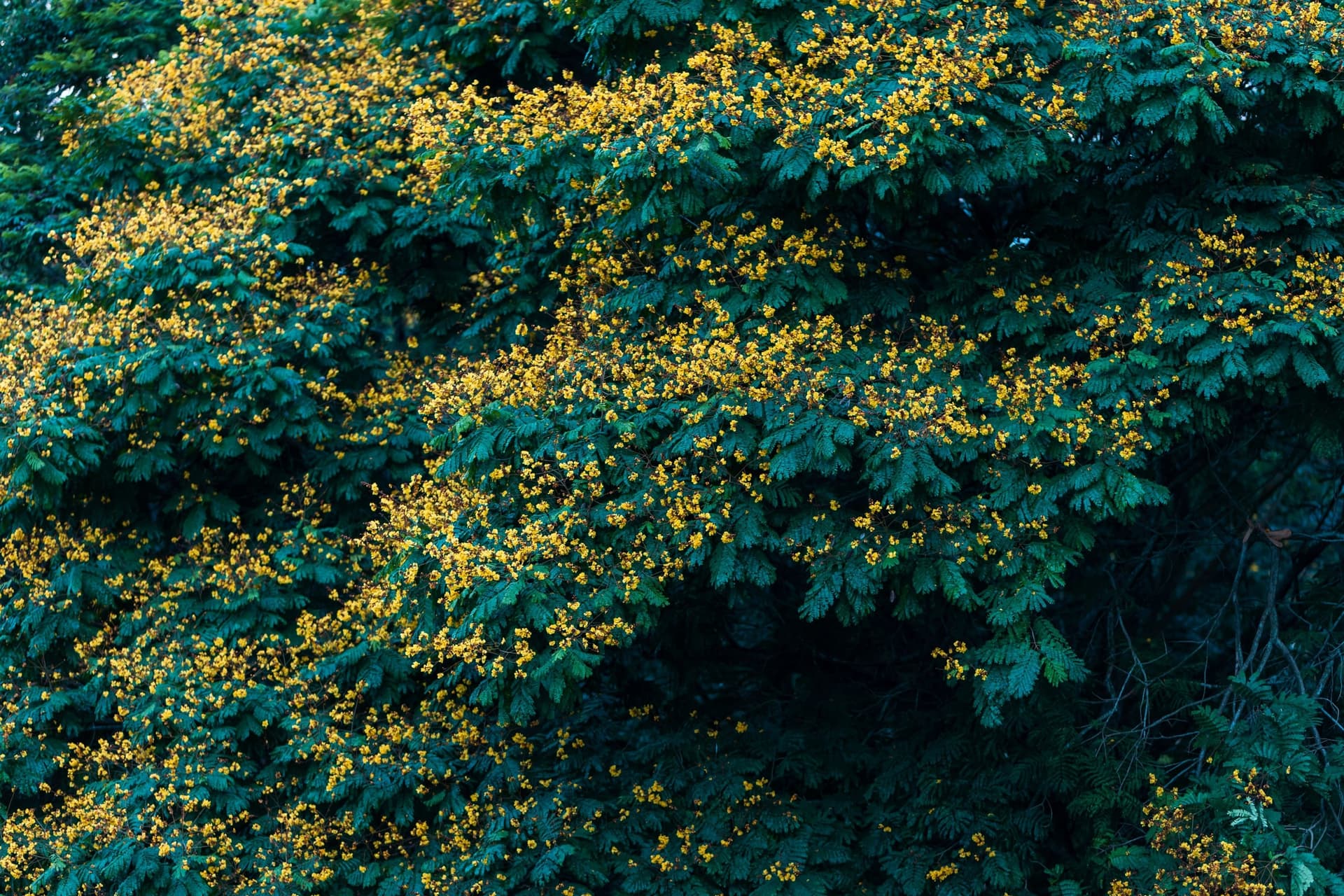
George Orwell (born 25 June 1903 in Motihari, British India, as Eric Arthur Blair; died 21 January 1950 in London) was an English writer, essayist, journalist and critic. He became especially famous for Animal Farm and Nineteen Eighty-Four. His work stands not only for warnings about dictatorship and surveillance, but for exact and often uncomfortable observation of language, power, poverty, class, colonialism and political self-deception.
Eric Blair and the Empire
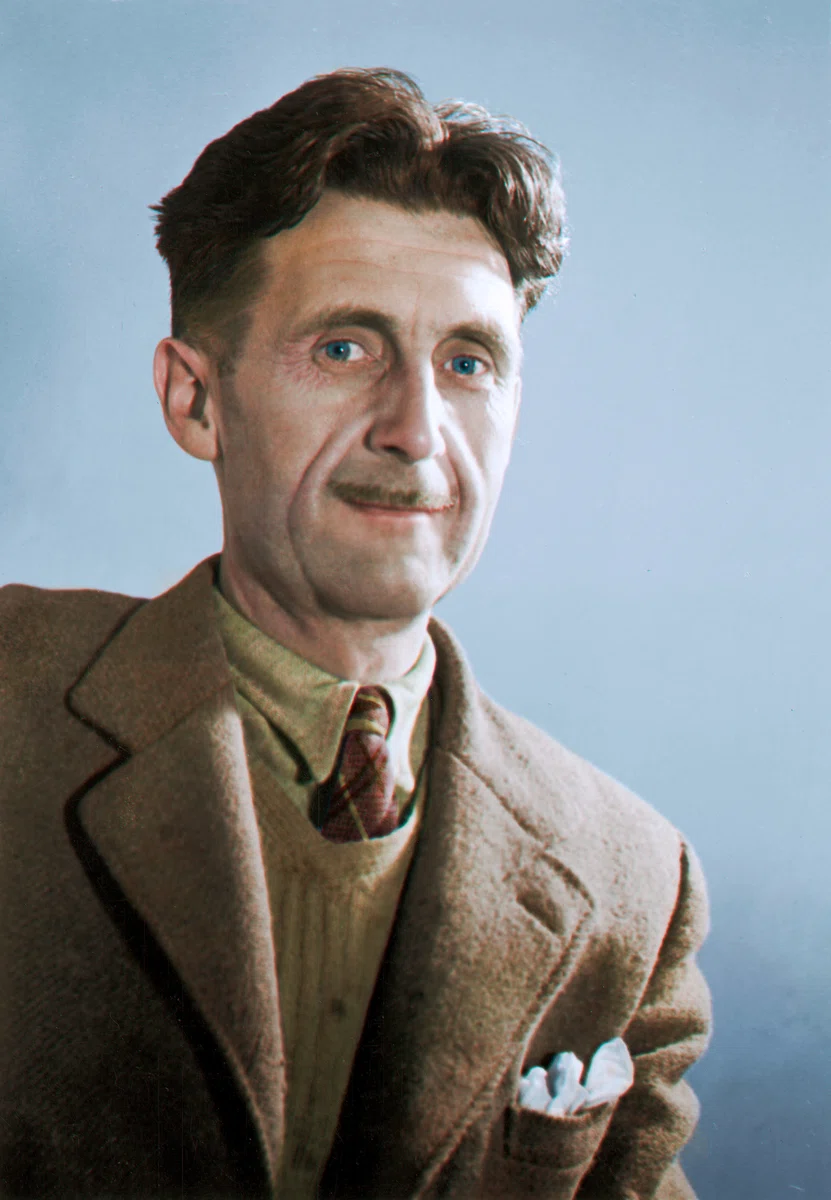
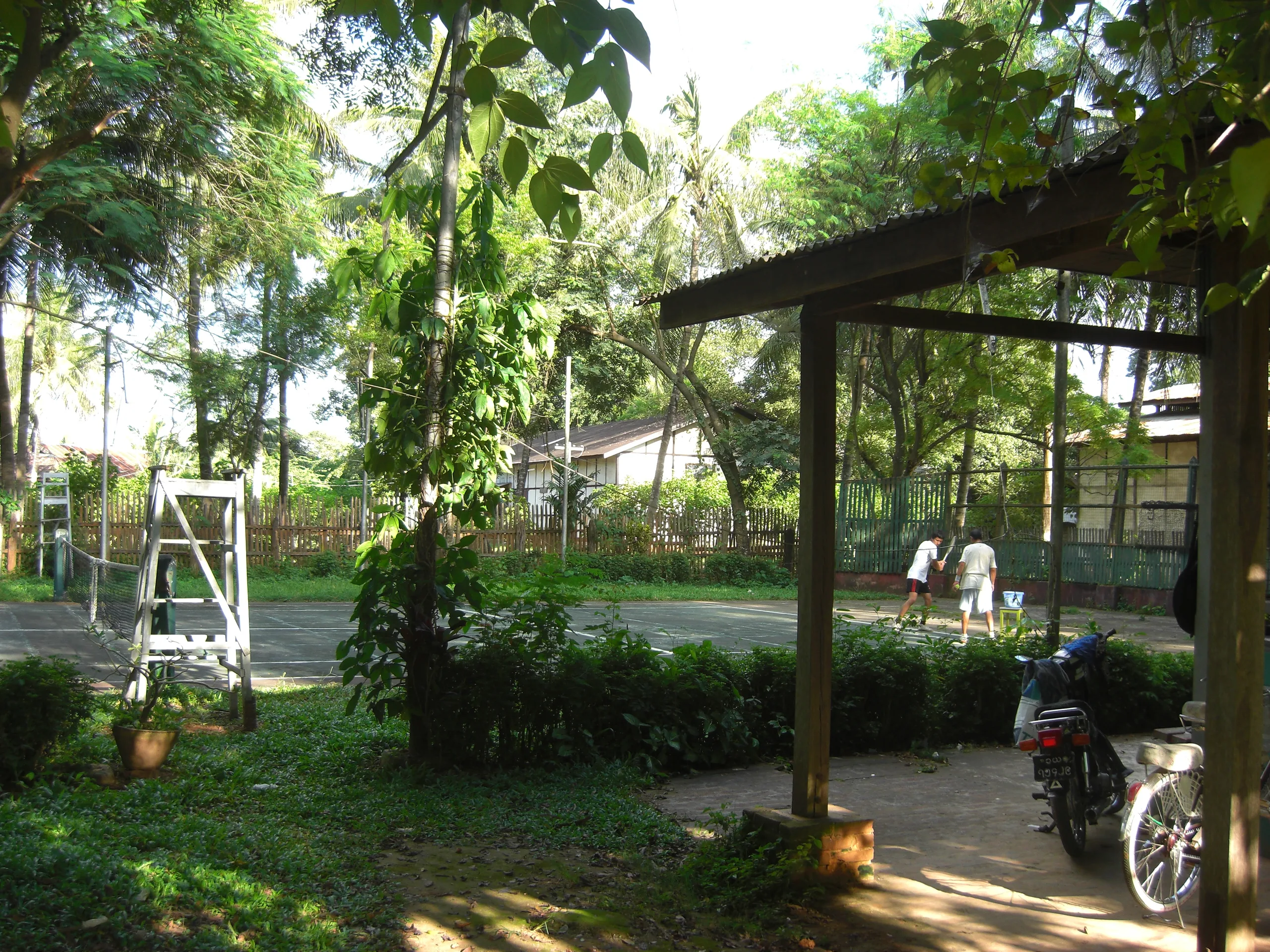
Orwell was born Eric Arthur Blair in Motihari, where his father served in the British colonial administration. He grew up mainly in England, attended Eton on a scholarship and in 1922 joined the police in Burma. There he encountered the reality of empire not as an abstract idea, but as daily life made of command, control, distance and inequality. This experience later shaped essays such as Shooting an Elephant and the novel Burmese Days. Orwell wrote about colonialism not from safe innocence, but from his own involvement.
Poverty as experience and method
After leaving colonial service, Blair chose writing and took the name George Orwell. In Paris and London he lived at times in poverty, worked as a dishwasher and moved among day laborers, homeless people and others at the edge of society. From this came Down and Out in Paris and London. Later, for The Road to Wigan Pier, he examined unemployment, housing and miners' lives in northern England. These books are not neutral social reports, but tests of the self: what does an educated observer really see, and where is his vision limited by class and prejudice?
Spain and the break with illusions
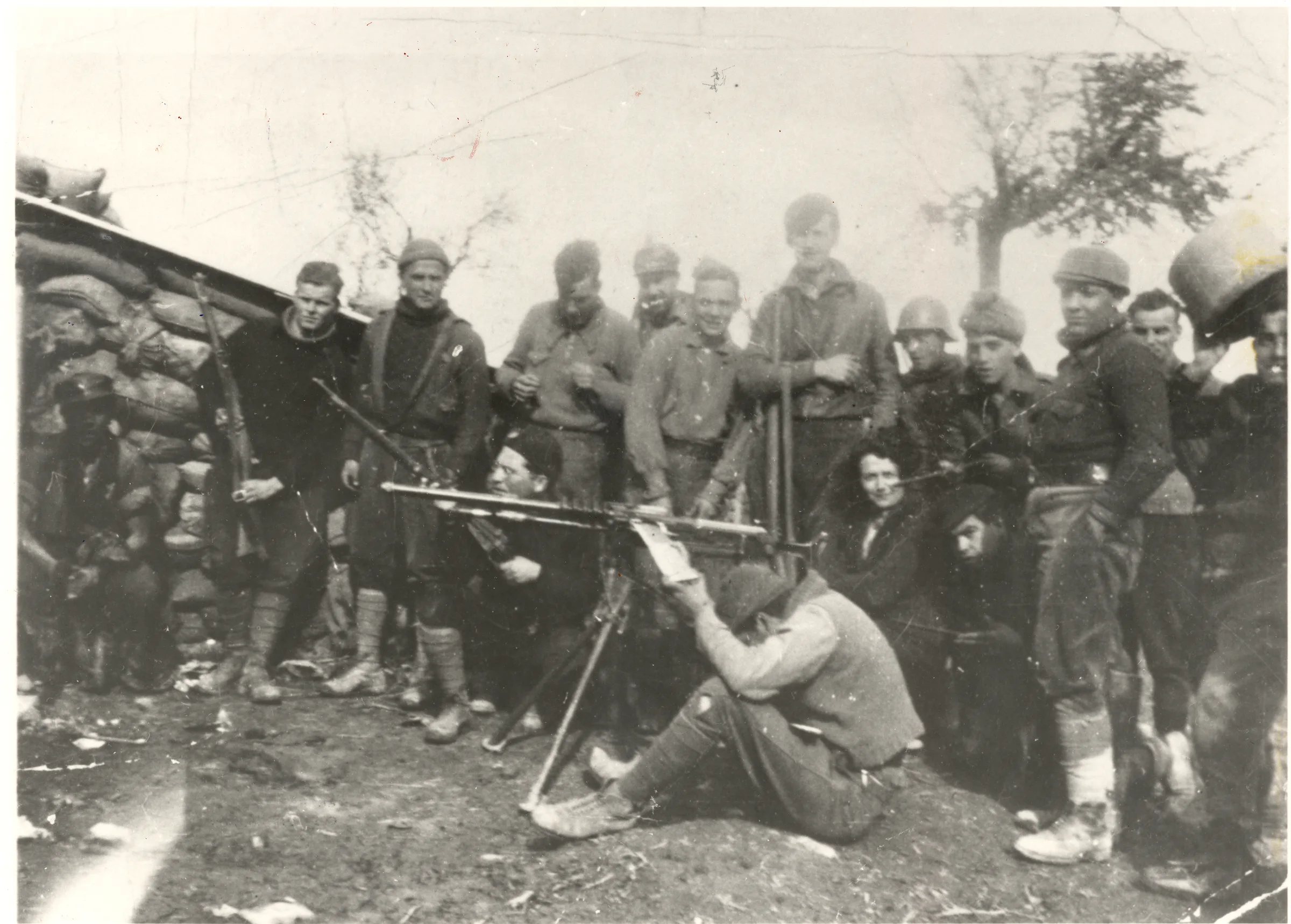
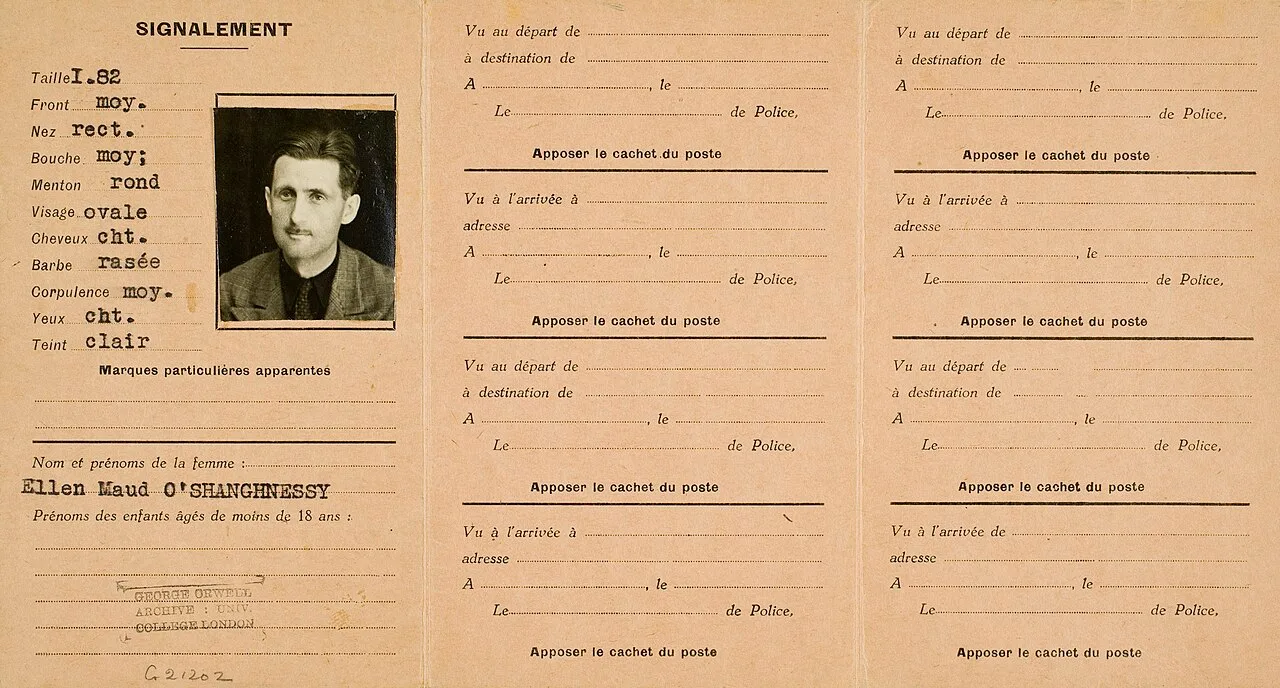
In 1936 Orwell married Eileen O'Shaughnessy. At the end of that year he went to Spain, first as an observer of the Civil War and then as a volunteer in a POUM militia. At the front he was seriously wounded by a bullet through the neck in 1937. The political experience in Barcelona affected him just as deeply: the Republican side fought Franco, but was also torn by internal power struggles, Stalinist persecution and propaganda. Homage to Catalonia became a book against fascism and against the convenient lie of one's own side.
Journalist, essayist, political writer
During the Second World War Orwell worked for the BBC and later as literary editor of Tribune. His essays joined clear language with distrust of empty formulas. He was a democratic socialist, but not a party soldier. He criticized imperialism, social inequality, fascism, Stalinism and the seductions of political language. That is why his prose remained so effective: it does not look for shiny sentences, but for sentences that make a matter more exact.
Animal Farm and Nineteen Eighty-Four
Animal Farm appeared in 1945, shortly after the death of Eileen O'Shaughnessy. The fable of a revolution turning into new rule was aimed especially at the Stalinist falsification of socialist hopes. After its success, Orwell spent periods on the island of Jura, where, despite serious illness, he worked on Nineteen Eighty-Four. The novel appeared in 1949. Its terms and images, from Big Brother to Newspeak, were later often shortened into slogans. In the book itself, the matter is more precise: power over truth, memory, the body, language and a person's ability not to be inwardly dispossessed.
Farewell
Orwell had been physically weakened for years and suffered from tuberculosis. In October 1949 he married Sonia Brownell; a few months later, on 21 January 1950, he died in London. He was 46 years old. His afterlife is unusually broad: political left and right still invoke him, often selectively. His real legacy lies less in catchwords than in an attitude: distrust of power, love of clear language and the willingness to examine one's own political side critically.
Life Events
6 Events1903
Born in Motihari, Bihar
1936
Married Eileen O'Shaughnessy
until 1945
1949
Married Sonia Orwell
until 1950
1950
Died in London (tuberculosis)
1996
Hugo Award for Best Novella
Animal Farm
1996
Retro Hugo Award for Best Novella
Animal Farm