
Biography of Mohandas Karamchand Gandhi
2. Oct 1869 – 30. Jan 1948(78 years)Died in:Gandhi Smriti, India
Indian independence activist
0
Candles
0
Condolences
11
Family Tree
Biography
Place of Death
Gandhi Smriti, India
Nationality
British Raj
Burial Place
Raj Ghat and associated memorials
Occupation(15)
Awards(5)
Time Person of the YearOrder of the Companions of O. R. TamboQueen's South Africa MedalNatal Native Rebellion MedalKaisar-i-Hind Medal
Spouse(1)
Mohandas Karamchand Gandhi (born 2 October 1869 in Porbandar; died 30 January 1948 in New Delhi), often called Mahatma Gandhi, was an Indian lawyer, political activist and a key figure in the Indian independence movement. He developed forms of nonviolent resistance that reached far beyond India. His life connects religious self-discipline, political strategy, colonial violence, mass mobilization and the painful conflicts of the partition of British India.
Background and education
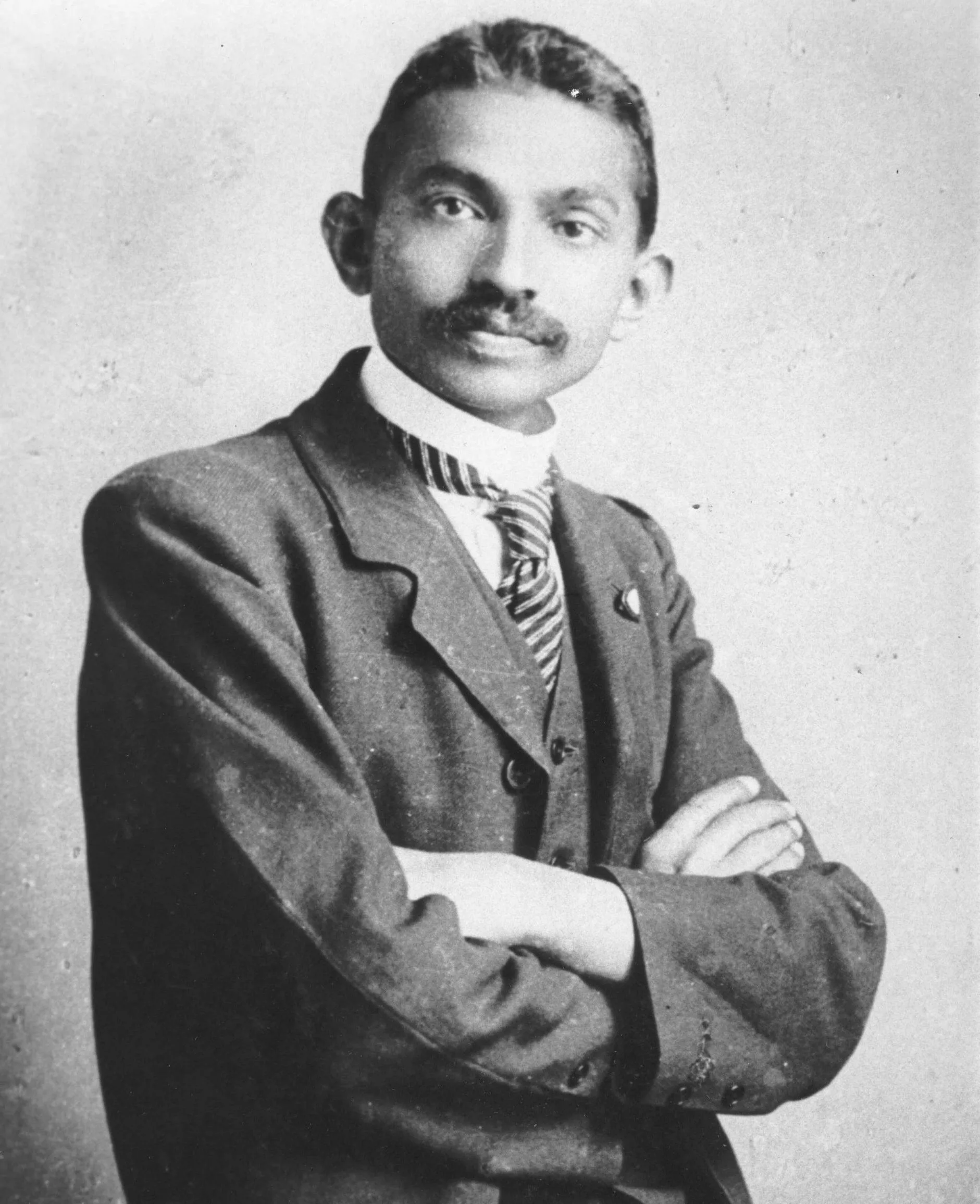
Gandhi was born in Porbandar into a Hindu family. In 1883 he married Kasturba Makhanji, as early arranged marriage was common in his social world. In 1888 he went to London to study law. There he encountered not only British law, but also vegetarian, religious and moral-philosophical debates. These years did not yet make him a political leader, but they gave him tools: legal language, self-examination and a strong interest in personal conduct.
South Africa and Satyagraha
In 1893 Gandhi went to South Africa as a lawyer. There he experienced the racist treatment of Indian immigrants and workers. From petitions, legal work and protest there gradually emerged a method of resistance that Gandhi called Satyagraha: holding to truth, publicly breaking unjust rules, accepting punishment and trying to place political and moral pressure on opponents. This method was not passive. It required discipline, organization and the deliberate acceptance of personal risk.
Return to India
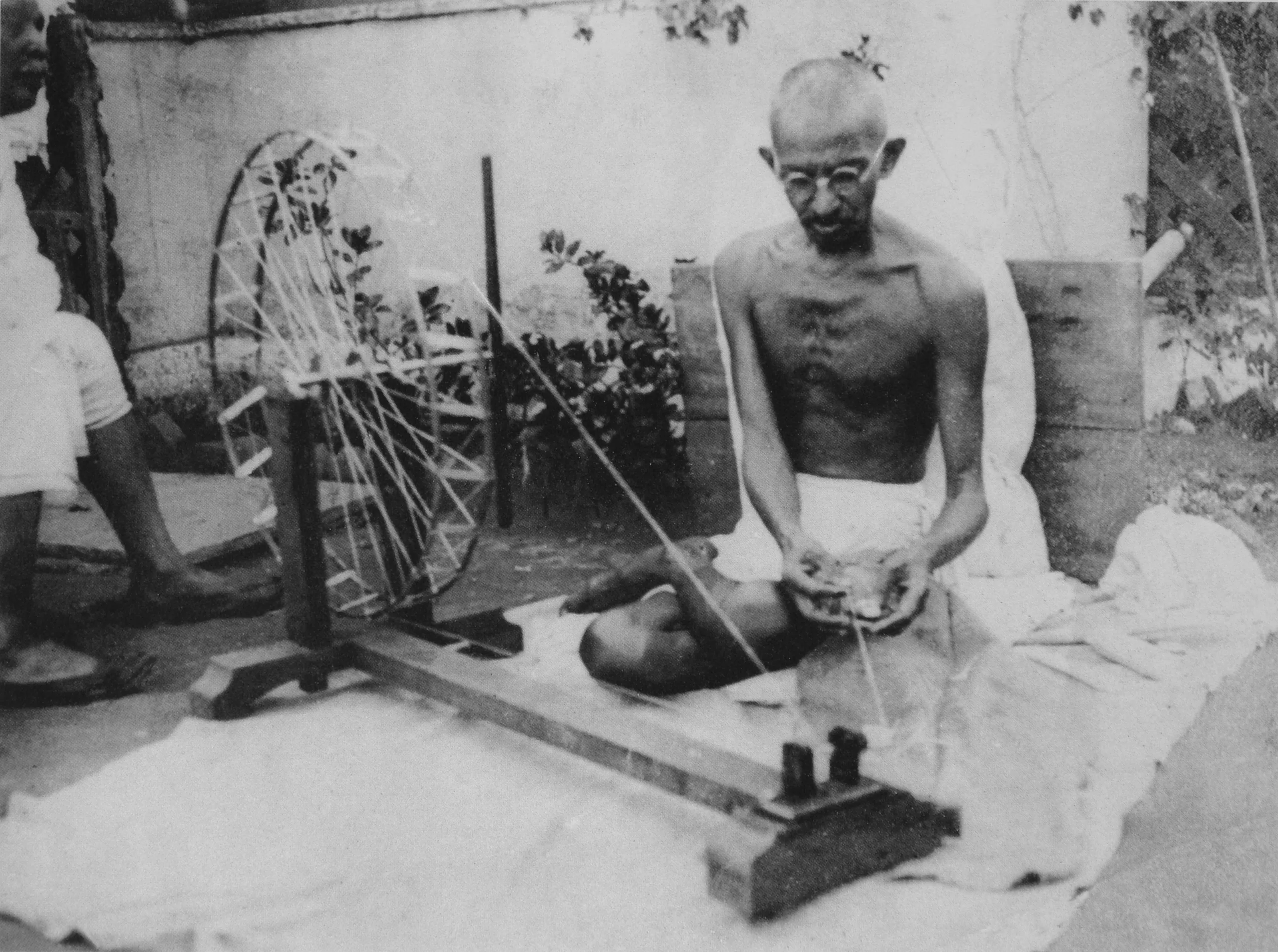
Gandhi returned to India in 1915. He did not immediately become a sole leader, but came to know the country through campaigns, travel and local conflicts. In Champaran, Ahmedabad and Kheda he connected legal questions, economic hardship and moral symbolism. Clothing, diet and the spinning wheel became political signs. Gandhi wanted independence to mean more than a transfer of power: less dependence on British goods, more self-organization and a different relation between political aim and personal practice.
Salt March and mass politics
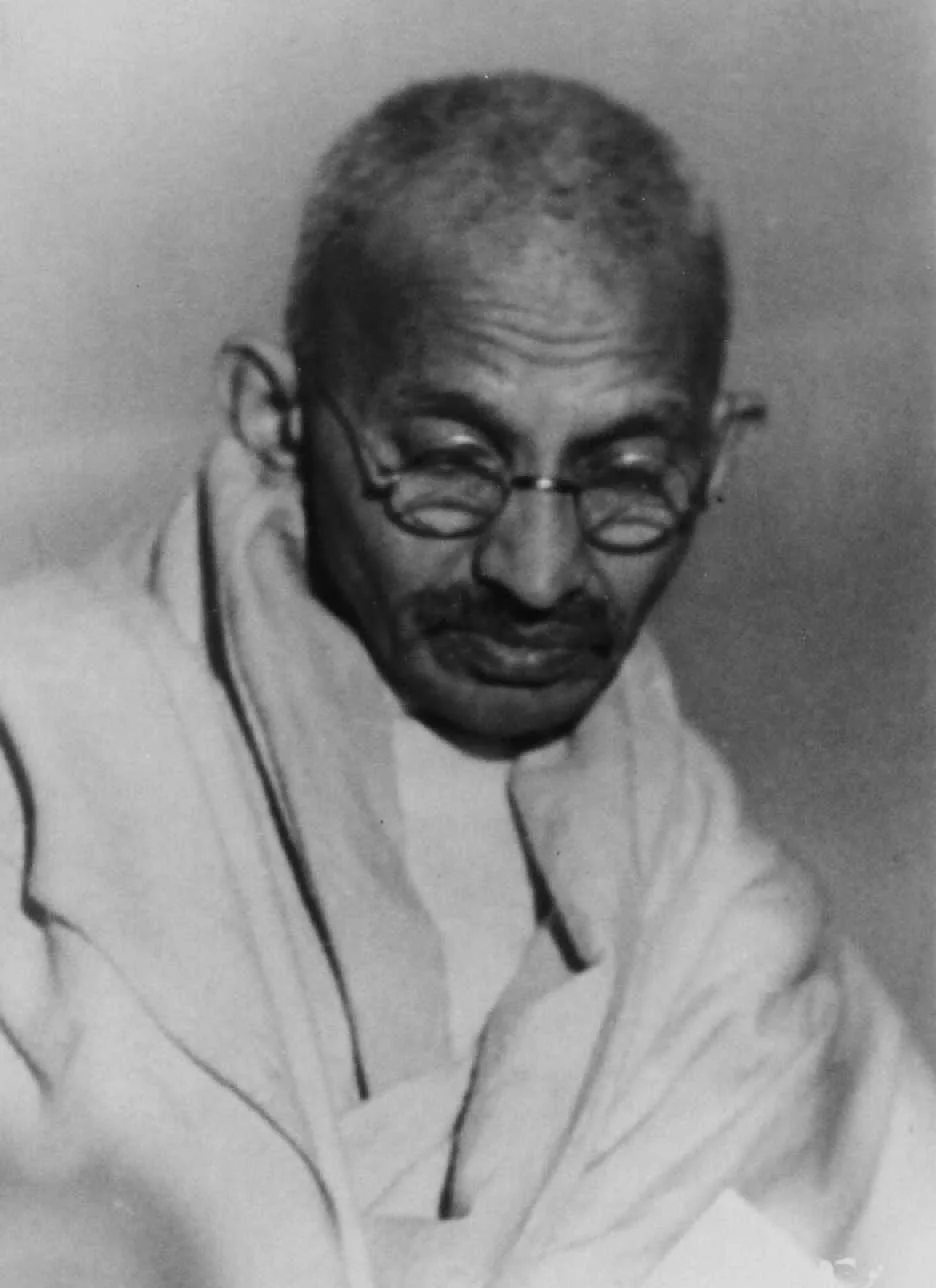
In 1930 the Salt March became one of the best-known moments of the independence movement. Gandhi walked with followers to Dandi to make salt and deliberately violate the British salt monopoly. The action was easy to understand, economically concrete and symbolically strong. It showed how colonial rule entered everyday things. At the same time, the Salt March made clear that nonviolence for Gandhi did not mean withdrawal, but a form of political confrontation seeking publicity, discipline and international attention.
War, Quit India and partition
During the Second World War, the conflict over India's future intensified. In 1942 Gandhi supported the Quit India demand for an end to British rule and was arrested with other leading politicians. Independence came in 1947, but not as a peaceful conclusion to a straight path. Partition into India and Pakistan brought displacement, massacres and religious violence. Gandhi opposed revenge during these months and tried, through fasting and presence, to reduce violence. He could not prevent partition, but he refused to treat it as a moral victory.
Assessment and farewell
Gandhi's influence reaches from Martin Luther King Jr. to Nelson Mandela, but it is not beyond debate. His ideas about asceticism, gender roles, caste, modern industry and personal purity continue to be discussed critically. For that reason, a good biography is not completed by putting a halo around him. Gandhi was a political thinker and practitioner whose strength lay in connecting symbol, body, law and mass action. On 30 January 1948 he was shot in New Delhi by Nathuram Godse. Gandhi was 78 years old.
Life Events
5 Events1869
Born in Porbandar, Gujarat
1883
Married Kasturba Gandhi
until 1944
1888
University College London
1930
Time Person of the Year
1948