

Biography of Ronald Reagan
6. Feb 1911 – 5. Jun 2004(93 years)Died in:Bel Air, Los Angeles County
President of the United States from 1981 to 1989 and actor
0
Candles
0
Condolences
15
Family Tree
Biography
Children
5
Burial Place
Ronald Reagan Presidential Library
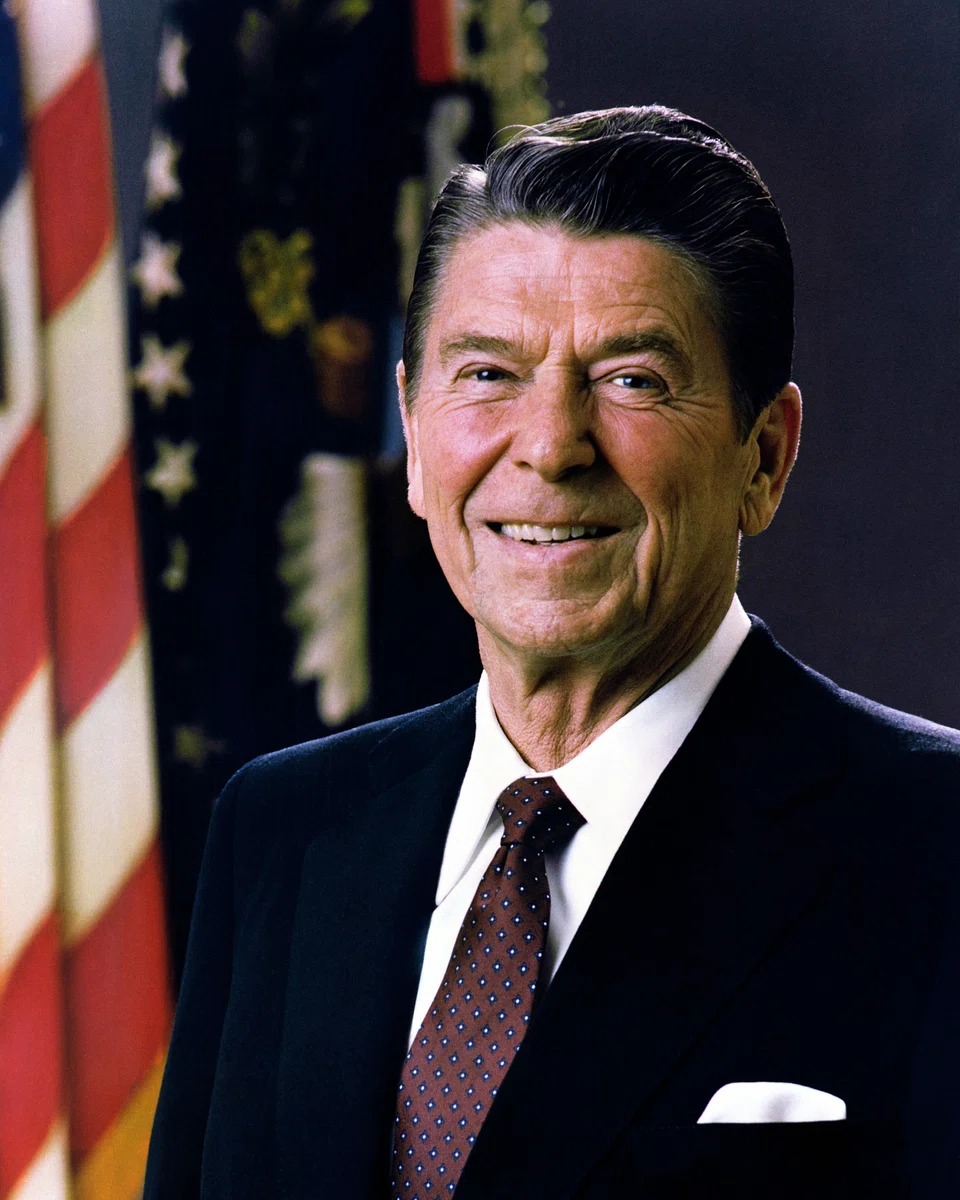
Ronald Reagan (born 6 February 1911 in Tampico, Illinois; died 5 June 2004 in Los Angeles) was an American actor, union leader and politician. He served as governor of California and, from 1981 to 1989, as the 40th president of the United States. Reagan shaped American politics in the 1980s through conservative rhetoric, economic deregulation, strong anti-communism and later diplomatic engagement with the Soviet Union.
Background and early career
Reagan grew up in Illinois, including in Dixon. At Eureka College he studied economics and sociology, played football and spoke in public. After graduation he worked as a radio sports announcer. That early experience with voice, timing and audience helped him later in both Hollywood and politics. In 1937 he joined Warner Bros. and began a long film and television career.
Hollywood and the union
As an actor, Reagan was not a major artistic innovator, but he became a familiar and dependable figure within the studio system. His work in the Screen Actors Guild became especially important. Beginning in 1947, he served several terms as the union's president. During these years his politics changed: from a Democrat he gradually became a conservative Republican. That shift was connected to labor conflicts in Hollywood, the anti-communist climate of the period and his own idea of individual freedom.
Governor of California
Reagan was elected governor of California in 1966 and took office in early 1967. He governed during a period of student protest, budget conflict and sharp cultural argument. Reagan spoke the language of order, tax skepticism and limited government. His two terms made him a national figure in the Republican Party. After an unsuccessful attempt to win the presidential nomination in 1976, he won it in 1980 and then defeated Jimmy Carter in the general election.
Presidency
Reagan was inaugurated on 20 January 1981. His presidency combined tax cuts, deregulation, military expansion and an emphatically optimistic image of American strength. On 30 March 1981 he was seriously wounded in an assassination attempt in Washington. He survived, returned to office and for many supporters became a symbol of resilience. Domestically, his record remained contested: supporters saw renewed growth and confidence, while critics pointed to social strain, rising inequality and growing budget deficits.
Cold War and political shadows
In foreign policy, Reagan first used hard language toward the Soviet Union. At the same time, his second term developed into direct dialogue with Mikhail Gorbachev. In 1987 the two leaders signed the INF Treaty, eliminating an entire class of intermediate-range nuclear missiles. That same year, Reagan gave his well-known Berlin speech calling for the Wall to be opened. His presidency also included the Iran-Contra affair, in which secret arms sales and support for Contra rebels in Nicaragua seriously damaged the administration.
Later years and farewell
After leaving the presidency, Reagan gradually withdrew from public life. In 1994 he announced in a personal letter that he had Alzheimer's disease. The letter was calm in tone and became one of the best-known public moments of his later years. Ronald Reagan died in Los Angeles on 5 June 2004. He was 93 years old. His political legacy remains strongly debated: for many he stands for conservative renewal and the end of the Cold War; for others, his policies left social and international consequences that continue to be judged critically.
Life Events
12 Events1911
Born in Tampico, Whiteside County
1924
Dixon High School
until 1928
1928
Eureka College
Bachelor of Arts · until 1932
1937
Warner Bros.
1940
Married Jane Wyman
until 1949
1952
Married Nancy Reagan
until 2004
1980
Doublespeak Award
1988
Francis Boyer Award
1990
Theodore Roosevelt Award
1993
Presidential Medal of Freedom
2004
Died in Bel Air, Los Angeles County (pneumonia)
2006