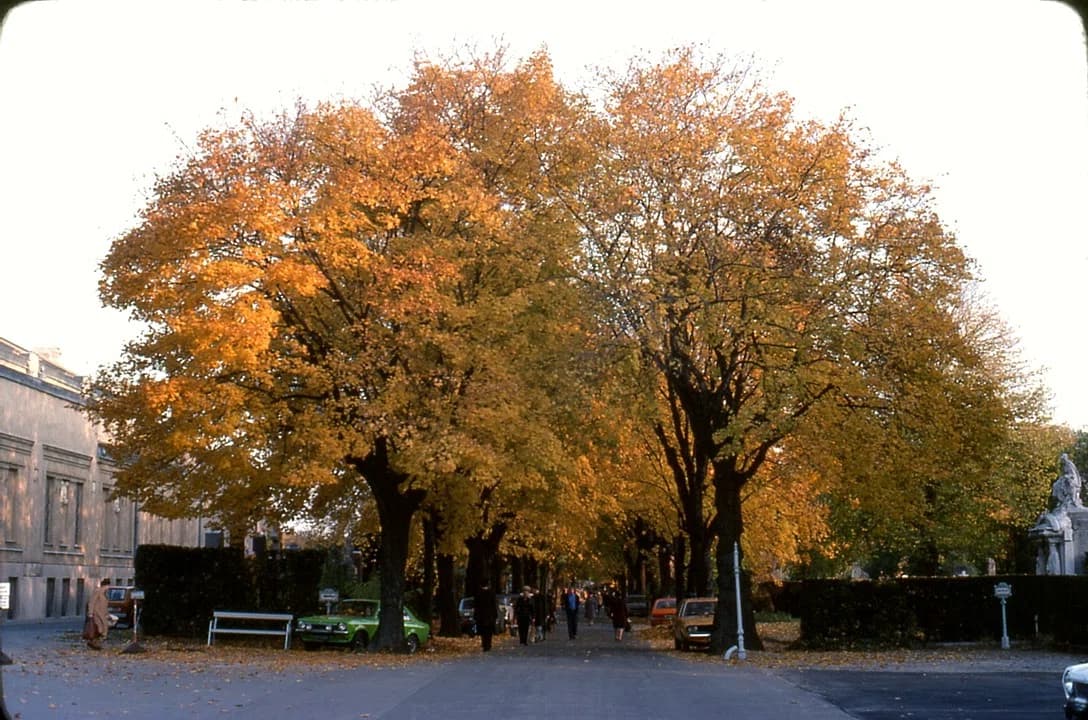
Wiener Zentralfriedhof
Simmeringer Hauptstraße, Kaiserebersdorf


Austrian diplomat, politician, judge, and eighth President of Austria
2 candles
Emoria lights a memorial candle in remembrance of Rudolf Kirchschläger.
Emoria
March 30th, 2026
Emoria lights a memorial candle for Rudolf Kirchschläger's birthday.
Emoria
March 20th, 2026
0 Entries
Be the first to share a memory.
Rudolf Kirchschläger (born 20 March 1915 in Upper Austria; died 30 March 2000 in Vienna) was an Austrian lawyer, diplomat, foreign minister and, from 1974 to 1986, federal president of the Republic of Austria. He was regarded as a non-party Catholic with sober language, legal thinking and a political style based on personal credibility.
Kirchschläger came from modest circumstances. He studied law in Vienna, was conscripted into the Wehrmacht after the Anschluss and was wounded several times during the war. After 1945 he worked as a judge and later entered Austria's diplomatic service. As a lawyer and diplomat he was involved in the foundations of the Second Republic, including the context of the State Treaty and neutrality.
From 1967 to 1970 Kirchschläger served as Austria's envoy in Prague. During the suppression of the Prague Spring in 1968, people sought protection in the Austrian embassy. Kirchschläger allowed help, although the political situation was delicate for Austria. The decision was later often cited as an example of his attitude: legally careful in form, but directed toward people in substance.
In 1970 Bruno Kreisky appointed the non-party diplomat foreign minister. In that role Kirchschläger combined Austrian neutrality with active engagement in international questions. After the military coup in Chile in 1973, the Austrian embassy in Santiago played an important role for persecuted people seeking refuge there. For Kirchschläger, foreign policy therefore went beyond protocol and became practical help in concrete crises.
After the death of Franz Jonas, Kirchschläger was elected federal president in 1974. He took office on 8 July 1974 and was re-elected in 1980 with very broad support. In a period of strong party loyalties, he embodied a head of state who kept distance from party tactics. His speeches were often concise, morally framed and directed toward the responsibility of citizens.
Kirchschläger became especially known for his phrase about draining the "swamps and sour meadows." It did not point to one single scandal, but to the importance of naming political and social failures honestly. His authority came less from loudness than from reliability. For that reason he remained respected in Austria across party lines.
Rudolf Kirchschläger died in Vienna on 30 March 2000, shortly after his 85th birthday. He was 85 years old. His life led from military service and the judiciary through diplomacy and foreign policy to Austria's highest office, showing a political style that grew from measure, language and personal responsibility.
Rudolf Kirchschläger wird in Oberösterreich geboren.
Kirchschläger wird Bundesminister für Auswärtige Angelegenheiten.
Kirchschläger tritt sein Amt als fünfter Bundespräsident der Zweiten Republik an.
Kirchschläger wird mit sehr breiter Zustimmung für eine zweite Amtszeit gewählt.
Rudolf Kirchschläger stirbt kurz nach seinem 85. Geburtstag in Wien.
No obituary has been uploaded for this memorial page yet. If you are one of the loved ones and would like to upload one, you can register as the owner of this memorial page and add it afterward.
Simmeringer Hauptstraße, Kaiserebersdorf
Rudolf Kirchschläger. Forever remembered.